Who might benefit from a washer-dryer?

Households without somewhere to dry clothes

If you can’t dry cotton shirts on a clothes airer, their care labels and the appliance’s drying capacity are key. The Verbraucherzentrale notes that you can’t dry a full wash load straight away in a washer-dryer; GINETEX explains the tumble-drying symbols.

People who take care with their shirts

If you want to follow the care instructions and avoid creasing, check that each shirt is suitable for tumble drying. GINETEX explains symbols for lower drying temperatures and the instruction not to tumble dry, among others. Bosch describes Iron Assist as a steam treatment designed to smooth dried laundry.

Households with larger loads of laundry

If your usual wash load is larger than the drying capacity, you may need to dry some of the laundry separately. The Verbraucherzentrale explains this difference for washer-dryers; Bosch specifies a suitable stacking kit for stacking a washing machine and tumble dryer.

What should you look for when buying?

Washer-dryer

A good fit if: You don’t have space to hang laundry or suitable conditions for two stackable appliances, and your shirts can be tumble dried.

The trade-off: The wash load may be larger than the drying capacity. The Verbraucherzentrale also notes that washer-dryers use more electricity and water than separate appliances.

Washing machine and air-drying

A good fit if: The care label says not to tumble dry, or you have somewhere suitable to hang your laundry.

The trade-off: Your laundry will take up space for a while. If you dry it indoors, the Umweltbundesamt recommends making sure the room is well ventilated.

Washing machine and separate tumble dryer

A good fit if: You regularly dry larger loads and can stack both appliances safely.

The trade-off: To stack the appliances safely, both models must be suitable and fitted with the right stacking kit, as Bosch advises.

What to consider What to check before buying Who should pay particular attention
Space and installation Check the dimensions of the space and route into your home, the door opening and the connections. If stacking appliances, check that both are suitable and that you have the right stacking kit; Bosch recommends checking the details for the specific products. If I don’t have room for a clothes airer or a suitable space for a stacked pair, the appliance needs to fit the space I have. Around 33% of consumers say available floor space is their top priority.
Shirt care Follow the washing temperature and tumble-drying symbol on each shirt. Check the purpose of extra features such as steam or easy-iron settings for the specific model; GINETEX explains the care symbols. If I want to care for my cotton shirts in line with their labels, those instructions come before any extra programme. Around 27% of consumers say shirt care is their top priority.
Drying capacity Compare the stated capacity in kilograms for washing and for washing and drying separately. For a continuous cycle, the lower drying capacity limits the load; the Verbraucherzentrale highlights this difference. If I want to dry my usual load without splitting it up more than once, drying capacity is key. Around 20% of consumers say load size is their top priority.
Energy and water On the EU energy label, compare the figures for the complete wash-and-dry cycle separately from those for washing alone. The European Commission lists energy and water consumption, as well as programme duration. If I regularly tumble dry my laundry, I want to know the energy and water use for the complete cycle, not just for washing. Around 20% of consumers say ongoing energy and water use is their top priority.

Common buying misconceptions

  • Assuming the washing capacity is the size of the full-cycle load

    A washer-dryer may have a lower drying capacity than washing capacity. This means you may need to dry some of your laundry separately.

    Compare both capacity figures in kilograms with your usual load and consider whether you can manage smaller drying loads.

  • Assuming the wash rating applies to the combined cycle

    The EU label lists the wash cycle and wash-and-dry cycle separately. For example, Bosch gives its WNG24441 model a rating of A for washing and E for washing and drying.

    If you plan to tumble dry your laundry after washing, compare the figures for the complete wash-and-dry cycle on a like-for-like basis.

  • Assuming cotton is always suitable for tumble drying

    The fabric description doesn’t replace the care label. GINETEX also provides guidance for cotton items on using a lower drying temperature or avoiding tumble drying altogether.

    Check the label on each shirt and make other drying arrangements for any items that aren’t suitable for tumble drying.

  • Confusing a washer-dryer with a stacked pair

    A washer-dryer combines washing and drying in one appliance. A stacked pair consists of a separate washing machine and a separate tumble dryer.

    Check the model name and number of appliances before deciding whether the option will fit your available space.

Brands and model ranges to consider

LG

According to LG, the W4WR7096YB washer-dryer combines a 9 kg washing capacity with a 6 kg drying capacity.

  • LG lists AI DD for the Cotton, Mixed and Easy Care programmes.
  • For a continuous drying cycle, the limit is the 6 kg drying capacity, not the 9 kg washing capacity.

Bosch

According to Bosch, the Series 6 WNG24441 washer-dryer offers a 9 kg washing capacity and a 6 kg wash-and-dry capacity.

  • Bosch lists a Cotton programme and Iron Assist, a steam treatment designed to smooth dried laundry.
  • Bosch gives the complete wash-and-dry cycle an energy efficiency rating of E; Iron Assist doesn’t guarantee crease-free shirts.

AEG

According to AEG, the Series 9000 LWR9W81600 washer-dryer combines a 10 kg washing capacity with a 6 kg drying capacity and heat pump drying.

  • AEG gives this model a B rating and a consumption figure of 206 kWh per 100 wash-and-dry cycles.
  • Even with a 10 kg washing capacity, the drying capacity for a continuous cycle is limited to 6 kg.

Miele

According to Miele, the WTD160 WCS from the WT1 range has an 8 kg washing capacity and a 5 kg drying capacity.

  • The German product sheet lists PerfectCare and Miele@home.
  • Bear in mind the 5 kg drying capacity if you have larger loads of shirts or mixed laundry.

Beko

According to Beko, the freestanding BM3DT4944W washer-dryer has a 9 kg washing capacity and a 6 kg drying capacity.

  • Beko lists a depth of 57 cm and a Cotton programme.
  • When planning where to put it, allow for the connections and door as well as the appliance’s depth.

Related products at Joybuy

This selection includes washer-dryers and a WashTower with a separate washing machine and tumble dryer. For washer-dryers, compare washing and drying capacities separately. For the WashTower, check that you have room for a stacked pair of appliances.

LG WT1210EGF WashTower with washing machine and heat pump tumble dryer

LG WT1210EGF WashTower, 12 kg washing / 10 kg drying

This stacked pair of a separate washing machine and tumble dryer may be worth considering if you can fit appliances vertically.

The stated capacity is 12 kg for washing and 10 kg for drying; the tumble dryer uses a heat pump.

View at Joybuy

LG WT1210WWF washer-dryer with 12 kg washing and 10 kg drying capacity

LG WT1210WWF washer-dryer, 12 kg washing / 10 kg drying

If you want washing and drying in one appliance, this model offers both functions according to the product details.

It has a stated washing capacity of 12 kg and drying capacity of 10 kg, along with Dual Inverter heat pump drying and a steam function.

View at Joybuy
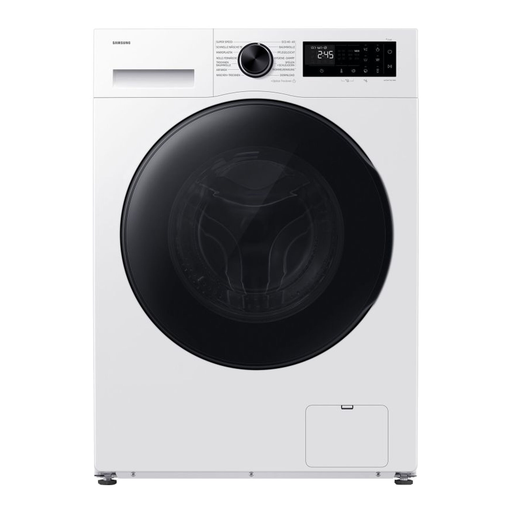
Samsung WD9BHG5U34BEEG washer-dryer with 9 kg washing and 6 kg drying capacity

Samsung WD9BHG5U34BEEG washer-dryer, 9 kg / 6 kg

This model may suit a household looking to combine washing and drying in one appliance.

The stated capacity is 9 kg for washing and 6 kg for drying. The product name mentions AI EcoBubble.

View at Joybuy
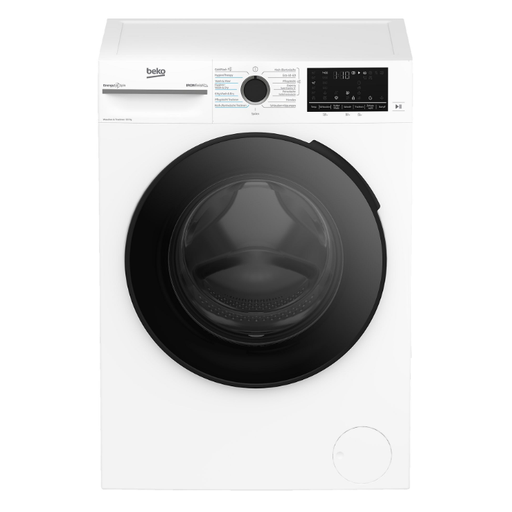
Beko BM3DT4944W washer-dryer with 9 kg washing and 6 kg drying capacity

Beko BM3DT4944W washer-dryer, 9 kg / 6 kg

If you want one appliance to handle both washing and drying, this model has separate stated capacities for each function.

It offers 9 kg washing capacity, 6 kg drying capacity, a Cotton programme and SteamCure to help smooth laundry.

View at Joybuy
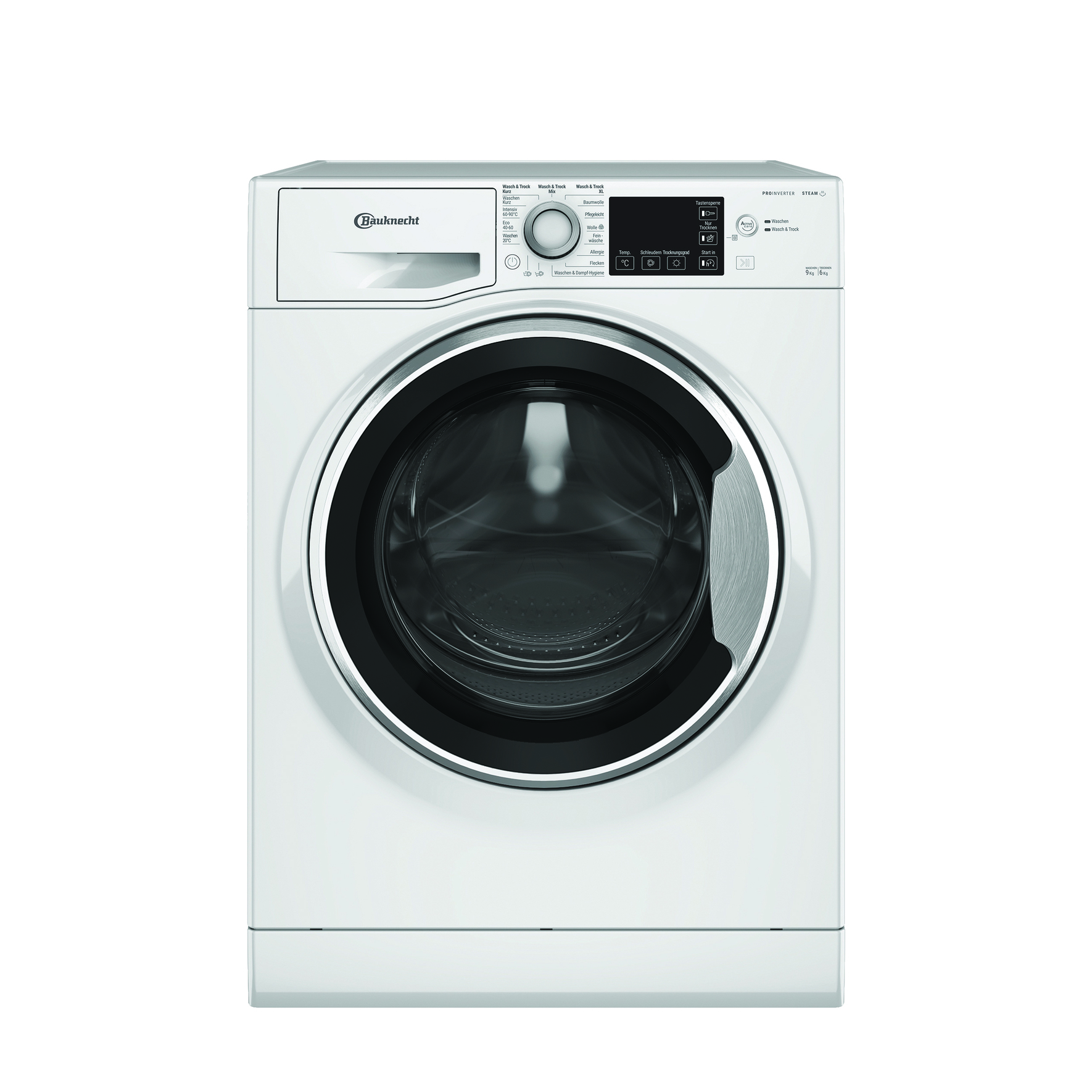
Bauknecht WADR ACTIVE 9614 D washer-dryer with 9 kg washing and 6 kg drying capacity

Bauknecht WADR ACTIVE 9614 D washer-dryer, 9 kg / 6 kg

This washer-dryer is an option if you want washing and drying functions in one appliance.

The product details list a 9 kg washing capacity and 6 kg drying capacity, a spin speed of 1400 rpm and a combined Wash&Dry cycle.

View at Joybuy

Frequently asked questions

Can every cotton shirt go in a washer-dryer?

No. Check the washing temperature and tumble-drying symbol on each shirt. GINETEX distinguishes, among other things, between a lower drying temperature and “do not tumble dry”. The fact that a shirt is made of cotton isn’t enough to tell you whether it can be tumble dried.

Which energy label figure matters if I’m going to dry shirts after washing?

Compare the figure for the complete wash-and-dry cycle, not just the one for washing. The European Commission’s EU label lists energy and water use, as well as programme duration, separately for each cycle type.

What should I bear in mind when stacking a washing machine and tumble dryer?

Check that both specific appliances are suitable for stacking and use a suitable stacking kit. Bosch recommends placing the tumble dryer on top and getting professional help with installation. This is manufacturer advice, not a general legal requirement for installation.

How can I manage damp when drying some shirts indoors?

If you dry laundry indoors, make sure the room is well ventilated. The Umweltbundesamt recommends avoiding drying laundry indoors where possible if you have somewhere else suitable to dry it.

What are my rights if a newly purchased appliance is faulty?

For consumer purchases in the EU, you have a legal guarantee from the seller for at least two years from the date you receive the goods. The Verbraucherzentrale distinguishes this legal guarantee from a manufacturer’s voluntary warranty; a warranty doesn’t replace your legal rights.