What should you look for when buying?
Washer-dryer
A good fit if: there isn’t enough room for two appliances and the load fits the stated wash-and-dry capacity for a complete cycle.
The trade-off: The drying load is smaller than the washing load; combined cycles can take longer, and you should compare consumption using the specific energy label.
Washing machine and separate tumble dryer
A good fit if: you have space for both appliances and regularly wash and dry larger family loads.
The trade-off: Two appliances need more space, but let you run washing and drying at the same time. Germany’s consumer advice centre takes a critical view of washer-dryer consumption compared with separate appliances.
Wash and air-dry
A good fit if: you have the time and space to hang clothes up, or the shirt’s care label advises against tumble drying.
The trade-off: A washing line or airer takes up drying space and time; Germany’s Environment Agency describes air-drying as the most energy-efficient method.
Germany’s consumer advice centre highlights the smaller drying capacity of washer-dryers. The EU energy label lists consumption figures separately for washing and for washing plus drying.
| Consideration |
What to check before buying |
Who is this important to? |
| Capacity for family laundry |
Compare the washing capacity and the capacity for washing and drying separately; base your planned load on the second figure. |
If I want to dry the family wash in one go, the capacity for a complete cycle is crucial. Around 33% of consumers are likely to see potential throughput as their main concern. |
| Caring for cotton shirts |
Check the shirts’ care symbols against the wash, dry and refresh programmes available on the specific model. |
If you want to care for shirts in line with their labels and understand what’s involved after drying, the programmes are especially important. Around 27% of consumers are likely to prioritise shirt care. |
| Space and installation |
Check the appliance dimensions, clearance for the door, water inlet, drain and level positioning against the model’s instructions. |
If my household has room for just one appliance, it needs to fit there with all the connections. Around 20% of consumers are likely to focus mainly on the space required. |
| Energy use when drying |
On the EU energy label, compare the figures for kWh per 100 washing cycles and per 100 wash-and-dry cycles separately. |
If you tumble-dry often and want to weigh up running costs, you need the figures for both operating modes. Around 20% of consumers are likely to give energy use particular consideration. |
Key brands at a glance
The information below relates to the product lines and models mentioned, not to a blanket assessment of each brand as a whole.
Bosch
Worth comparing if you’re considering a washer-dryer with model-specific drying and crease-reduction features, such as the WNA14441.
- Bosch lists Auto Dry and Iron Assist for the WNA14441; its stated capacity is 9 kg for washing and 5 kg for washing and drying.
- These features don’t guarantee a crease-free result for a particular cotton shirt; the smaller capacity applies to a complete wash-and-dry cycle.
LG
The W4WR7096YB is an example of a washer-dryer with a washing capacity of 9 kg and a drying capacity of 6 kg.
- LG lists Steam and TurboWash 360° for this model.
- A fabric-care test cited by LG relates to different model numbers and doesn’t demonstrate the same benefit for the W4WR7096YB.
AEG
The LWR9W81600 is an example of a washer-dryer with heat-pump drying, a washing capacity of 10 kg and a drying capacity of 6 kg.
- For this model, AEG lists 206 kWh per 100 wash-and-dry cycles and 51 kWh per 100 washing cycles.
- The figures relate to different operating modes, so compare the one that matches how you plan to use the appliance; they don’t support a blanket claim about all AEG appliances.
Siemens
The WN44A141 is an example of a washer-dryer with model-specific crease-reduction and drying features.
- For this model, Siemens lists smartFinish and autoDry, with a capacity of up to 9 kg for washing and up to 5 kg for a complete wash-and-dry cycle.
- The manufacturer’s listed features don’t guarantee a crease-free result for a particular shirt; the combined capacity is lower than the washing capacity.
Washer-dryers at Joybuy
These models are selected with family use in mind. Pay particular attention to the washing capacity compared with the smaller capacity for a complete wash-and-dry cycle.
 No image available
LG WT1210WWF washer-dryer
The stated capacity may appeal to larger families, provided 10 kg is enough for your complete cycle. This model is listed with a washing capacity of 12 kg and a drying capacity of 10 kg, as well as a cottons programme and heat-pump drying.
View at Joybuy
 No image available
Beko BM3DT4944W washer-dryer
This model may suit households whose planned wash-and-dry load fits its stated 6 kg capacity. It’s listed with a washing capacity of 9 kg, a wash-and-dry capacity of 6 kg, 1400 rpm, and Cotton, Shirts and SteamCure features.
View at Joybuy
 No image available
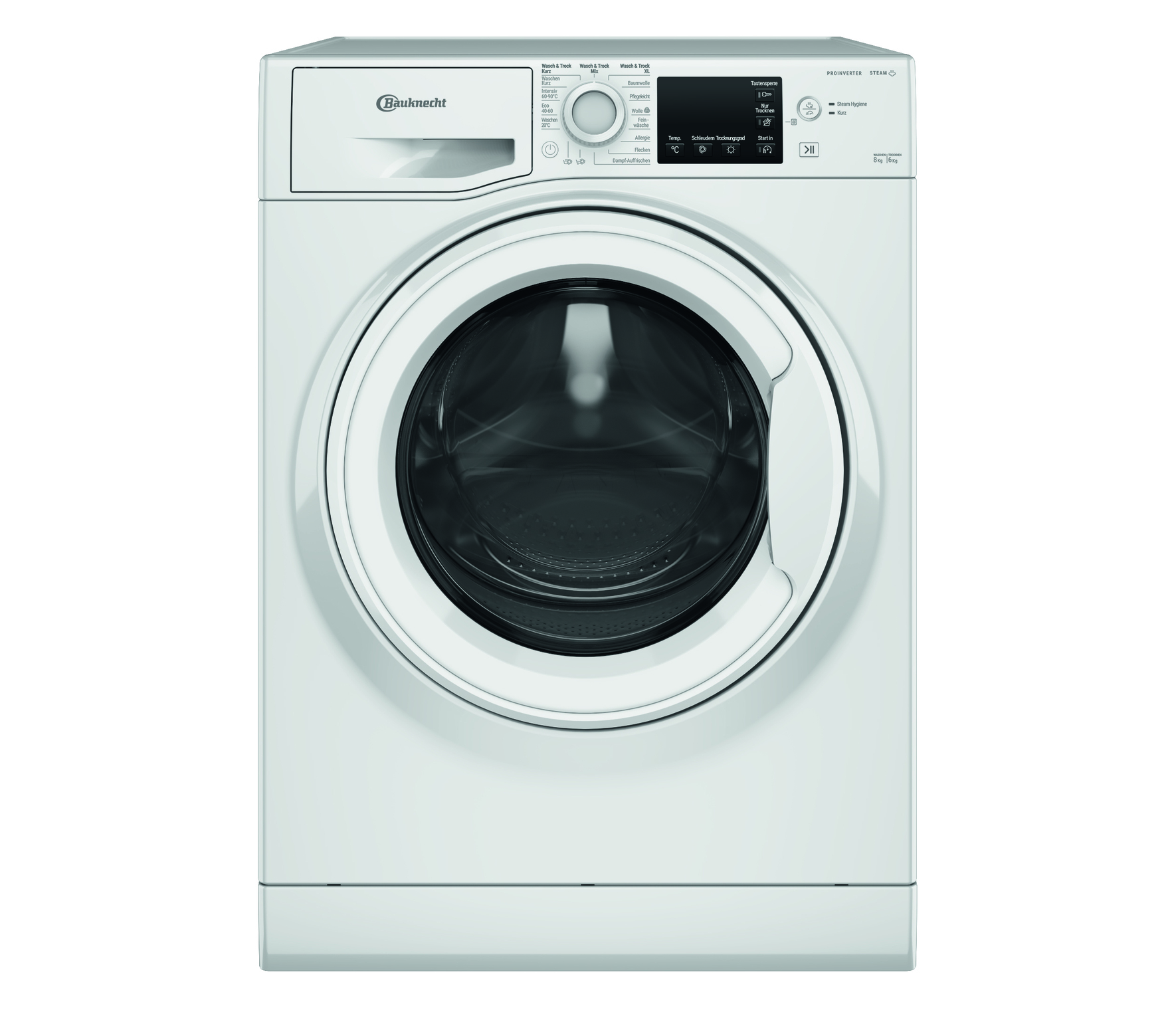
Bauknecht WD Eco Shield 8614 D
This model may suit households looking for a washer-dryer with a refresh function, provided 6 kg is enough for a complete cycle. It’s listed with a capacity of 8 kg for washing and 6 kg for washing and drying, a depth of 54 cm, and a Steam Refresh feature.
View at Joybuy
 No image available
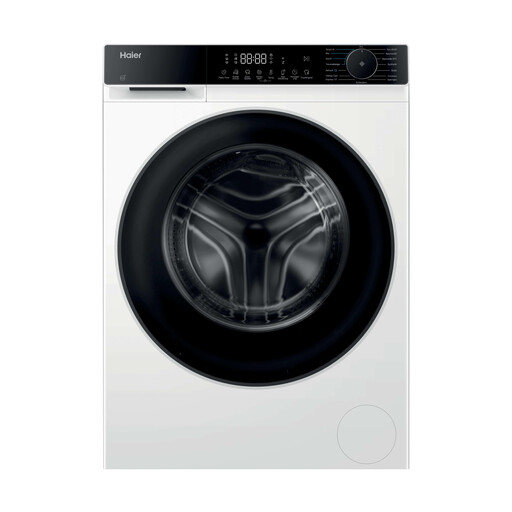
Haier X5 Series HWD120-BP14357U1
For larger wash loads, check whether the combination of a 12 kg washing capacity and 8 kg for a complete cycle suits your needs. The product description also lists a steam function, 14 programmes and app control.
View at Joybuy
 No image available
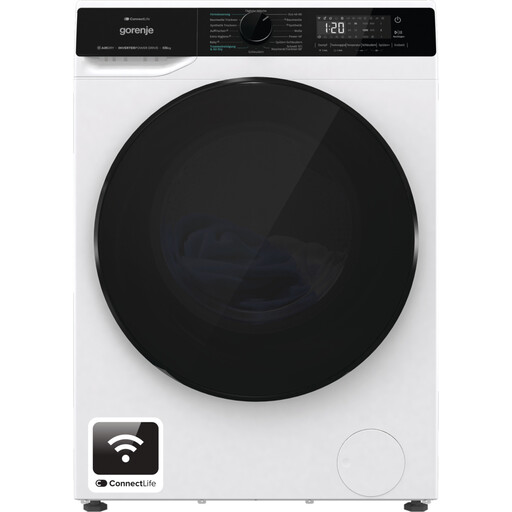
Gorenje WD2PA854ADW
This model may be an option for washing shirts in a washer-dryer, provided its 5 kg capacity is enough for a complete wash-and-dry cycle. It’s listed with a washing capacity of 8 kg, as well as a Shirts/Blouses programme and SteamTech.
View at Joybuy
Frequently asked questions
Can every cotton shirt go straight into the tumble dryer after washing?
No. Always follow the care label on the individual shirt. Care symbols distinguish, among other things, between normal and low-temperature drying, and indicate when tumble drying is prohibited; the fibre description alone isn’t enough. Germany’s consumer advice centre provides care symbols explained by GINETEX Germany.
What should I check before installing a washer-dryer?
Check the space available and the clearance for the door, as well as the water inlet, drain and level positioning, using the instructions for the specific model. LG notes that installation requirements and features vary by model.
How do I compare a washer-dryer’s energy use?
Compare the EU energy label figures for washing and washing plus drying separately, particularly the electricity use per 100 cycles for the operating mode you’ll actually use. How often you tumble-dry will affect which figure is most relevant to your routine.
How can I help prevent odours after use?
Don’t leave wet laundry sitting in the machine for long, and wipe the rubber seal and detergent drawer dry after washing. Germany’s consumer advice centre also recommends letting the machine dry out; if your appliance has a lint filter, follow its instructions.
Which labelling rules apply to new domestic washer-dryers sold in Germany?
Domestic washer-dryers newly placed on the market in Germany must meet EU ecodesign and energy-labelling requirements. According to the European Commission, the energy label provides information on efficiency, consumption, programme duration and noise, among other things; it doesn’t impose a particular efficiency class as a general purchase requirement.
Where should I take an old washer-dryer?
Don’t put old electrical appliances in household waste. Germany’s Environment Agency lists local collection points and the option to return large old appliances when buying a replacement, including online purchases with delivery. The German Federal Government confirms that changes to the collection and labelling of return points came into force on 1 January 2026.


