A washer-dryer makes most sense when you have limited floor space, the care labels say your shirts can be tumble dried, and neither air-drying nor safely stacking separate appliances is practical. The Verbraucherzentrale notes that washer-dryers use more electricity and water than separate appliances. So compare the actual dimensions, the smaller wash-and-dry capacity and the consumption figures for the complete wash-and-dry cycle. A steam programme does not guarantee crease-free shirts.
Who is a washer-dryer suitable for?
Homes without space to dry clothes
If you only have space for one appliance and can rarely hang shirts up to dry, check that a washer-dryer will fit with the necessary clearance and that your shirts are within its permitted drying load. The Verbraucherzentrale explains the space-saving advantage of washer-dryers, while GINETEX explains the care symbols for tumble drying.
People who take care with their shirts
You want to wash your cotton shirts according to their care labels and only tumble dry them if permitted. GINETEX, the European Commission and Bosch Hausgeräte Deutschland offer guidance on care symbols, programmes and model-specific features.
People who regularly wash large loads
If you need to get through several loads, consider whether the smaller drying capacity and longer combined cycles suit your routine, or whether a safely stacked pair of appliances is an option. The Verbraucherzentrale and Bosch Hausgeräte Deutschland explain how to compare consumption and installation requirements.
What should you look for when buying?
Washer-dryer
A good fit if: you have space for only one appliance and the care labels say your shirts can be tumble dried.
The trade-off: The Verbraucherzentrale notes that washer-dryers use more electricity and water than separate appliances; the combined capacity determines the load size for each cycle.
Washing machine and air-drying
A good fit if: you have a suitable place to hang your washing and the care labels say your shirts can be treated this way.
The trade-off: You won’t need a machine drying cycle, but you’ll need to allow time and space for hanging your shirts up.
Washing machine with a stacked tumble dryer
A good fit if: you have enough vertical space and the manufacturer confirms that the two appliances can be safely stacked.
The trade-off: Bosch Hausgeräte Deutschland recommends using a suitable stacking kit. Stacking isn’t an option if the installation isn’t suitable in your home.
| What matters when buying |
What to check |
Who it matters most to |
| Space and installation |
Check the appliance dimensions and the clearance needed in the installation space. For a stacked setup, check that both appliances are compatible and choose the right stacking kit according to the manufacturer’s instructions. |
If there’s room for only one appliance where I plan to put it, I want to know whether a washer-dryer will fit with enough clearance; around 33% of consumers put a suitable installation first. |
| Caring for cotton shirts |
Check the washing and drying symbols on each shirt, as well as the programme instructions. GINETEX explains care symbols; steam and crease-reduction functions vary by model. |
For cotton shirts, I want to follow the care label rather than assume the fabric is suitable for tumble drying; around 27% of consumers prioritise the right care for their shirts. |
| Drying capacity and cycle |
Compare your usual load with the stated wash-and-dry capacity, not just the washing capacity. The Bosch WNA14491 is listed as 9 kg for washing and 5 kg for wash-and-dry; the LG W4WR7096YB as 9 kg for washing and 6 kg for drying. |
If I want to dry a full wash load without having to split it unexpectedly, I compare the stated combined capacity; around 20% of consumers pay particular attention to the load size that can be dried in one go. |
| Electricity and water use |
Compare consumption figures for the complete wash-and-dry cycle on the same basis. The European Commission distinguishes between figures for washing and combined operation on the energy label. |
If I regularly use the drying function, I want to compare figures for the complete cycle rather than just the wash programme; around 20% of consumers focus on running costs. |
Common buying mistakes
-
Comparing only the washing capacity
The maximum washing load may be larger than the load the appliance can handle in a complete wash-and-dry cycle. For example, the Bosch WNA14491 is listed as 9 kg for washing and 5 kg for wash-and-dry, while the LG W4WR7096YB is listed as 9 kg for washing and 6 kg for drying.
Compare your usual drying load with the stated wash-and-dry capacity.
A larger wash load may need to be split into extra drying loads, taking more time.
-
Assuming all cotton is suitable for tumble drying
Whether a shirt can be tumble dried depends on its care label. A marketed crease-reduction or steam function doesn’t guarantee crease-free shirts.
Check the care symbols first, then choose the right programme and stay within its load limit. Treat claims about crease-reduction features as manufacturer claims that apply to specific models.
-
Assuming wash figures apply to combined cycles
The EU energy label distinguishes between washing and the complete wash-and-dry cycle. The Verbraucherzentrale also notes that washer-dryers can use more electricity and water than separate appliances.
Compare figures on the same basis and factor in the complete combined cycle before making your decision.
If you dry clothes frequently, electricity and water costs can make a bigger difference to your running costs.
-
Not considering a stacked setup
Stacking appliances can make use of vertical space that would otherwise be needed for two appliances side by side. However, you’ll need enough height, compatible appliances and secure fixings.
Check the installation requirements in the manufacturer’s instructions. Bosch Hausgeräte Deutschland recommends using a suitable stacking kit.
Selected models from leading brands
Bosch
The Bosch WNA14491 washer-dryer is listed with a 9 kg washing capacity, a 5 kg wash-and-dry capacity and a depth of 565 mm. Bosch Hausgeräte Deutschland lists Iron Assist and Auto Dry for this model.
- The stated dimensions and capacities are useful when planning where to put the appliance and how much washing to load.
- The combined capacity is lower than the washing capacity. Bosch’s crease-reduction claim is a manufacturer statement, not a guarantee for every shirt.
LG
LG Deutschland lists the W4WR7096YB with a 9 kg washing capacity, a 6 kg drying capacity and a cotton programme.
- The stated capacities make the difference between the wash load and drying load clear.
- The drying capacity is lower than the washing capacity. According to LG, claims about extra fabric protection apply to specific comparison models and test loads, not every shirt.
AEG
AEG Deutschland lists the L9WEF80690 with a 9 kg washing capacity, a 6 kg wash-and-dry capacity and heat-pump drying.
- AEG lists energy consumption of 252 kWh per 100 complete wash-and-dry cycles for this model and includes a steam-refresh function.
- The consumption figure applies to this model and the stated cycles; without comparable figures, it doesn’t establish a general advantage.
Siemens
Siemens Hausgeräte Deutschland lists the WN44G243 with a 10.5 kg washing capacity and a 6 kg wash-and-dry capacity. The model also features smartFinish.
- The stated washing capacity is useful when planning larger wash loads.
- The maximum load for a complete combined cycle is 6 kg. The advertised reduction in creasing is a manufacturer claim.
Samsung
Samsung lists its Bespoke AI washer-dryer, launched in Germany, with an 18 kg washing capacity, an 11 kg drying capacity and heat-pump drying.
- The stated capacities are aimed at households with large loads.
- A large capacity doesn’t remove the need to check the actual external dimensions when space is tight. Samsung also recommends checking the door frame width before delivery.
Washer-dryers at Joybuy
The product cards below feature washer-dryers with combined washing and drying functions. Pay particular attention to the stated drying capacity, dimensions and care instructions for your shirts.
 No image available
LG WT1210WWF front-loading washer-dryer
For homes with space for one appliance, if your shirts’ care labels allow tumble drying; the drying capacity is lower than the washing capacity.
12 kg washing, 10 kg drying; Dual Inverter heat pump, AI DD and steam function.
View at Joybuy
 No image available
Samsung washer-dryer, 9 kg / 6 kg
For homes with space for one appliance, if a washer-dryer suits your setup and the care labels say your shirts can be tumble dried; the drying load is smaller than the washing load.
9 kg washing, 6 kg drying, 1400 rpm and AI EcoBubble; energy ratings A for washing and D for combined operation.
View at Joybuy
 No image available
Roborock Zeo Lite Grey
For homes with space for one appliance, if you want to wash and dry in a single appliance; the lower drying capacity applies to a combined cycle.
10 kg washing and 6 kg drying; energy rating E.
View at Joybuy
 No image available
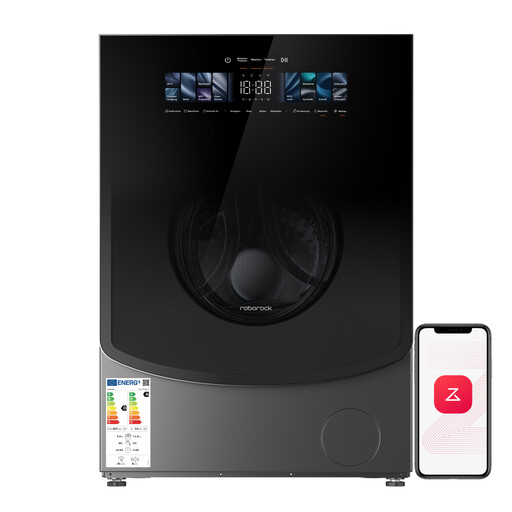
Roborock Zeo X
For homes with space for one appliance, if you want to run a combined wash-and-dry cycle; larger wash loads may exceed the stated drying capacity.
11 kg washing and 6 kg drying; 27 programmes; energy rating A.
View at Joybuy
 No image available
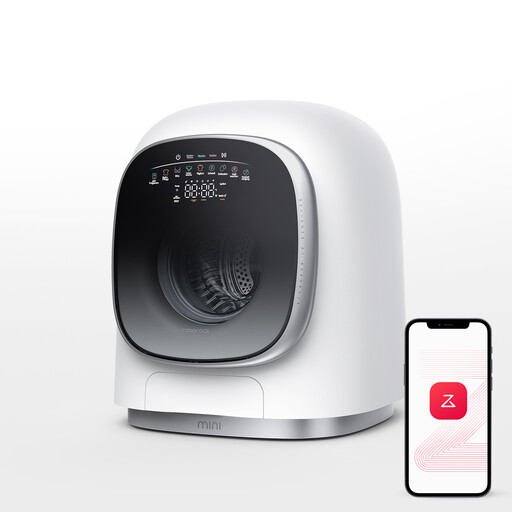
Roborock Zeo Mini
For homes with space for one appliance, if the stated small washing and drying capacities suit your needs; bear the capacity in mind if you need to wash larger loads of shirts.
1 kg washing and 0.5 kg drying; energy rating A.
View at Joybuy
Frequently asked questions
Can every cotton shirt go in a washer-dryer?
No. Check the symbols on each shirt: a crossed-out tumble-dryer symbol means it must not be tumble dried. The care label also tells you the right washing temperature and how gently to treat it.
Is Eco 40–60 suitable for all cotton shirts?
No. The European Commission describes Eco 40–60 as being for normally soiled cotton that the care label says can be washed at 40 °C or 60 °C. Also check the care label and the programme instructions for your specific appliance.
What should I check before stacking a washing machine and tumble dryer?
Check the available height, installation space, compatibility of both appliances and the right stacking kit according to the manufacturers’ instructions. Bosch Hausgeräte Deutschland recommends placing the tumble dryer on top of the washing machine, not the other way round.
Which capacity matters for a complete wash-and-dry cycle?
Check the stated wash-and-dry or drying capacity, not just the larger washing capacity. Compare it with your usual load to see whether you’ll need to split your washing before drying it.
How do I compare washer-dryer energy and water use?
Compare figures for the complete wash-and-dry cycle on the same basis, rather than comparing them with figures for washing alone. The European Commission explains that the energy label gives separate figures for washing and combined operation.


