Who is a washer-dryer suitable for?

Households with no space to dry clothes

If you have little room for a drying rack, an appliance that combines washing and drying could be an option when you only have space for one appliance. The key is to check that the dimensions fit your space and that the drying capacity suits your load.

Households that regularly wash mixed loads

If you wash socks with other cotton items, check how much of the load can then be dried. Washing and drying capacities are listed separately, and the lower drying capacity may mean you need to split the load.

Households mindful of costs and fabrics

If you use the dryer frequently, compare the consumption figures for a complete wash-and-dry cycle and check the care labels on each pair of socks. The Verbraucherzentrale advises against judging combination appliances on washing efficiency alone.

What should you look for when buying?

Washer-dryer

A good fit if: You have little space to dry clothes and can only accommodate one suitable appliance.

Consider: Drying capacity should be considered separately from washing capacity. Check the relevant consumption figures for a complete cycle.

Washing machine and separate tumble dryer

A good fit if: You have room for both appliances and regularly want to dry larger loads.

Consider: Check that both appliances can be installed safely in the intended location; don’t assume one option will always use less energy.

Wash and air-dry

A good fit if: You have a practical space for hanging clothes, or somewhere to air-dry your socks.

Consider: Air-drying takes up space and time, but avoids using a machine to dry your clothes.

What matters What to check before buying Who should pay particular attention?
Space and installation location Check the appliance dimensions, access route and installation instructions against the intended location. If I only have room for one suitable appliance, I need to make sure it can actually be installed there. That’s why around 36% of consumers put suitable dimensions and location first.
Drying capacity Check the washing and drying capacities separately, and compare the drying load with the amount of laundry you usually wash. If I want to dry socks with other laundry, the key figure is how much the dryer can hold. For around 29% of consumers, drying capacity is the main consideration.
Electricity and water consumption Compare figures for the same operating mode, particularly kWh per 100 complete wash-and-dry cycles. If I regularly use the dryer, I want to understand the consumption for a complete cycle. Around 21% of consumers focus first on running costs.
Whether the socks are suitable for tumble drying Check the care label on each pair and follow the stated temperature guidance. If I want to tumble-dry cotton socks, the care label must allow it for that particular pair. Around 14% of consumers put sock care first.

Common buying mistakes

  • Assuming the washing and drying capacities are the same

    The two figures are listed separately, so a larger wash load may be too big for the drying cycle that follows.

    If you want to run a complete wash-and-dry cycle, plan your load around the stated drying capacity, not just the washing capacity.

    Depending on the load, you may need extra drying cycles or space to hang some items up.

  • Comparing only the washing efficiency rating

    The label distinguishes between washing and a complete wash-and-dry cycle. So a washing figure alone doesn’t tell you how the appliance performs when both functions are used.

    Compare the same operating mode across the models you’re considering, and check the electricity and water figures.

  • Tumble-drying all cotton socks without checking

    Cotton alone doesn’t mean a garment is suitable for tumble drying: the care label may limit or rule it out. GINETEX Germany’s care symbols distinguish, among other things, between low and normal drying temperatures and a ban on tumble drying.

    Check the symbol on each relevant pair. Socks that can’t go in the dryer will need somewhere to air-dry.

  • Assuming limited space means the appliance will fit

    Combination appliances come in different sizes and have different installation requirements. A tight space doesn’t automatically mean a particular model will fit.

    Measure the space and access route, and check the instructions for the full model code before ordering.

Brands to consider

LG

The models listed include a conventional washer-dryer and one explicitly described as a heat-pump washer-dryer.

  • LG Germany lists a washing capacity of 9 kg and a drying capacity of 6 kg for both the W4WR7096YB and HPWD096C.
  • LG Germany gives the HPWD096C an A energy rating for both operating modes.
  • These figures apply to the models listed and don’t establish that they’re suitable for every pair of socks.

AEG

The L9WEF80690 is described as a heat-pump washer-dryer, with figures for a complete cycle available for comparison.

  • AEG lists a washing capacity of 9.0 kg and a drying capacity of 6.0 kg, plus a C energy rating for washing plus drying and 252 kWh per 100 complete cycles.
  • The manufacturer’s information about gentle drying doesn’t replace the care instructions for each item.

Beko

Specific dimensions are listed for the freestanding BM3DT4944W washer-dryer.

  • Beko lists a height of 84.9 cm, a width of 60 cm and a depth of 57 cm, as well as a spin noise level of 76 dB(A).
  • The manufacturer’s description of AquaWave movement isn’t an independent performance test; the dimensions apply to this model only.

Washer-dryers at Joybuy

The Joybuy options below range from washer-dryers with separate washing and drying capacities to compact models for smaller loads.

Roborock Zeo Lite washer-dryer

Roborock Zeo Lite, 10 kg wash / 6 kg dry

A combined washing and drying solution for households looking to use both functions in the space available for one appliance.

10 kg washing and 6 kg drying capacity; E energy rating. The product name mentions Zeo-Cycle drying and a self-cleaning lint system.

View at Joybuy

LG WT1210WWF washer-dryer

LG WT1210WWF, 12 kg wash / 10 kg dry

An option for households that need a higher stated drying capacity than smaller-load models offer.

12 kg washing and 10 kg drying capacity; the product name mentions Dual Inverter Heat-Pump technology.

View at Joybuy
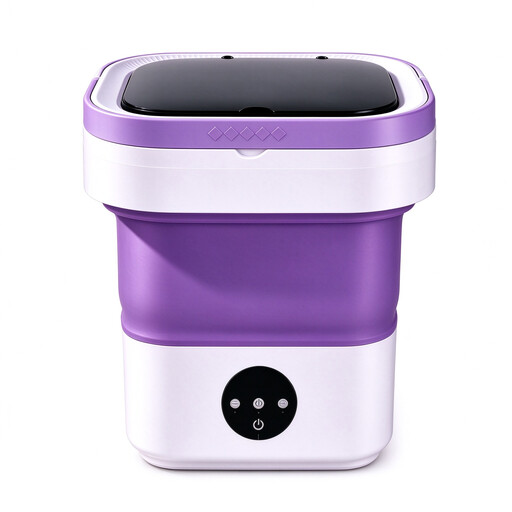
Foldable mini washer-dryer for small loads

Foldable mini washing machine with dryer function, 12 l

The product description presents this foldable appliance as suitable for small textiles and compact spaces.

12 l washing capacity; described as a foldable washing machine with a dryer function.

View at Joybuy

Beko BM3DT4944W washer-dryer

Beko BM3DT4944W, 9 kg wash / 6 kg dry

A freestanding combination appliance for a single appliance space. Its separate capacities make it easier to check whether it suits your usual load.

9 kg washing and 6 kg drying capacity; 1.400 U/min; D energy rating. The product description lists cotton and Wash+Dry programmes.

View at Joybuy
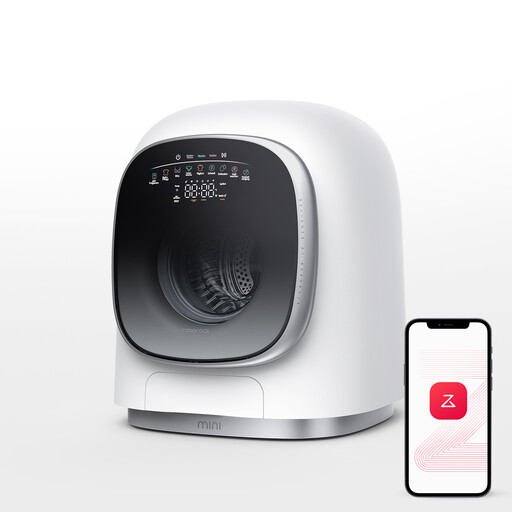
Roborock Zeo Mini washer-dryer

Roborock Zeo Mini, 1 kg wash / 0.5 kg dry

For small loads, provided the stated drying capacity is suitable for the items you’re washing.

1 kg washing and 0.5 kg drying capacity; A energy rating. The product name mentions Zeo-Cycle low-temperature drying.

View at Joybuy

Frequently asked questions

Can cotton socks go straight into the tumble dryer after washing?

Only if the care label on that particular pair allows tumble drying. GINETEX Germany’s care symbols also distinguish between low and normal temperatures. If the label says not to tumble-dry, don’t put the socks in the machine.

Can I dry a full wash load without taking anything out?

Not necessarily: compare the model’s separately listed washing and drying capacities. For example, the manufacturer gives the AEG L9WEF80690 a washing capacity of 9.0 kg and a drying capacity of 6.0 kg.

What should I check before installing and connecting the appliance?

Check that the space and access route suit the dimensions of the specific appliance, and follow its installation and safety instructions. Beko’s stated dimensions of 84.9 × 60 × 57 cm apply to the BM3DT4944W, not to other appliances.

How do I compare energy use when washing and drying?

If you regularly combine both steps, compare electricity use per 100 complete wash-and-dry cycles and check the water figures on the same programme basis. The European Commission lists figures for washing and washing plus drying separately.

Which energy label details matter for a washer-dryer?

Check the figures for both operating modes, and make sure you’re comparing like with like: washing alone or the complete wash-and-dry cycle. The EU requires energy labels to be visible in online shops too; the label doesn’t prescribe a particular energy rating for your purchase.