House share with limited drying space
If there’s room for only one appliance, a washer-dryer can combine washing and drying. The Verbraucherzentrale points out that drying capacity may be lower than washing capacity.


A washer-dryer can be a good fit for a house share with limited space for appliances and drying, provided the care label allows the underwear to be tumble dried and the smaller drying capacity suits your laundry routine. If air-drying is an option, the higher energy consumption of washer-dryers may make a washing machine the better choice. If you regularly wash large loads and have room for two appliances, separate machines are another option. Before buying, compare the drying capacity, the duration of a complete wash-and-dry cycle, and the consumption figures for both operating modes.
If there’s room for only one appliance, a washer-dryer can combine washing and drying. The Verbraucherzentrale points out that drying capacity may be lower than washing capacity.
If you share set time slots, factor in the duration of a complete wash-and-dry cycle. The European Commission lists cycle duration as one of the labelling criteria for washer-dryers.
If there’s space to hang laundry or install two appliances, it’s worth weighing the energy used for tumble drying against how often you plan to use it. The Umweltbundesamt recommends choosing a washing machine rather than a washer-dryer, as washer-dryers use more energy.
A good fit if: There’s only one suitable spot for an appliance in your house share and your laundry can be tumble dried.
What to consider: Drying capacity is lower than washing capacity, so check that your load will fit the drying cycle without needing to be split.
A good fit if: You have somewhere to dry laundry and don’t need every load to be tumble dried straight away.
What to consider: You’ll need space to hang your laundry. As the Verbraucherzentrale explains, if you dry clothes indoors, it’s important to ventilate and heat the room sufficiently.
A good fit if: You have room for two appliances and regularly wash and dry larger loads.
What to consider: You’ll need two spaces for appliances and will have to transfer the laundry between them. The Verbraucherzentrale considers separate appliances more energy-efficient than washer-dryers.
| Priority | What to check when buying | Who it matters most to |
|---|---|---|
| Fabric care | Check for a cotton programme and the permitted temperature. Before drying, check the tumble-drying symbol on each item. | If I want to care for my underwear according to its care label, it’s important that the temperature and drying programme are suitable for each item. Around 33 % of consumers put fabric care first. |
| Time the machine is in use | Compare the duration of a complete wash-and-dry cycle at a suitable load size with the house share’s usage schedule. | If several housemates share set laundry times, I want to know how long the machine will be occupied before the laundry is dry. Around 27 % of consumers prioritise a laundry schedule that works for everyone. |
| Space for the appliance | Measure the installation space, route for delivery, connections and appliance dimensions. Allow room to open and connect the appliance. | If space is limited, I want to fit in both washing and drying functions without overlooking the smaller drying load. Around 20 % of consumers put available space for the appliance first. |
| Running costs and water protection | Compare the EU label figures for washing and washing-and-drying separately. Also check water consumption and the model’s water-protection features. | If air-drying is an option for me, I want to weigh the extra electricity and water use against the convenience of tumble drying. Around 20 % of consumers put running costs first. |
Drying capacity may be lower. If the whole wash load won’t fit in the drying cycle, you’ll need to remove some laundry or dry it another way.
Compare both capacities with a typical load for your house share.
An oversized wash load may mean extra drying cycles or space to hang some laundry while you wait.
The EU label gives separate figures for washing and washing-and-drying. The washing rating alone therefore doesn’t tell you how much energy a combined cycle uses.
Compare the figures for the operating mode you’ll actually use regularly.
The duration of a quick wash programme doesn’t tell you how long washing and drying together will take. A complete cycle may keep a shared machine in use for longer.
Check the duration of a complete programme at a load size that suits your needs.
The cotton content alone doesn’t determine how a garment can be treated. Always follow the care label on the individual item.
Check the care labels on the underwear you actually use before choosing an appliance.
For its W4WR7096YB washer-dryer, LG lists a washing capacity of 9 kg and a drying capacity of 6 kg.
According to the manufacturer, the Bosch WNC244070 from the Series 8 is a washer-dryer with a 9 kg washing capacity, a combined capacity of 6 kg and AquaStop.
The AEG L9WEF80690 from the 9000 series is a 9/6 kg option with heat-pump drying.
According to the manufacturer, the Siemens WN54C2A40 iQ700 has a 10.5 kg washing capacity, a combined capacity of 6 kg and automatic detergent dosing.
This selection includes washer-dryers for a shared appliance space, as well as compact appliances for small personal loads. For the smaller models, pay particular attention to whether their capacity suits the laundry you share with your housemates.
 No image available
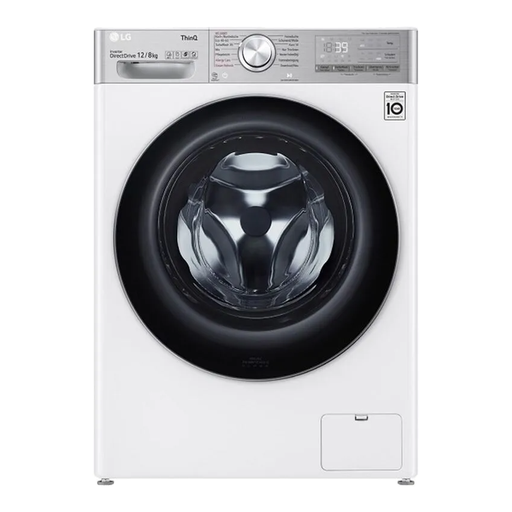
For a house share looking to combine washing and drying in one appliance space. The stated drying capacity is 10 kg, compared with 12 kg for washing.
The product name specifies Dual Inverter heat-pump drying.
 No image available
An option for a house share that needs washing and drying functions in one appliance. The product description lists a cotton programme.
Before comparing, check the separate drying capacity and the consumption figures for washing and washing-and-drying.
 No image available
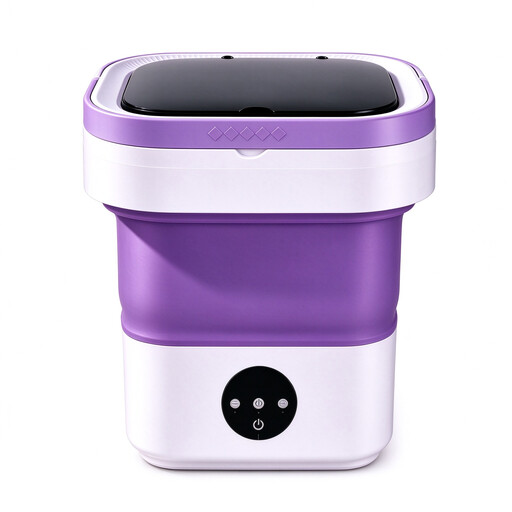
For small personal loads, rather than as a solution for all the laundry in a house share. The description gives a capacity of 12 L and says it can hold up to 1.5 kg of laundry.
The product name describes it as a portable, foldable appliance with washing, drying and sterilising functions.
 No image available
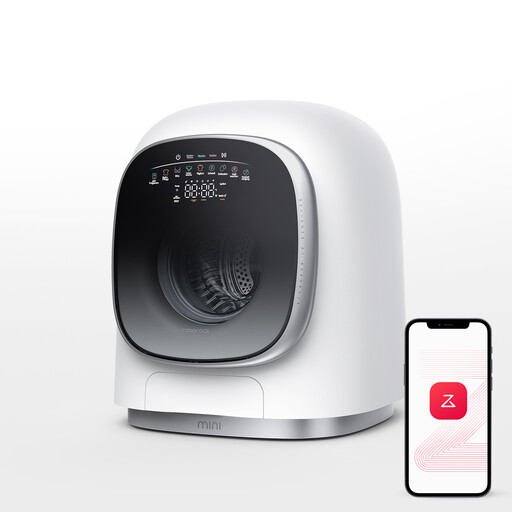
For small personal loads, with a stated capacity of 1 kg for washing and 0.5 kg for drying.
The product name specifies low-temperature drying. Check whether the capacity is enough for your laundry needs.
No. The Umweltbundesamt says there’s no need to routinely disinfect laundry belonging to healthy household members when it’s normally soiled; for underwear, it recommends 40 or 60 °C. Follow the care label for the permitted temperature. If someone has a contagious illness or a weakened immune system, a different approach may be needed.
No. The tumble-drying symbol on each individual item is what matters. GINETEX explains that care symbols specify the permitted treatment. The load must also be within the appliance’s drying capacity.
Measure the space and delivery route, and check that the connections and installation comply with your tenancy agreement or house rules. A water-protection system doesn’t replace a suitable connection; the Verbraucherzentrale recommends water protection to help prevent damage.
On the EU label, compare the figures for washing-only cycles separately from wash-and-dry cycles, and make sure they use the same basis, such as kWh per 100 cycles. Also consider water consumption and how often your house share will actually use tumble drying. To work out your own costs, you’ll also need to factor in your electricity and water tariffs.