Households with limited drying space
If there’s no suitable space in your utility room for an airer or a separate tumble dryer, consider whether a washer-dryer could finish drying suitable laundry straight in the appliance.


A washer-dryer is a good fit if you often want to dry tumble-dryer-safe cotton underwear straight after washing, and have little room in your utility room for an airer or two separate appliances. If you have space to air-dry clothes or install separate appliances, consider those options too: the Verbraucherzentrale (German consumer advice centre) points out that washer-dryers can use more electricity and water than a washing machine and separate tumble dryer. You should also check the care label, the lower capacity for washing and drying in one cycle, and the consumption figures for the programmes you’ll actually use.
If there’s no suitable space in your utility room for an airer or a separate tumble dryer, consider whether a washer-dryer could finish drying suitable laundry straight in the appliance.
If you often wash cotton underwear with other suitable cotton items, make sure the load you have in mind fits the capacity for a combined wash-and-dry cycle.
If you could also air-dry your laundry or use separate appliances, compare the consumption figures for the wash and dry cycles you actually plan to use, rather than looking at the wash cycle alone.
A good fit if: You often want to dry laundry without moving it between appliances, and space for appliances or drying is limited.
Consider: The load for a continuous cycle is limited by the usually lower wash-and-dry capacity; combined operation has its own consumption figures.
A good fit if: There’s room to dry laundry in your utility room and you don’t need it to be dry straight away.
Consider: Air-drying takes time and space; as the Verbraucherzentrale explains, good ventilation is important when drying clothes indoors.
A good fit if: You have room for two appliances and regularly want to machine-dry larger loads of laundry.
Consider: You’ll need more space and will have to move laundry from one appliance to the other.
| What matters when buying | What to check | Who is this important to? |
|---|---|---|
| Cleaning and fabric care | Check the care label, recommended wash temperature, tumble-drying symbol and suitable programmes. | When washing cotton underwear, I want to follow the care label and check whether it’s suitable for tumble-drying, rather than automatically choosing an extra programme. Around 33 % of consumers put suitable cleaning and fabric care first. |
| Load size for a continuous cycle | Compare the washing capacity and combined wash-and-dry capacity separately, in kg. | If I don’t want to remove anything after washing, the entire tumble-dryer-safe load needs to fit the combined cycle. Around 20 % of consumers prioritise a suitable load size for a continuous cycle. |
| Space in the utility room | Check the appliance dimensions and required connections against the installation space; also consider the room needed for an airer or two appliances. | If space is limited, I want to decide in advance whether a combined appliance, two separate appliances or an airer is practical. Around 20 % of consumers put the available installation or drying space first. |
| Consumption in the chosen mode | Compare energy and water figures for equivalent operating modes and check how they match your intended usage. | If I regularly machine-dry my laundry, I want to estimate the cost of the combined cycle I’ll actually use, not just the wash cycle. Around 27 % of consumers focus primarily on consumption during use. |
For cotton underwear, the Umweltbundesamt (German Environment Agency) recommends washing at 40 or 60 °C for hygiene reasons. However, the suitable temperature and drying method still depend on the care label for each item.
For the models documented here, the washing capacity may be higher than the amount that can be dried in the same cycle.
If you want to run a cycle without removing laundry in between, plan your load according to the stated wash-and-dry capacity and check that the items are suitable for tumble-drying.
A larger wash load may need a second drying cycle, which means using the appliance for longer.
The figures for washing and for washing plus drying refer to different operating modes. The washing figure alone doesn’t show how much regular combined cycles will use.
Compare the figures for the mode you actually plan to use and take your usage frequency into account.
The Umweltbundesamt says extra disinfection isn’t needed for normally soiled laundry in a healthy household.
Follow the care label and don’t choose a special programme based on its name alone. Different considerations apply if you have specific hygiene requirements.
The Verbraucherzentrale points out that washer-dryers can use more electricity and water than a washing machine and separate tumble dryer.
If you have the space, compare air-drying and separate appliances too, based on how you use them and their respective consumption figures.
The WNA14441 is a specific model you can use to compare capacity and dimensions.
The LWR9W81609 combines a 10 kg washing capacity with a 6 kg combined capacity and heat pump drying.
The HPWD096C is an example of a model with a 9 kg washing capacity and a 6 kg drying capacity.
The B5DBT6941W adds a freestanding washer-dryer with a 9 kg washing capacity and a 6 kg drying capacity to the comparison.
This selection includes washer-dryers as well as a stacked washing machine and tumble dryer. First, check whether you’re looking for a combined appliance or two separate appliances stacked on top of each other.
 No image available
This stacked unit includes a washing machine and a tumble dryer. It could suit households looking for two appliances in a space-saving stacked configuration.
Capacity: 12 kg washing and 10 kg drying. Dimensions: 60 × 165,5 × 66 cm.
 No image available
This washer-dryer may be a good option if you want to combine washing and drying in one appliance; your planned load needs to fit the drying capacity.
Capacity: 12 kg washing and 10 kg drying. The product name specifies a Dual Inverter heat pump.
 No image available
The separate capacities make it easier to work out whether you can dry a planned wash load in the same appliance without removing anything.
Capacity: 9 kg washing and 6 kg drying; spin speed: 1400 rpm. The product name lists energy class A for washing and D as the overall rating.
The product description lists 32 kWh per 100 wash cycles and 308 kWh per 100 wash-and-dry cycles for this model.
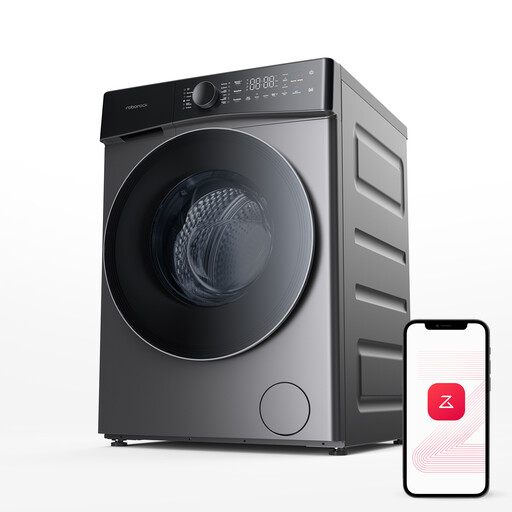 No image available
The combined capacity of 6 kg is the key limit if you want to dry laundry in one cycle without removing anything.
Capacity: 10 kg washing and 6 kg drying. The product name specifies heat pump drying and energy class E.
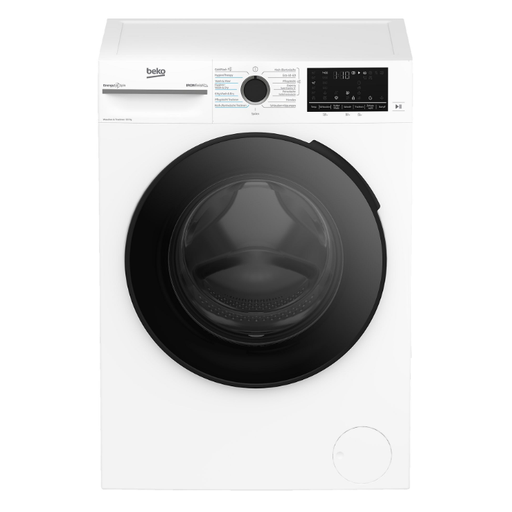 No image available
If you’re planning a continuous wash-and-dry cycle, compare the 6 kg drying capacity with the actual amount of laundry that’s suitable for tumble-drying.
Capacity: 9 kg washing and 6 kg drying; spin speed: 1400 rpm. The product description lists a Cotton programme and Eco 40–60.
No, 60 °C isn’t necessary in every case. For hygiene reasons, the Umweltbundesamt recommends washing underwear at 40 or 60 °C; extra disinfection isn’t needed for normally soiled laundry in a healthy household. Follow the care label and take any specific hygiene needs into account.
Only if the items are suitable for tumble-drying and the combined load limit isn’t exceeded. For example, Bosch Hausgeräte Deutschland lists a capacity of 9 kg for washing and 5 kg for washing plus drying on the Bosch WNA14441.
Compare the dimensions of the specific model with the available space and check the required connections in the installation instructions. If you plan to dry laundry indoors instead, the Verbraucherzentrale recommends good ventilation and heating to help prevent damp damage.
Compare the figures for washing and washing plus drying separately, using the same basis. The European Commission describes energy labels for washer-dryers that show energy consumption per 100 cycles; for your choice, the key figure is for the operating mode you actually plan to use.