Who is a washer-dryer suitable for in a shared house?

Shared houses without suitable drying space

If you don’t have room to hang laundry, washing and drying in one appliance could be an option. Check the available space, connections and the lower capacity for a combined cycle. The consumer advice centre highlights this difference with washer-dryers.

Shared houses with a tight laundry schedule

If several people use the machine, a long wash-and-dry cycle could delay the next load. Compare the programme duration with your usual washing times and the information on the European Commission’s EU energy label.

Shared houses where face cloths are changed frequently

If suitable fabric care and a well-maintained shared machine matter to you, the care label and wash programme are more important than an advertised refresh programme. The Federal Environment Agency offers guidance on washing temperatures; the consumer advice centre recommends not leaving wet laundry in the machine for long and drying the seal and detergent drawer after washing.

What should you look for when buying?

Washer-dryer

A good fit if: Your shared house has room for just one suitable appliance and you don’t have space to dry laundry.

Things to weigh up: A combined cycle ties up the machine for longer, and the drying capacity is lower than the washing capacity. The consumer advice centre also points out that washer-dryers use more electricity and water than separate appliances.

Washing machine with air-drying

A good fit if: You have somewhere suitable to dry laundry and don’t need to use a tumble dryer regularly.

Things to weigh up: The cloths need space and time to dry. If you dry them indoors, make sure you allow for adequate ventilation and heating.

Washing machine and separate tumble dryer

A good fit if: You have room for two suitable appliances and your shared house often washes and dries larger loads.

Things to weigh up: Two appliances take up more space. According to the consumer advice centre, washer-dryers use more electricity and water than a washing machine and tumble dryer; compare the specific figures against how you plan to use them.

What matters to you What to check before buying Who is it important for?
Fabric care and hygiene Check the care label, suitable wash programmes and their load limits; don’t assume a refresh programme is the same as a suitable wash cycle. If I use face cloths close to my skin, I want to check the care label alongside the wash programme. Around 33% of consumers put suitable fabric care and clean cloths first.
No space to dry laundry Check the washing and drying capacities separately, and make sure the drying capacity matches the load you want to dry without splitting it. If there’s nowhere suitable to hang laundry in our shared house, I want to know whether the relevant load of cloths can be tumble-dried. Around 27% of consumers prioritise having no space to dry laundry.
Machine availability Compare the duration of wash-and-dry programmes with your housemates’ laundry schedules, and check the information on the European Commission’s EU label. If several housemates need to use the same machine, I want to know how long a combined cycle will tie it up. Around 20% of consumers put shared access to the machine first.
Electricity and water consumption Look at the figures for washing only and washing with drying separately; compare figures per 100 cycles only for the same operating mode. If we share the running costs, I want to compare the consumption figures for the way we actually plan to use the appliance. Around 13% of consumers prioritise electricity and water consumption.
Installation and water protection Check the appliance dimensions against the available space and the access it needs; check the connections and water protection system. If space is tight in our shared house, I want to make sure in advance that the appliance can be installed there with the necessary connections. Around 7% of consumers put installation and water protection first.

Which buying misconceptions should you avoid?

  • Looking only at the washing capacity

    With washer-dryers, the stated drying capacity is lower than the washing capacity. The consumer advice centre points out that often only part of a wash load can go straight into the dryer.

    Plan a combined cycle around the lower drying capacity and the appropriate programme.

    If you need to split a load, an extra drying cycle could tie up the shared machine for longer.

  • Assuming the washing efficiency rating applies to a combined cycle

    The EU energy label distinguishes between operating modes. The consumer advice centre notes that washer-dryers can use more electricity and water than the equivalent separate appliances.

    Compare kWh per 100 cycles and water consumption per cycle only for the same operating mode. The European Commission lists these figures for washer-dryers on the energy label.

    Frequent use of combined cycles could mean higher electricity and water bills than with the separate appliances being compared.

  • Confusing a steam refresh with a hygienic wash

    An advertised refresh programme doesn’t prove that it can replace a wash cycle suitable for the cloth.

    Follow the care label and the Federal Environment Agency’s guidance on washing temperatures; assess steam programmes separately.

Which manufacturers and models are worth considering?

LG

For the W4WR7096YB model, LG Germany lists a 9 kg washing capacity and 6 kg drying capacity, as well as an option for half loads.

  • These figures give you a useful starting point for comparing washing and drying capacity against your loads.
  • A half-load option doesn’t prove hygienic performance or low costs for washing individual cloths. The drying capacity is still lower.

Bosch

Bosch Home Appliances Germany lists a 9 kg washing capacity and a 6 kg capacity for washing and drying on the WNC244070, with appliance dimensions of 848 × 598 × 622 mm (H × W × D).

  • AquaStop and an add-laundry function are also listed for this model.
  • These details apply to the WNC244070, not all appliances from the brand; the combined cycle is limited to 6 kg.

AEG

AEG Germany lists the L9WEF80690 as a heat-pump washer-dryer, with a 9 kg washing capacity and 6 kg drying capacity.

  • For this model, AEG states 252 kWh per 100 combined cycles and 49 kWh per 100 wash-only cycles.
  • These consumption figures relate to different operating modes and shouldn’t be directly compared. Manufacturer claims about fabric care don’t prove a specific benefit for face cloths.

Haier

Haier Germany lists an 8 kg washing capacity and a 5 kg drying capacity for the HWD80-BP14637T, with appliance dimensions of 595 × 507 × 850 mm (W × D × H).

  • The stated depth may be useful when checking whether the appliance will fit in a tight space.
  • Check the dimensions against the actual space, including connections and the access needed; the 5 kg capacity limits the combined cycle.

Siemens

Siemens Home Appliances Germany lists a 10.5 kg washing capacity and a 6 kg capacity for combined washing and drying on the WN54C2A40.

  • The separate capacity figures help you check whether the appliance suits larger shared loads.
  • The higher washing capacity doesn’t increase the stated capacity for washing and drying; convenience features aren’t proof of hygiene performance.

Joybuy products for small laundry loads

The Joybuy products below include washer-dryers for small fabric loads and one built-in appliance. Capacities and installation types vary, so check them against your laundry schedule and the space available.
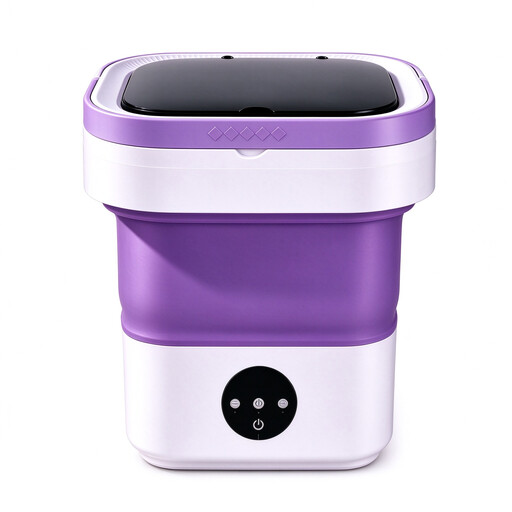
Foldable mini washer-dryer for small fabric loads

Foldable mini washer-dryer, 12 l

For small fabric loads; the product description states a washing capacity of up to 1.5 kg.

Described as a foldable, portable appliance; check that its limited capacity suits your usual shared-house loads.

View at Joybuy
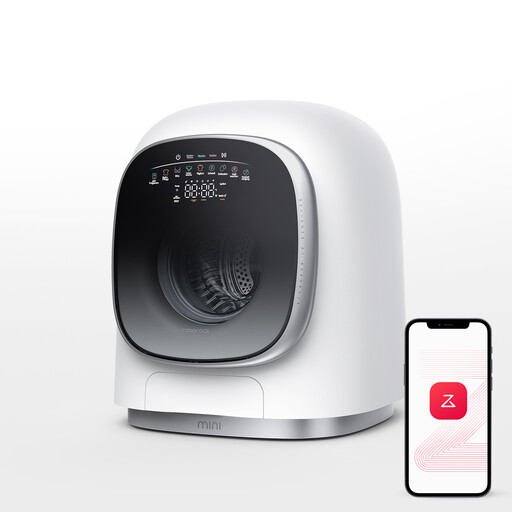
Roborock Zeo Mini washer-dryer

Roborock Zeo Mini washer-dryer

For very small loads; the product details state a washing capacity of 1 kg and a drying capacity of 0.5 kg.

The limited drying capacity restricts how much can be dried in one combined cycle.

View at Joybuy
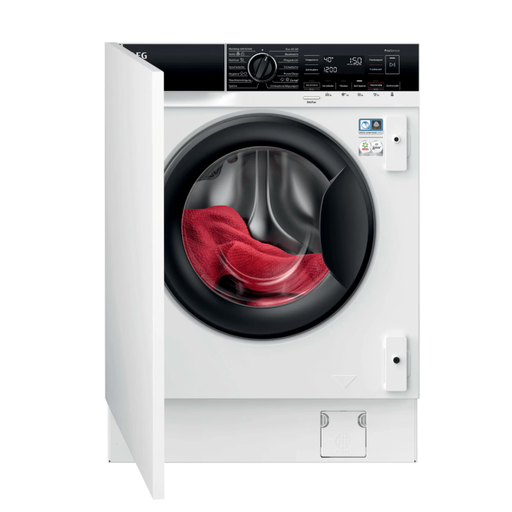
AEG LWR8WI7680 8000 Series PowerCare built-in washer-dryer

AEG LWR8WI7680 8000 Series PowerCare built-in washer-dryer

As a built-in appliance, this model is only an option if your shared house has a suitable integrated space.

8 kg washing capacity and 4 kg drying capacity; the product details state a minimum niche height of 82 cm.

View at Joybuy

Frequently asked questions about washer-dryers in shared houses

Do face cloths always need to be washed at 60 °C?

No, not as a general rule. For hygiene reasons, the Federal Environment Agency recommends washing towels at 40 or 60 °C. Also check the care label and consider your household’s circumstances. This isn’t a general instruction for specific health conditions.

How can you prevent smells in a shared washing machine?

Don’t leave wet laundry in the machine for long, and dry the seal and detergent drawer after washing. The consumer advice centre also recommends caring for the machine as instructed and regularly washing whites at 60 °C with powdered biological detergent.

Which consumption figure matters most when buying?

If you plan to use the dryer regularly, check the figures for washing and drying rather than looking only at the wash-only figures. The European Commission’s EU energy label lists, among other things, energy consumption per 100 cycles, as well as water consumption and programme duration per cycle.

Does a shared house in rented accommodation always need to ask the landlord before installing an appliance?

There’s no blanket yes or no. The consumer advice centre recommends discussing your specific circumstances with the landlord before installation and taking steps to prevent water damage.

Can you return an old washer-dryer when buying a new one in Germany?

Under the conditions set out in § 17 ElektroG, retailers must accept an equivalent old appliance free of charge when you buy a new one. Legal conditions apply to distance selling; if the appliance is delivered to your home, collection of the old one may be included. Check the specific return option with the retailer, and don’t put the old appliance in household rubbish.