Who might benefit from a washer-dryer?

Households without a suitable place to dry clothes

If you wash face cloths regularly but have nowhere practical to hang them, a washer-dryer lets you wash and dry them in the space taken up by a single appliance. The Verbraucherzentrale lists saving space as a potential benefit of washer-dryers.

Households with a tight appliance alcove

If you need to fit an appliance into an alcove, check the exact model’s width, depth and height, including connections, and compare its lower drying capacity with the size of your usual loads. Haier’s model examples have different dimensions and washing and drying capacities.

Households weighing hygiene and running costs

If you want to clean face cloths appropriately for the fabric while also considering how often to use a tumble dryer, compare the wash programmes and the figures for both operating modes. The German Environment Agency offers hygiene guidance for household textiles, while EU labels show consumption figures for the relevant cycles.

What should you look for when buying?

Compact washer-dryer

A good fit if: space is particularly limited and you only need to dry small loads in one go.

Bear in mind: drying capacity is limited. Haier lists a 5 kg wash capacity and a 2.5 kg wash-and-dry capacity for the HWD50-BP12307U1.

Washer-dryer with a standard front-loader footprint

A good fit if: you have room for a front-loading appliance but nowhere suitable to hang clothes.

Bear in mind: wash and drying capacities can differ considerably. Haier lists 8/5 kg for the HWD80-BP14637T, while LG lists 9/6 kg for the W4WR7096YB.

Washing machine with air-drying or a separate tumble dryer

A good fit if: you have enough space to hang clothes or accommodate two appliances, and regularly wash larger loads.

Bear in mind: air-drying takes space and time, while two appliances need more floor space. The Verbraucherzentrale notes that washer-dryers use more electricity and water than separate appliances.

Priority What to check when buying Who is most affected?
Drying without an airer Compare the drying capacity in kg and the duration of a complete wash-and-dry cycle with the load you plan to do. If I can’t hang damp face cloths somewhere practical, having one continuous wash-and-dry cycle matters to me. Around 33% of consumers say a lack of drying space is their main concern.
Fitting the installation space Check the appliance’s width, depth and height, as well as the space needed for the door to open and for connections at the exact installation location. If I have a tight alcove, I need to make sure the appliance will actually fit with its connections. Around 27% of consumers put the space available for the appliance first.
Suitable cleaning Compare the wash programmes and available temperatures with the care label and your hygiene needs. If cleaning my face cloths properly matters to me, I want to choose a wash programme that suits both the fabric and my household. Around 20% of consumers name hygiene as their main concern.
Running costs Compare electricity use for washing and for a complete wash-and-dry cycle, as well as water use, separately. If I dry clothes regularly, I also want to take the consumption of a complete cycle into account. Around 20% of consumers say running costs are their main concern.

Common buying mistakes

  • Looking only at wash capacity

    For the washer-dryers featured here, drying capacity is lower than wash capacity. That means a full wash load will not necessarily fit into a single continuous wash-and-dry cycle.

    Compare your planned load with the stated wash-and-dry capacity, not just the wash capacity.

    If you need to remove some of the laundry before drying, you’ll need a suitable place to keep it until the next cycle.

  • Assuming the wash efficiency rating applies to combined use

    The EU label distinguishes between the wash-only cycle and the complete wash-and-dry cycle. For example, Haier lists class A for washing and class E for combined use on its mini model.

    For the way you plan to use the appliance, check the consumption figures per 100 complete wash-and-dry cycles.

    If you use the machine to dry clothes frequently, the additional electricity and water consumption can affect your running costs.

  • Confusing a steam refresh with a hygienic wash

    A refresh function is not proof that used face cloths have been hygienically washed or disinfected.

    Wash textiles according to their care labels and your hygiene needs. Don’t treat a steam programme as a substitute unless there is evidence that it is effective for that purpose.

  • Judging the space savings without comparing alternatives

    A washer-dryer can save floor space, while air-drying requires a suitable place. If you can hang clothes to dry, you avoid using electricity for tumble-drying.

    Before buying, consider whether a well-ventilated drying space or two separate appliances would work for your household.

    Using the combined wash-and-dry cycle can mean higher electricity and water consumption.

Brands and specific model examples

Haier

Haier lists a 5 kg wash capacity and a 2.5 kg wash-and-dry capacity for the HWD50-BP12307U1, and 8/5 kg for the HWD80-BP14637T.

  • The listed dimensions vary by model: the HWD50-BP12307U1 measures 510 × 488 × 700 mm, while the HWD80-BP14637T measures 595 × 507 × 850 mm.
  • According to Haier, the HWD50-BP12307U1 is class A for washing and class E for combined use. Manufacturer claims about hygiene functions should not be taken as independently verified disinfection performance.

LG

LG lists a 9 kg wash capacity and a 6 kg drying capacity for the W4WR7096YB washer-dryer.

  • These figures relate to this specific model and make the difference in capacity between the two operating modes clear.
  • The capacities and features of this model cannot be assumed to apply to all LG washer-dryers.

Bosch

Bosch lists a 10.5 kg wash capacity, a 6 kg wash-and-dry capacity and dimensions of 848 × 598 × 590 mm for the Serie 6 WNG24443 washer-dryer.

  • The product details give specific dimensions and capacities to help you check the appliance against your available space and load size.
  • If you want to dry a full wash load straight away, you’ll need to take the lower combined capacity into account. These specifications are not the result of a comparative performance test.

AEG

AEG lists a 10 kg wash capacity and a 6 kg drying capacity for the LWR7F65605 washer-dryer.

  • The product data sheet gives separate energy consumption figures: 307 kWh per 100 complete wash-and-dry cycles and 51 kWh per 100 wash-only cycles.
  • The figures relate to different ways of using the appliance and should not be added together. AEG describes ProSteam as a refresh function, not a substitute for washing used face cloths.

Siemens

Siemens lists a range of iQ300 and iQ700 washer-dryers for the German market, with capacities that vary by model.

  • For certain models, Siemens lists features such as automatic dosing or sensor-controlled drying.
  • Check the model, capacity and programme options for the specific appliance you’re considering.

Washer-dryers at Joybuy

This selection of washer-dryers at Joybuy includes appliances that wash and dry in the space taken up by a single machine, including models for smaller loads.

Roborock Zeo Lite washer-dryer, grey

Roborock Zeo Lite, grey

For washing and drying in the space taken up by a single appliance, with different capacities for each function.

10 kg wash capacity and 6 kg drying capacity. The product title also mentions Zeo-cycle drying, a self-cleaning LintClear system and automatic dosing.

View at Joybuy
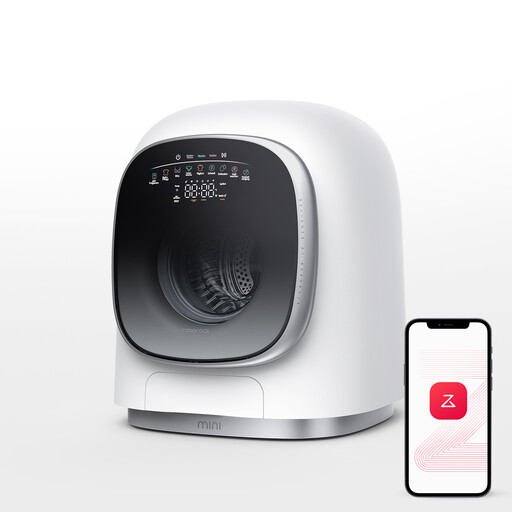
Roborock Zeo Mini mini washer-dryer

Roborock Zeo Mini

For very small loads when you need to wash and dry in the space taken up by a single appliance.

1 kg wash capacity and 0.5 kg drying capacity. The product title mentions low-temperature drying, a self-cleaning LintClear system and more than 20 wash and drying programmes.

View at Joybuy
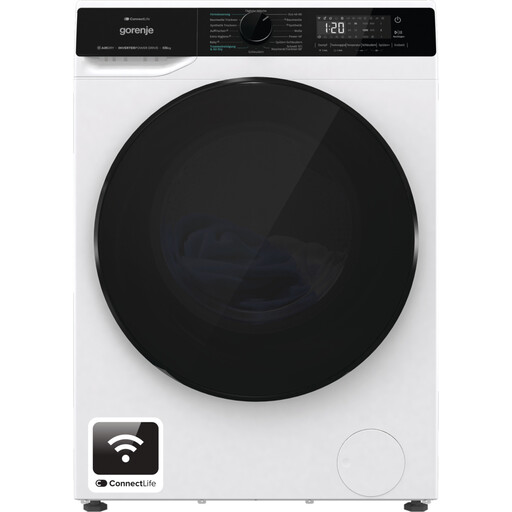
Gorenje WD2PA854ADW washer-dryer

Gorenje WD2PA854ADW, DE

A washer-dryer for households looking to combine washing and drying in the space taken up by a single appliance.

The product title lists 16 programmes and 1400 RPM. Before buying, check the specific wash and drying capacities and the dimensions required for your installation space.

View at Joybuy
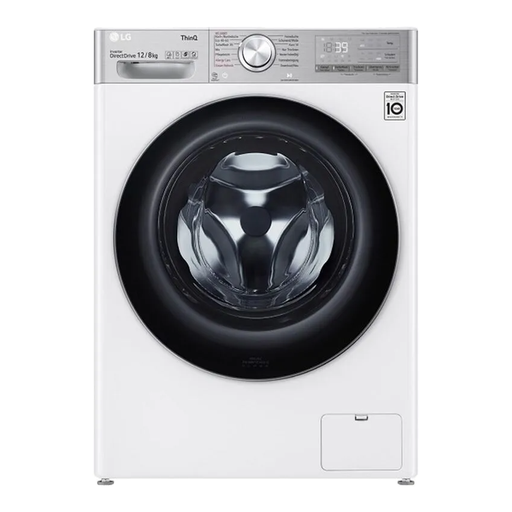
LG V9WD128H2 AI DD washer-dryer, white

LG V9WD128H2 AI DD, 12 kg, white

A washer-dryer for households looking to use both functions in a single appliance.

The product title lists a capacity of 12 kg, but does not specify a separate drying capacity.

View at Joybuy
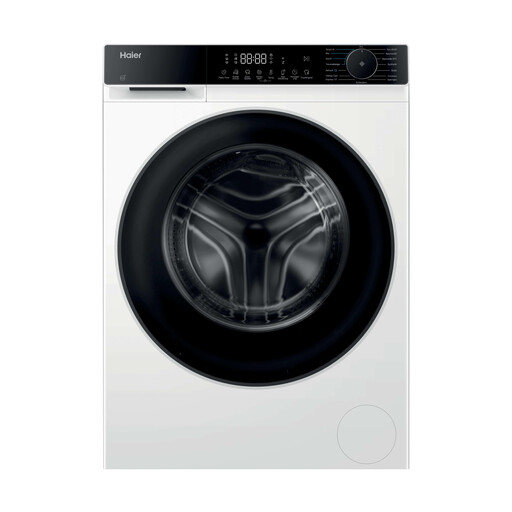
Haier X5 Series HWD120-BP14357U1 washer-dryer

Haier X5 Series HWD120-BP14357U1

For households looking to combine washing and drying in a freestanding front-loading appliance.

The product title lists 12+8 kg, 14 programmes and AquaStop. According to the product information, drying capacity is lower than wash capacity.

View at Joybuy

Frequently asked questions

Do face cloths always need to be washed at 60 °C?

No, there is no blanket rule that they must be. For hygiene reasons, the German Environment Agency recommends washing towels and similar household textiles at 40 or 60 °C. The care label and any specific health circumstances remain important. A steam refresh programme is not a proven substitute for washing.

What should I check before installing and using the appliance for the first time?

Check the dimensions, including the space needed to open the door, as well as the water and electricity connections at the exact installation location. Follow the model’s instructions. If you rent your home, the Verbraucherzentrale recommends checking the installation and protection against possible water damage in advance. This is not a general ban on having a washing machine in a rented property.

How can I prevent odours if I wash face cloths frequently?

Don’t leave damp laundry in the machine for long. The Verbraucherzentrale also recommends drying the seal and detergent drawer after washing, leaving the door open until the machine is dry, and cleaning the fluff filter as instructed in the appliance manual.

What are my rights if the appliance develops a fault?

When you buy from a business seller, EU consumer law gives you a legal guarantee of at least two years from the date you receive the goods. This is separate from any additional manufacturer’s guarantee, which is subject to its own terms and conditions.

Which energy label applies to washer-dryers?

New domestic washer-dryers covered by EU rules carry the label for washing machines and washer-dryers. It distinguishes between the wash-only cycle and the complete wash-and-dry cycle. The separate label for standalone tumble dryers, which has applied since July 2025, must not be applied to washer-dryers.