Who is a washer-dryer right for?

Families focused on hygiene

If you wash cotton underwear regularly, make sure the temperature, suitable detergent and care label all work together. The official guidance from infektionsschutz.de recommends washing underwear at a minimum of 60 °C with a heavy-duty detergent containing bleach; the key consideration is still what the fabric can withstand.

Families with lots of laundry

For larger loads, it’s not just the washing capacity that matters: check how much laundry the appliance can wash and dry in one continuous cycle. HEA explains that the energy label lists figures for washing and combined wash-and-dry operation separately.

Families short on drying space

If you only have room for one appliance, being able to wash and dry in the same machine can be practical. However, the Verbraucherzentrale notes that washer-dryers can use more electricity and water than separate appliances.

Which buying priorities should you compare?

Washer-dryer with condenser drying

A good fit if: you only have space for one appliance and want to dry smaller suitable loads straight after washing.

Consider: washing and drying capacities differ, so compare the figures for the specific model.

Heat pump washer-dryer

A good fit if: you use machine drying regularly and want to pay particular attention to the figures for a complete wash-and-dry cycle.

Consider: drying capacity, energy figures and programme times should still be checked for the specific model.

Separate appliances or air-drying

A good fit if: you have room for a separate tumble dryer or only need to use machine drying occasionally.

Consider: two appliances need more floor space, while air-drying takes time and a suitable area. The Verbraucherzentrale considers washer-dryers less favourable than separate appliances in terms of electricity and water use.

Priority What to check before buying Who is this important to?
Washing underwear with care Check the care label, available temperatures and detergent compatibility together. If I want to wash cotton underwear hygienically, I want to match the programme to the fabric’s care needs. Around 36% of consumers are likely to put hygiene first.
Drying family loads straight after washing Compare the washing capacity and the capacity for a complete wash-and-dry cycle separately. For larger family loads, I want to know whether I’ll need to split the laundry before drying. Around 29% of consumers are likely to prioritise load size.
Everyday running costs Compare electricity and water figures for washing and combined operation in line with how you plan to use the appliance. If I use machine drying regularly, I want to assess the figures for complete wash-and-dry cycles. Around 21% of consumers are likely to make running costs their top buying priority.
Space where the appliance will go Check the appliance dimensions, space for the door to open and the connections available. If I only have room for one appliance, it needs to fit the space available. Around 14% of consumers are likely to consider the available space first.

Common washer-dryer buying misconceptions

  • Assuming the washing capacity is the same as the capacity for a complete wash-and-dry cycle

    The two figures can differ. For example, AEG Deutschland lists a washing capacity of 9 kg and a combined wash-and-dry capacity of 6 kg for the AEG L9WEF80690.

    If you plan to dry clothes straight after washing, use the lower capacity listed for combined operation as your guide.

    If the wash load is larger, you may need to run an additional drying cycle, which takes more time.

  • Comparing only the energy rating for washing

    Energy figures for a wash cycle and a complete wash-and-dry cycle relate to different types of operation. The Verbraucherzentrale also points out that washer-dryers use more electricity and water than separate appliances.

    Compare the label figures for both types of operation, and weigh them according to how often you actually dry clothes.

  • Assuming steam or quick programmes guarantee hygiene

    Manufacturers’ claims about these programmes apply to the specific programmes and conditions stated; they don’t automatically replace the need to check the temperature, detergent and care label.

    Follow the care label and the official guidance from infektionsschutz.de. Use a manufacturer-specific programme only under the conditions specified.

Key brands to consider

AEG

The 9000 Series includes the L9WEF80690, a washer-dryer with heat pump drying.

  • AEG Deutschland lists a washing capacity of 9 kg, a drying capacity of 6 kg and 252 kWh per 100 wash-and-dry cycles for this model.
  • The energy figure relates to the specified reference cycles; it doesn’t apply universally to every load or every AEG appliance.

LG

LG offers several 9/6 kg models, including the heat pump washer-dryer HPWD096C and the W4WR7096YB.

  • LG lists a steam programme among the features of the W4WR7096YB.
  • The specifications and features of one model don’t necessarily apply to the other; assess programmes according to the conditions for each model.

Samsung

According to Samsung, the WD90DB8B85GBU2 combines a 9 kg washing capacity with a 6 kg combined capacity and offers automatic wash functions.

  • Samsung describes an AI Energy mode for this model.
  • Samsung states that the mode requires the app, Wi-Fi and a Samsung account, and only works with certain programmes and temperatures.

Miele

The WT1 WTD160 WCS is a documented 8/5 kg option for households whose planned drying load fits the stated capacity.

  • Miele lists a washing capacity of 8 kg and a drying capacity of 5 kg for this model.
  • If you want to dry a larger wash load straight away, you’ll need to split it; check delivery and installation services separately.

Bosch

The WNG24440 is a documented model with a washing capacity of 9 kg and a drying capacity of 6 kg.

  • Bosch Hausgeräte Deutschland lists the model’s dimensions and water figures separately.
  • Bosch marks the WNG24440 as no longer available on its German website. The figures are therefore an example of the model’s specifications, not confirmation that it’s currently available to buy.

Washer-dryers at Joybuy

The following Joybuy options include washer-dryers for family laundry with different washing and drying capacities, as well as freestanding and integrated models.
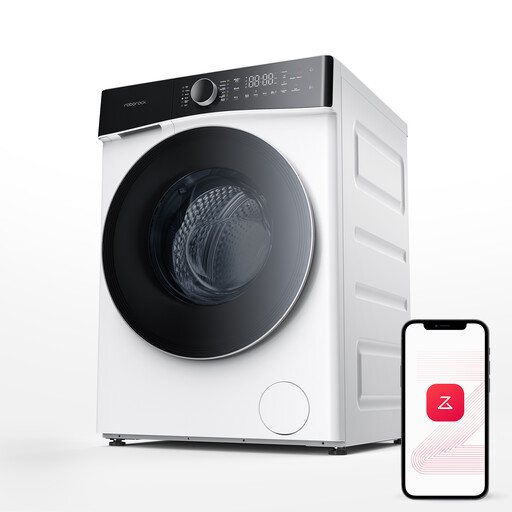
White Roborock Zeo Lite washer-dryer

Roborock Zeo Lite, white

For larger family loads, the separate washing and drying capacities are key.

10 kg washing and 6 kg drying.

Loads over 6 kg need to be split before drying.

View at Joybuy

Samsung washer-dryer with a 9 kg washing capacity and 6 kg drying capacity

Samsung Washer Dryer Combo, 9 kg washing/6 kg drying

The separate capacity figures make it easier to work out whether family loads will fit into a complete wash-and-dry cycle.

9 kg washing and 6 kg drying; 1400 rpm.

Loads over 6 kg need to be split before drying.

View at Joybuy
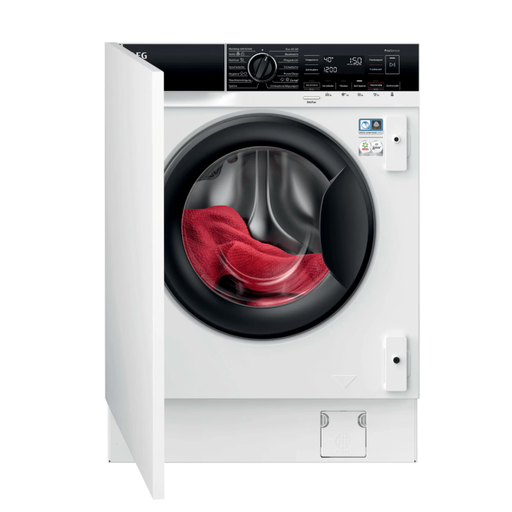
AEG LWR8WI7680 8000 PowerCare integrated washer-dryer

AEG LWR8WI7680 8000 PowerCare, integrated

This integrated model could be a good option if the space you have for installation matches the appliance’s dimensions.

8 kg washing and 4 kg drying; 1600 rpm.

Larger loads need to be split before drying. A minimum recess height of 82 cm is specified for installation.

View at Joybuy
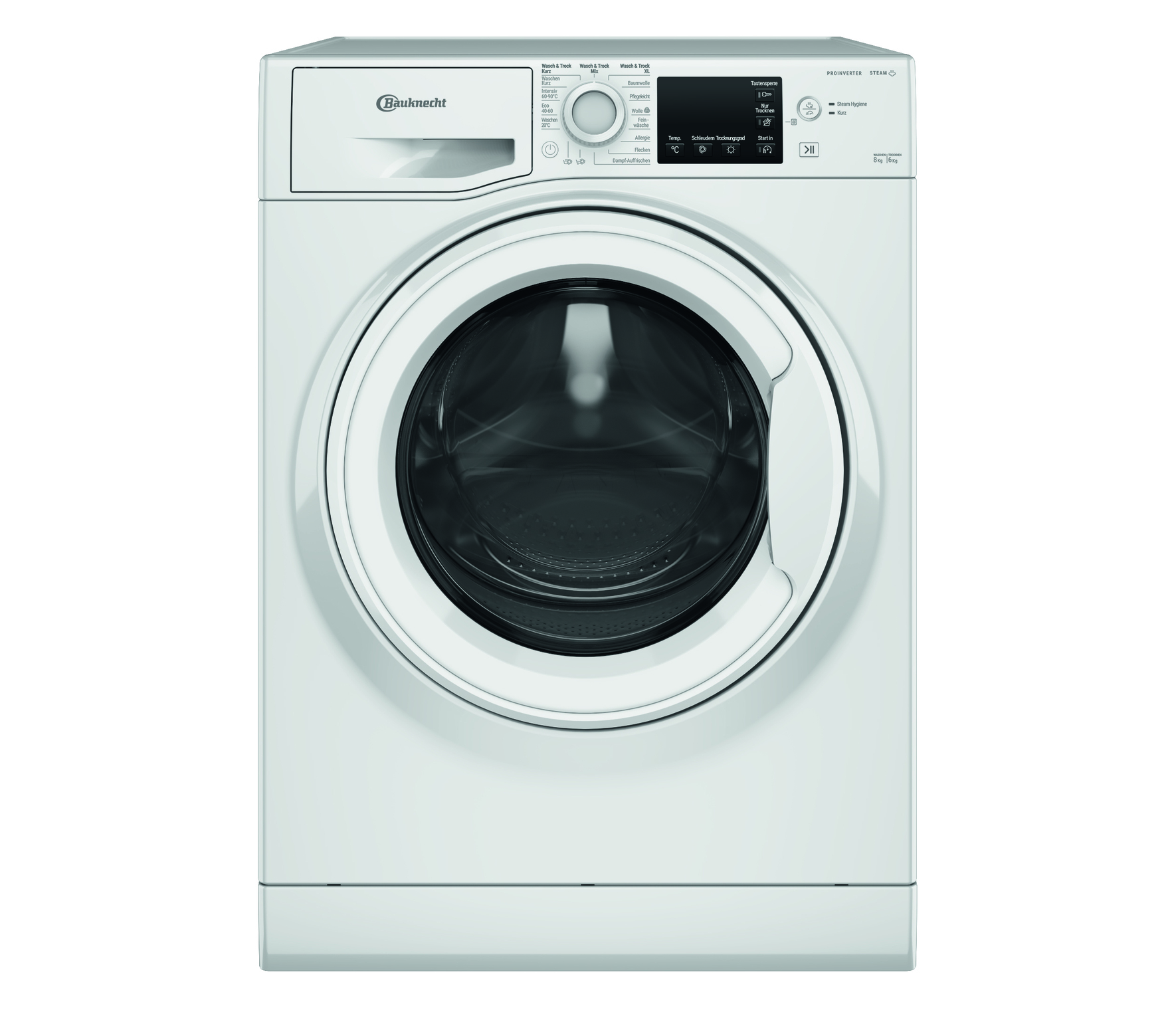
Bauknecht WD Eco Shield 8614 D washer-dryer

Bauknecht WD Eco Shield 8614 D

When planning a family load, remember to consider the washing and drying capacities separately.

8 kg washing and 6 kg drying; 1400 rpm.

Larger loads need to be split before drying. A steam programme doesn’t automatically replace the need for a suitable wash temperature and detergent.

View at Joybuy
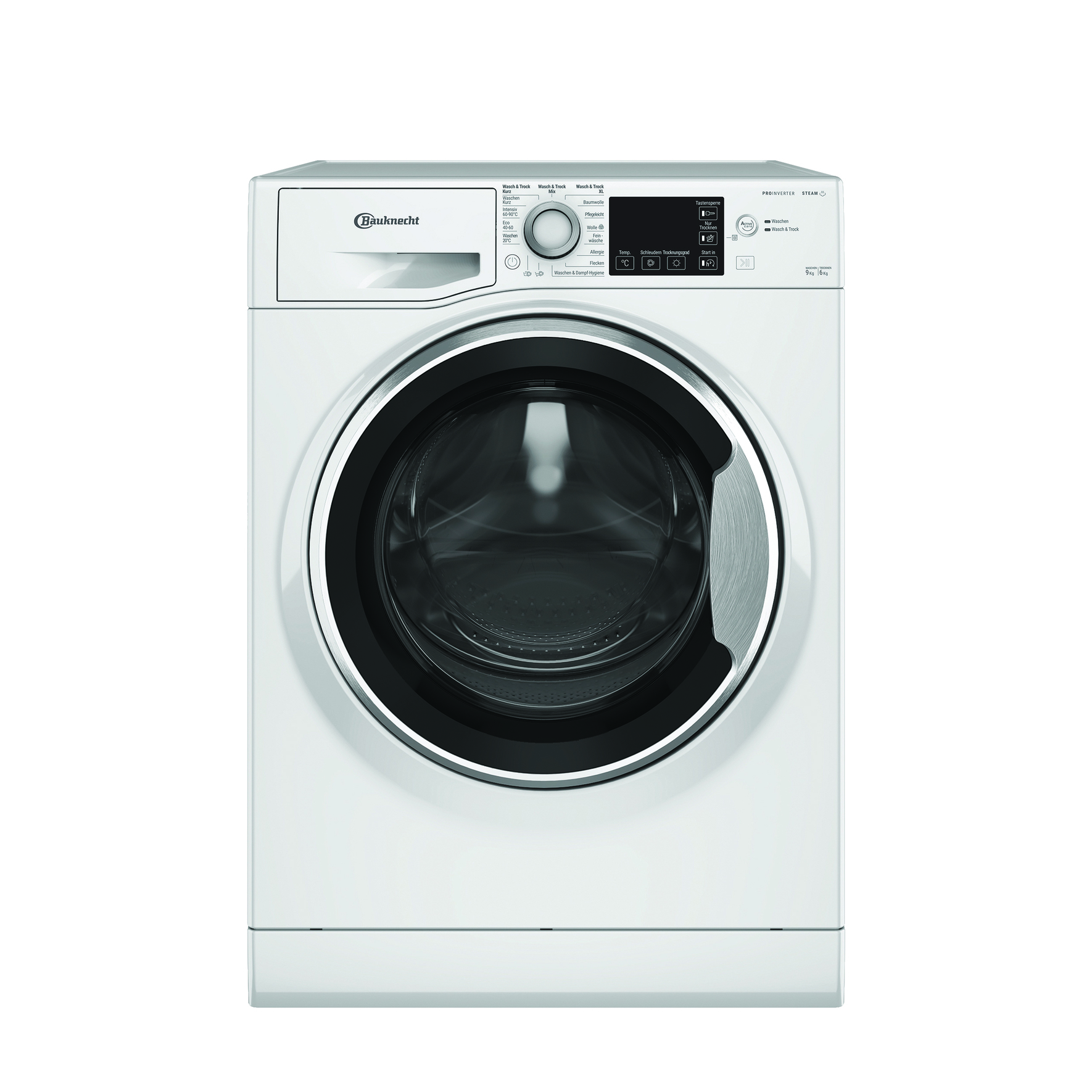
Bauknecht WADR ACTIVE 9614 D washer-dryer

Bauknecht WADR ACTIVE 9614 D

The 9 kg washing and 6 kg drying capacities are worth bearing in mind when planning larger family loads.

9 kg washing and 6 kg drying; 1400 rpm.

Loads over 6 kg need to be split before drying.

View at Joybuy

Frequently asked questions about washer-dryers

Does cotton underwear always need to be washed using a steam programme?

No. The official household hygiene guidance from infektionsschutz.de recommends washing underwear at a minimum of 60 °C with a heavy-duty detergent containing bleach; the care label must allow the chosen treatment. A manufacturer-specific steam programme is not a universal substitute for this recommendation.

How can I keep the machine clean if I often wash at low temperatures?

The official household hygiene guidance recommends running a 60 °C wash with a heavy-duty detergent containing bleach after around every fifth wash, or every two weeks, to help prevent biofilm build-up. Also follow the care instructions for your specific appliance.

What should I check before installation?

Check the appliance dimensions, including the space needed when the door is open, against the installation area. Then check the water, drainage and electrical connections using the installation instructions for the specific model. The appliance’s width alone isn’t enough to confirm it will fit.

What are my rights if my washer-dryer is faulty?

For a consumer purchase from a trader in the EU, you’re entitled to a minimum two-year legal guarantee from the date you receive the goods, which you can claim from the seller. The European Union’s Your Europe website distinguishes this legal guarantee from an additional manufacturer’s warranty.

Is an EU energy label required for household washer-dryers?

EU Regulation 2019/2014 sets out the energy-labelling requirements for mains-powered household washer-dryers. The Umweltbundesamt explains that Germany has used the A to G scale since 2021; the label shows figures for a complete wash-and-dry cycle separately from those for washing alone.