Households with no space to dry laundry
If you have room for a washing machine but little space to hang fabric napkins, check whether a suitable load can be dried without having to transfer it elsewhere.


A washer-dryer can be a practical choice if you have limited space to dry fabric napkins, provided the care label allows tumble drying and the drying capacity is suitable for your load. Compare the capacity for a complete wash-and-dry cycle, as well as electricity and water consumption. The German consumer advice centre warns that washer-dryers use more than separate appliances.
If you have room for a washing machine but little space to hang fabric napkins, check whether a suitable load can be dried without having to transfer it elsewhere.
If you use napkins regularly, stain treatment, the wash programme and fabric-appropriate drying all need to work together.
If you only need the drying function now and then, compare the figures for washing alone and for a complete wash-and-dry cycle with how often you expect to use it.
| What matters when buying | What to look for | Who is most affected? |
|---|---|---|
| Drying space and installation | Check the appliance dimensions, connections and door opening against the space available. For a continuous wash-and-dry cycle, bear in mind that the capacity is lower. | If I have very little room to hang laundry, the installation and being able to dry a load without transferring it are crucial. Around 33% of consumers who consider a lack of drying space their main purchase concern. |
| Fabric care and stains | Check the care symbols, permitted wash temperature and drying setting for the napkins in question. Treat stains before they have a chance to dry in, if possible. | When I wash napkins stained with food, I want to match the programme and temperature to the fabric, and only dry items that are suitable for tumble drying. Around 27% of consumers put fabric care first when buying. |
| Running costs | Compare the energy label figures for washing and for a complete wash-and-dry cycle separately. Remember to consider water consumption too. | If I only dry laundry occasionally, I want to compare running costs with how I actually use the appliance. Around 20% of consumers put these costs first. |
| Drying capacity and time | Compare the amount of napkins suitable for tumble drying with the capacity for a complete cycle. If you need to run several loads, check the programme duration too. | If several loads of table linen need to be ready on time, I want to know how much can be dried in one cycle. Around 20% of consumers consider load throughput their main priority. |
The amount an appliance can wash is not necessarily the amount it can dry in a continuous wash-and-dry cycle. Bosch lists the WNA13441 model as having a 9 kg washing capacity and a 5 kg capacity for washing and drying.
Compare your planned napkin load with the stated capacity for a combined cycle.
A programme for delicates does not override the care label. The care symbols may rule out tumble drying or require a lower temperature.
Before starting a cycle, check the care symbols on all the items in the load and use the stated drying setting.
Machine-drying fabric against the advice of its care label risks damaging it.
The WNA13441 washer-dryer is an example for households comparing appliance dimensions and capacity for a complete wash-and-dry cycle.
The W4WR7096YB washer-dryer is an example model with a 9 kg washing capacity and a 6 kg drying capacity.
The L9WEF80690 is an example for shoppers comparing heat-pump models and label figures for complete cycles.
The WTR870WPM is an example model with automatic detergent dosing.
The iQ500 WN44G243 is an example for shoppers who want to consider a larger washing capacity.
This selection includes washer-dryers and a WashTower solution for households with limited floor space for drying laundry. If you choose a stacked solution, check the available height and installation requirements carefully.
 No image available
A combined wash-and-dry appliance is worth considering if you have no separate space for drying laundry. Its drying capacity is lower than its washing capacity.
10 kg washing and 6 kg drying capacity; Zeo-Cycle drying and automatic dosing are mentioned in the product name.
 No image available
This WashTower combines a washing machine and heat-pump tumble dryer in a stacked design. Check that its height and installation requirements suit your space.
12 kg washing and 10 kg drying capacity; the product name also mentions AI DD, TurboWash 360° and 1,350 rpm.
 No image available
A combined appliance may suit you if you want to wash and dry in one machine. Bear in mind that the drying capacity is lower.
12 kg washing and 10 kg drying capacity; features also include a Dual-Inverter heat pump, AI DD and a steam function.
 No image available
A washer-dryer can be an option if you have little separate space for drying laundry. Its drying capacity is lower than its washing capacity.
9 kg washing and 6 kg drying capacity; the product name lists 1,400 rpm and energy class D.
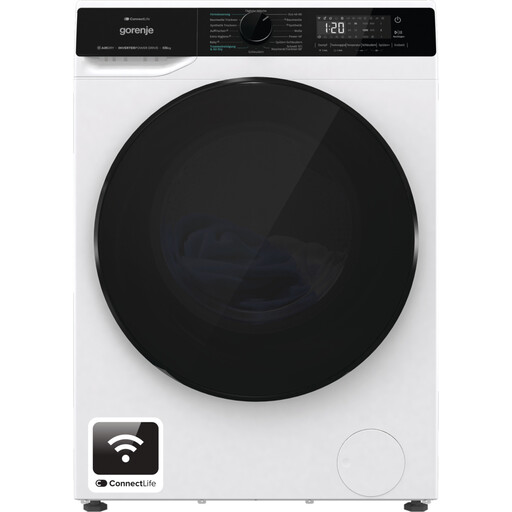 No image available
The combined wash-and-dry function may suit households with limited drying space. Check that the programmes listed are compatible with the care labels on your napkins.
The product name lists 16 programmes, 1,400 rpm and energy class D.
No. The care label determines the wash temperature and whether the item can be tumble dried. A crossed-out tumble-dryer symbol means you must not dry it in the appliance. Check the care symbols on each of your napkins individually.
Not necessarily: the capacity for a complete wash-and-dry cycle may be lower. For example, Bosch lists the WNA13441 as having a 9 kg washing capacity and a 5 kg capacity for a continuous wash-and-dry cycle.
Check the dimensions and installation requirements for the specific model. The German consumer advice centre recommends drying the seal and detergent drawer after washing, leaving the machine open until then, and cleaning any lint filter as instructed.
No. Your statutory consumer rights apply in relation to the seller, while a warranty is an additional voluntary promise with its own terms. If a product is faulty, the first step may be to ask for it to be repaired or replaced.
Household washer-dryers must carry the EU energy label. The German Environment Agency notes that the A-to-G label has applied to this appliance category since 2021. Compare the figures for the wash cycle and the complete wash-and-dry cycle separately.
Online retailers also have take-back obligations for waste electrical appliances. Before completing your purchase, check the return options on offer to see whether collection from your home can be arranged for that particular order.