A washer-dryer can be a good choice for cotton pyjamas in a house share if there’s no suitable place to dry clothes and no room for a separate tumble dryer, and the care labels allow tumble drying. Plan a complete wash-and-dry cycle around the lower drying capacity. If you can hang your washing up, or a care label rules out tumble drying, washing and air-drying is the right alternative. The Verbraucherzentrale highlights the space-saving benefits for particularly cramped homes, while GINETEX Germany distinguishes between washing and drying instructions on care labels.
Who is a washer-dryer suitable for?
House shares with nowhere to dry clothes
If you can’t reliably hang up your pyjamas and there’s no room for a separate appliance, a washer-dryer can combine both functions in the space of one machine. Even so, check the care label on each item to make sure it can be tumble-dried. The Verbraucherzentrale describes washer-dryers as a space-saving option for particularly cramped homes, while GINETEX Germany explains the care symbols.
House shares with a shared laundry routine
If several people use the same appliance, load sizes and the time needed for a complete wash-and-dry cycle must fit into your shared laundry schedule. Bosch Hausgeräte Deutschland, for example, lists different wash and drying capacities for the WNA14441.
Budget-conscious house shares
If you’re weighing up how often you’ll actually need the drying function, compare consumption figures for the same type of cycle and take your planned usage into account. The Verbraucherzentrale highlights the energy consumption of washer-dryers, while AEG Deutschland’s product information distinguishes between wash cycles and complete wash-and-dry cycles.
What should you look for when buying one?
Washer-dryer
A good choice when: There’s no suitable place to dry clothes or room for a separate tumble dryer in your house share, and the care labels say your pyjamas can be tumble-dried.
The trade-off: The appliance is occupied for the combined cycle, and its drying capacity may be lower than its washing capacity.
Washing machine with air-drying
A good choice when: You can hang your pyjamas up to dry, or their care labels rule out tumble drying.
The trade-off: You’ll need space and time for drying. The Verbraucherzentrale recommends good ventilation and heating when drying clothes indoors.
Separate washing machine and tumble dryer
A good choice when: You have room for two appliances and your house share regularly wants to tumble-dry laundry.
The trade-off: Two appliances take up more floor space, but the washing machine isn’t tied up drying the same load.
| What to consider |
What to look for |
Who is it important to? |
| Drying space and room for the appliance |
Measure the space, connections, door opening and route for moving the appliance; work out where you could otherwise dry your pyjamas. |
If we have neither room for a clothes airer nor space for a separate tumble dryer, a solution that fits in one spot is essential. Around 33% of consumers rank a lack of drying space as their top concern. |
| Electricity and water consumption |
Read the figures for washing and washing with drying separately, and only compare figures for the same type of cycle. The European Commission’s product label includes information such as energy and water consumption. |
If we only want to use the drying function when needed, we want to assess running costs in line with our routine. Around 27% of consumers make running costs a top buying concern. |
| Capacity and scheduling |
Check wash and drying capacities separately, and plan your shared laundry schedule around programme duration and available time slots. |
If several people take turns doing their washing, loads and time slots need to work for everyone. Around 20% of consumers prioritise sharing the appliance. |
| Caring for your pyjamas |
Check the washing and drying symbols on each item. GINETEX Germany explains that care labels show washing and tumble-drying instructions separately. |
If we wash our cotton pyjamas together, each item should be cared for according to its own label. Around 20% of consumers put finding the right care for their pyjamas first. |
Common buying mistakes
-
Assuming the drying capacity matches the washing capacity
The capacities can differ: the Bosch WNA14441 has a 9 kg washing capacity and a 5 kg drying capacity. So, for a complete wash-and-dry cycle, it’s the lower drying figure that matters.
If you want to dry a shared load in one go, plan it around the drying capacity of the specific model.
-
Using washing figures as a guide to the complete wash-and-dry cycle
The EU label distinguishes between types of use. AEG Deutschland lists 47 kWh per 100 wash cycles and 265 kWh per 100 complete wash-and-dry cycles for the LWR7AMZ48WD. These figures relate to different types of cycle; they are not two measurements of the same house-share load.
Only compare figures based on the same cycle definition, and consider how often you actually plan to use the drying function.
-
Assuming every cotton pyjama can go in the tumble dryer
The fact that an item is made of cotton doesn’t tell you whether it can be tumble-dried. GINETEX Germany lists washing and drying instructions separately.
Check the label on each pair of pyjamas before drying, and remove any items whose care label rules out tumble drying.
-
Looking only at the appliance dimensions and purchase price
The width of the appliance alone won’t tell you whether it can be installed in the space you have or moved there in the first place.
Measure the space, connections, door opening and route for moving the specific appliance, and check what delivery and installation are actually included before you order.
Brands and model ranges to consider
Bosch
According to Bosch Hausgeräte Deutschland, the Serie 4 WNA14441 washer-dryer is an example of a model with a 9 kg washing capacity and a 5 kg drying capacity.
- The separate capacity figures help you plan shared loads around the drying cycle.
- A full wash load won’t necessarily be suitable for a complete wash-and-dry cycle.
AEG
AEG Deutschland lists different model configurations, including the LWR7AMZ48WD with an 8/5 kg capacity and the L9WEF80690 with a 9/6 kg capacity for washing and drying.
- The product information lets you compare the separate washing and drying capacities of specific models.
- For the LWR7AMZ48WD, AEG Deutschland lists 265 kWh per 100 complete wash-and-dry cycles and 47 kWh per 100 wash cycles. These figures relate to different types of cycle and don’t demonstrate a general cost advantage.
LG
LG Deutschland lists the HPWD096C washer-dryer with separate capacities of up to 9 kg for washing and up to 6 kg for drying.
- The model information makes the difference between the capacities of the two functions clear.
- Manufacturer claims about speed or efficiency apply only under the stated conditions and aren’t independent comparative measurements.
Samsung
Samsung Deutschland lists the WD90DG6G94BKU2 with a 9 kg washing capacity, a 5 kg drying capacity and a depth of 480 mm.
- The stated depth can help you plan when checking a tight space.
- Also measure the connections, door opening and route for moving the appliance. The product dimensions alone can’t confirm that it will fit in an unknown location.
Bauknecht
Bauknecht Deutschland lists the WATK Sense 86S 41 C as part of a washer-dryer range, with a washing capacity of 8 kg.
- The model information gives you another specific reference point when planning a house-share load.
- For a combined cycle, you also need to take account of the separate drying capacity listed for the specific model.
Washer-dryers at Joybuy
The Joybuy models below combine washing and drying functions. For a complete wash-and-dry cycle in a house share, the lower drying capacity is the figure to bear in mind for each appliance.
 No image available
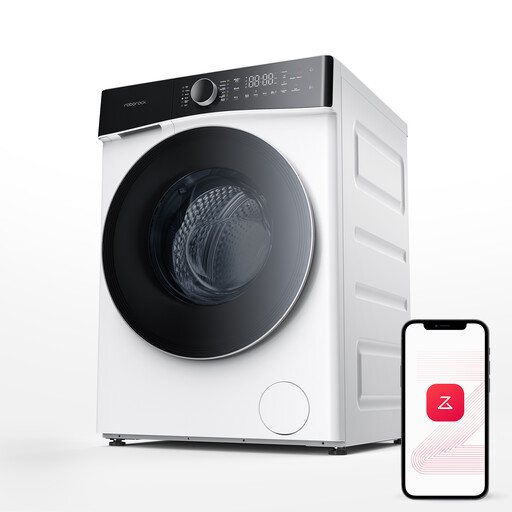
Roborock Zeo Lite White washer-dryer
The separate capacity figures help you plan shared loads for washing and drying.
10 kg washing capacity and 6 kg drying capacity; for a complete cycle, bear in mind the lower drying capacity.
View at Joybuy
 No image available
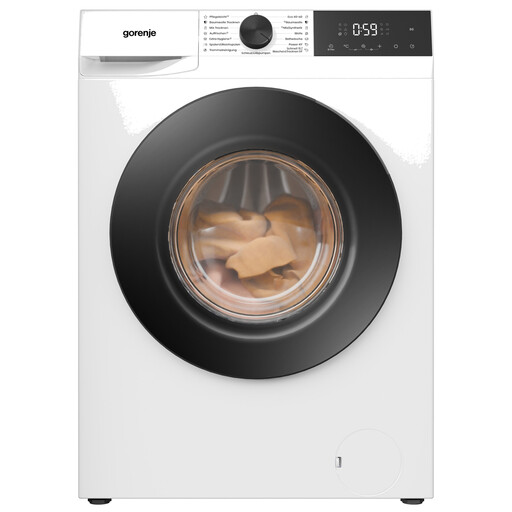
GORENJE WD5G2P1174A2DP2 washer-dryer, white
The stated capacities give you a useful reference when planning shared house-share loads.
11 kg washing capacity and 7 kg drying capacity; plan a complete cycle around the lower drying capacity.
View at Joybuy
 No image available
LG WT1210WWF washer-dryer
The separate figures make it easier to plan a load for a combined wash-and-dry cycle.
12 kg washing capacity and 10 kg drying capacity; the drying capacity limits the load for a complete cycle.
View at Joybuy
 No image available
Samsung washer-dryer, 9 kg washing and 6 kg drying capacity
The separate capacity figures help you plan a suitable load for a shared wash-and-dry cycle.
9 kg washing capacity and 6 kg drying capacity; for a complete cycle, bear in mind the lower drying capacity.
View at Joybuy
 No image available
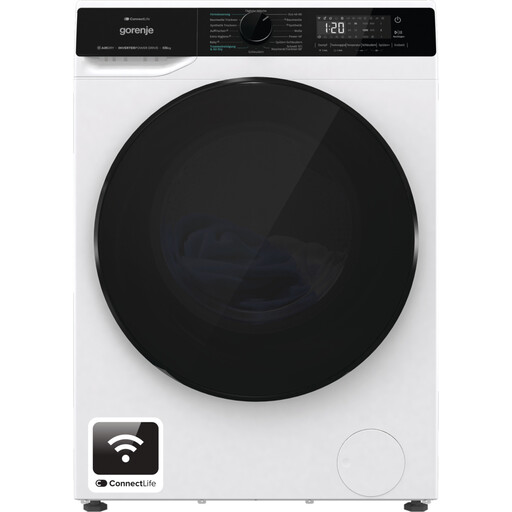
Gorenje WD2PA854ADW washer-dryer
The separate capacities are useful when planning house-share loads for a wash followed straight away by drying.
8 kg washing capacity and 5 kg drying capacity; plan the combined cycle around the lower drying capacity.
View at Joybuy
Frequently asked questions
Can every cotton pyjama be dried completely in a washer-dryer?
No. The fact that it’s made of cotton isn’t enough to tell you. Check the tumble-drying symbol on each pair of pyjamas: according to GINETEX Germany, a crossed-out tumble-drying symbol means you mustn’t use this drying method. The washing temperature is shown separately.
Which programme is suitable for normally soiled cotton pyjamas?
The “eco 40–60” programme is intended for normally soiled cotton laundry that, according to its label, can be washed at 40 °C or 60 °C. The European Commission describes this intended use. The care label on each pair of pyjamas will also tell you whether it can go in the wash and whether it can then be tumble-dried.
What should we check before connecting the appliance in a rented house share?
Agree the location and connection options with your landlord, and check how to protect the appliance against water damage. The Verbraucherzentrale notes that washing machines generally can’t be prohibited outright in rented homes; this doesn’t mean every house share needs general permission.
What should we clean or check after drying?
Follow the maintenance instructions for your specific model. AEG lists lint on the seal as a maintenance point, but that doesn’t mean there’s one cleaning interval that applies to every washer-dryer.
What’s the difference between statutory rights and a guarantee?
Your statutory rights are set out by law, while a guarantee is offered voluntarily. The Verbraucherzentrale recommends keeping the two separate. Before ordering, also check what delivery and installation are included with the specific offer.


