Households with delicate pillowcases
You want to wash removable pillowcases without assuming that because they are washable, they can also be tumble-dried.


A washer-dryer could be right for you if you only have space for one appliance and want to dry tumble-dryer-safe laundry as well as wash pillowcases, without moving the load between machines. Before you buy, check the care label on every item: being washable does not automatically mean it can go in the tumble dryer. Also compare the separate wash and drying capacities, the appliance dimensions and the energy and water consumption for the programme you’ll actually use.
You want to wash removable pillowcases without assuming that because they are washable, they can also be tumble-dried.
You want to machine-dry tumble-dryer-safe textiles as well as wash pillowcases, but don’t have room for two appliances.
You want to handle larger loads, so you need to consider the wash and drying capacities separately.
A good fit if: The care label says your pillowcases are suitable for tumble-drying and the load is within the drying capacity.
The trade-off: The drying capacity is lower than the wash capacity. For typical washer-dryers, the Verbraucherzentrale notes that energy and water consumption are higher than with separate appliances.
A good fit if: Your pillowcases are washable but not suitable for tumble-drying, and you have somewhere suitable to dry them.
The trade-off: You won’t use the drying function for the pillowcases themselves, though you can use it for other laundry that is suitable for tumble-drying.
A good fit if: You have room for both appliances in your utility room and regularly wash items that are suitable for tumble-drying.
The trade-off: You’ll need more floor space and have to transfer laundry between appliances; pillowcases that aren’t suitable for tumble-drying will need to be dried another way.
The EU energy label lists consumption figures separately for washing and for the combined wash-and-dry cycle. Compare the figures for the programme you actually intend to use.
| Criteria | What to check before buying | Who is this important for? |
|---|---|---|
| Caring for pillowcases | Check the care label, washing temperature and tumble-dryer symbol on each pillowcase. | If I want to wash removable pillowcases according to their care instructions, I also check whether they can go in the tumble dryer. Around 36% of consumers give the pillowcases’ suitability for tumble-drying top priority. |
| Space and installation | Check the appliance depth, available floor space, door opening and water, drainage and electricity connections. | If there’s only room for one appliance in my utility room, the main thing is whether it will actually fit. Around 29% of consumers put the available space for an appliance first. |
| Energy and water consumption | On the EU energy label, compare kWh per 100 cycles and water per cycle for the relevant programme. | If I regularly use a combined wash-and-dry cycle, I want to assess the consumption for that cycle rather than looking only at the washing figures. Around 21% of consumers prioritise low running costs. |
| Wash and drying capacity | Check both capacity figures in kg and any programme restrictions; make sure larger pillowcases fit and that the programme meets their care requirements. | If I regularly have larger loads, I want to know whether they’ll also fit in the subsequent drying cycle. Around 14% of consumers focus primarily on the load size the appliance can handle. |
One example described by IKEA Germany can be machine-washed at up to 40 °C, but is explicitly not suitable for tumble-drying. Choosing a suitable wash programme doesn’t mean the item is approved for tumble-drying.
Before choosing a programme, check the tumble-dryer symbol and care instructions on every pillowcase.
On washer-dryers, the maximum drying capacity may be lower than the wash capacity. So a larger wash load may not fit in a continuous wash-and-dry cycle.
For a combined cycle, use the drying capacity specified for that programme as your guide.
If the planned load is too large, you may need an additional drying cycle or to split the laundry into smaller loads.
The EU energy label lists figures separately for washing and for washing and drying. The Verbraucherzentrale also notes that typical washer-dryers use more energy and water than separate appliances.
Compare wash cycles with wash cycles, and combined cycles with combined cycles.
The models listed here show different combinations of load capacity and appliance depth.
The W4WR7096YB is an example of a washer-dryer with a 9 kg wash capacity and a 6 kg drying capacity.
For the WATK Sense 86 DC, the manufacturer lists an 8 kg wash capacity, a 6 kg drying capacity and a delicates programme option.
The following Joybuy models are washer-dryers for households that want to wash pillowcases and air-dry items that aren’t suitable for tumble-drying. The combined function can be used for other laundry that is suitable for tumble-drying.
 No image available
The separate capacity figures help you work out the load size intended for washing and drying.
The product name lists a 12 kg wash capacity and a 10 kg drying capacity, Dual Inverter Heat-Pump and AI DD.
 No image available
The capacity figures are a useful guide if you want to plan the wash load and potential drying load separately.
The product name lists a 9 kg wash capacity and a 6 kg drying capacity, 1,400 rpm and energy class D.
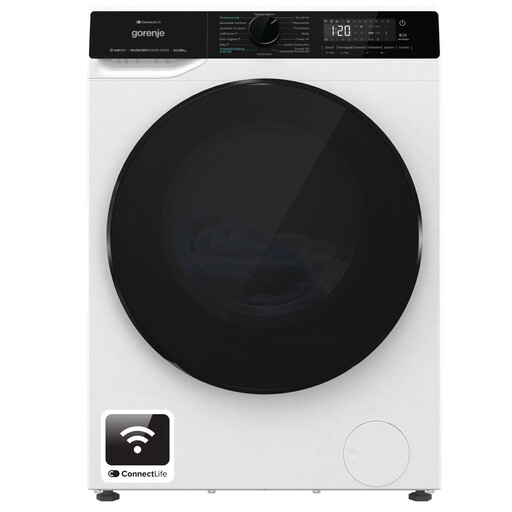 No image available
This model is worth considering if you’re looking for a washer-dryer for pillowcases and other textiles.
The product name lists a 10.5 kg capacity, 16 programmes and 1,400 rpm.
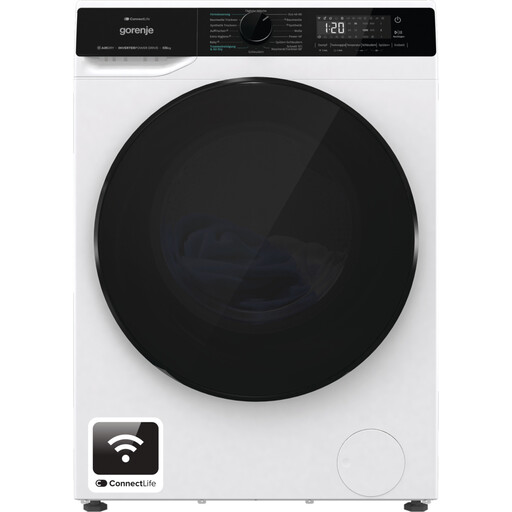 No image available
Before choosing, check that the appliance dimensions and capacity suit your utility room and the amount of laundry you do.
The product name lists an 8 kg capacity and 1,400 rpm.
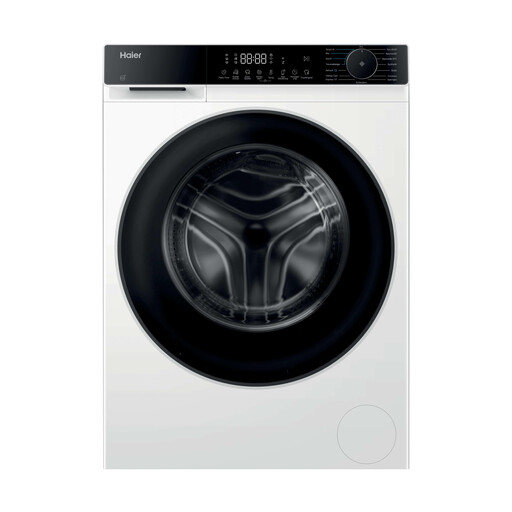 No image available
The separate figures help you avoid assuming that a larger wash load will fit in the drying cycle too.
The product name lists a 12 kg wash capacity and an 8 kg drying capacity.
Not necessarily. IKEA Germany lists a pillowcase that can be machine-washed at up to 40 °C but isn’t suitable for tumble-drying. Always follow the care instructions for your specific pillowcase: a suitable wash programme doesn’t mean it can go in the tumble dryer.
They refer to different programmes. Compare the consumption and load figures for the cycle you actually plan to use, rather than treating washing figures as if they also apply to the combined cycle.
Check the appliance dimensions against the available space and door opening, and make sure you have the required water, drainage and electricity connections. The Verbraucherzentrale lists an integrated water protection system as a feature worth considering; check whether the specific model has one.
The Verbraucherzentrale advises against leaving wet laundry in the machine for too long. Check the manual for your specific model for instructions on cleaning and drying the appliance.
Not necessarily: the drying capacity may be lower than the wash capacity. Check both figures and any programme restrictions before planning a load for a continuous wash-and-dry cycle.