Households with set laundry times
If you share an appliance or coordinate laundry times with others, the full wash-and-dry cycle needs to fit into your time slot. So, as well as the load limit, you’ll need to consider how long the programme takes.


A washer-dryer can be a good fit for washable pillowcases if the care label permits tumble drying and the full load is within the drying capacity. It’s also important to check whether the complete wash-and-dry cycle fits into your agreed time slot. If the pillowcases aren’t suitable for tumble drying, or you have enough space to air-dry them, a washing-only cycle may be a better option.
If you share an appliance or coordinate laundry times with others, the full wash-and-dry cycle needs to fit into your time slot. So, as well as the load limit, you’ll need to consider how long the programme takes.
For removable pillowcases, the care symbols show you the suitable wash temperature and treatment, and whether tumble drying is permitted. The Consumer Advice Centre explains that the numbers in the wash tub indicate the maximum recommended wash temperature.
If you have little room for a clothes airer or a second appliance, a washer-dryer can save space. However, the Consumer Advice Centre notes that washer-dryers use more energy and water than separate appliances; compare figures for equivalent programmes.
A good fit if: The care label permits tumble drying, the load is within the drying capacity and the full cycle fits into your agreed time slot.
Consider: The appliance remains in use until the drying cycle has finished. The maximum wash load isn’t necessarily the same as the amount you can dry afterwards.
A good fit if: The cover is machine-washable but not suitable for tumble drying, or you have a suitable place to dry it after the wash cycle.
Consider: The appliance is free again once the wash cycle has finished, but you’ll need time and space to dry the laundry.
A good fit if: You have space for both appliances and separate cycles work better with your shared laundry schedule.
Consider: This option needs room for two appliances, and you’ll have to transfer the laundry between them. The Consumer Advice Centre compared washer-dryers with separate appliances in terms of general electricity and water consumption. When choosing, compare the specific model figures for the relevant operating mode.
| What matters | What to look for | Who is this especially important to? |
|---|---|---|
| Time slot | Check how long the complete wash-and-dry programme takes for your planned load; don’t assume a short wash time is the same as a full cycle. | If I share the appliance with others, the full cycle needs to fit into my reserved time slot. That’s why around 33% of consumers make sure the wash-and-dry cycle fits their schedule. |
| Fabric care | Check the care label on each cover, and look at the washing and tumble-drying symbols separately. | For removable covers, I follow the care label on each one: permission to wash doesn’t automatically mean it can be tumble-dried. Around 27% of consumers prioritise suitability for delicate covers. |
| Space | Check the appliance dimensions and delivery route against the installation space, and consider where you could air-dry laundry. | If there’s no room for a second appliance or enough space to air-dry laundry, I need to know whether the option I choose will fit into the space available. Around 20% of consumers prioritise limited space. |
| Running costs | Compare kWh per 100 cycles and water consumption per cycle for the same operating mode. | If I tumble-dry regularly, I compare figures for complete wash-and-dry cycles rather than washing alone. Around 20% of consumers base their choice primarily on the running costs of the mode they use. |
For some models, the maximum wash load is higher than the amount that can be washed and dried in one cycle. You may need to split a larger load.
Compare your planned load with the stated limit for a complete wash-and-dry cycle.
Splitting the load may mean running an extra drying cycle or finding somewhere to store and air-dry the remaining covers.
The care symbols for machine washing and tumble drying give different instructions. So a washable cover isn’t automatically suitable for the drying function.
Before planning your laundry, check both the washing symbols and the tumble-drying symbol on each cover.
A short stated wash time doesn’t tell you how long washing and drying together will take.
Check the model documentation for the duration, load limit and operating mode of the complete cycle.
A longer cycle may keep a shared appliance in use beyond your planned time slot.
The energy label gives separate consumption figures for washing alone and for a complete wash-and-dry cycle. A figure for one operating mode doesn’t automatically tell you what to expect from the other.
Compare the figures for the mode you actually plan to use, and consider how often you’ll tumble-dry.
The L9WEF80690 model combines heat-pump drying with a 9 kg wash capacity and a 6 kg drying capacity. It may be a good option if the care label says your covers are suitable for tumble drying and the full cycle fits your shared schedule.
With the WNC244070 washer-dryer, you can compare the load you’re planning to wash and the space available with the model’s stated capacity and dimensions.
The W4WR7096YB is listed with a 9 kg wash capacity and a 6 kg drying capacity. If you’re coordinating your laundry schedule with others, the duration of the full programme is what matters.
The WD90DG5B15BBEG is listed with a 9 kg wash capacity and a 6 kg drying capacity. App features are only worth considering if they work with the way you organise your shared laundry schedule.
This selection includes washer-dryers and a WashTower with a washing machine and heat-pump tumble dryer. Check each model to see whether you’ll need to transfer laundry between separate units and whether the drying capacity is right for your load.
 No image available
The washing machine and heat-pump tumble dryer are presented as a WashTower; check whether this appliance set-up works for your laundry routine.
12 kg wash capacity and 10 kg drying capacity; Dual Inverter heat-pump drying.
 No image available
If your covers are suitable for tumble drying, compare the stated drying capacity with the load you want to put through without interruption.
12 kg wash capacity and 10 kg drying capacity; heat-pump drying, AI DD and TurboWash 360°.
The drying capacity is lower than the wash capacity.
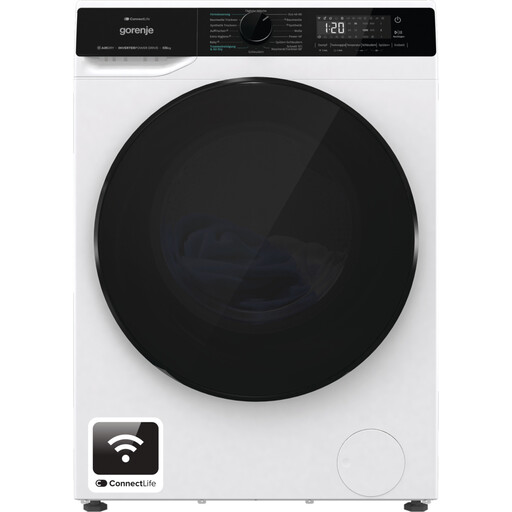 No image available
For a complete wash-and-dry cycle, the load must not exceed the stated combined capacity.
8 kg wash capacity and 5 kg wash-and-dry capacity; 16 programmes.
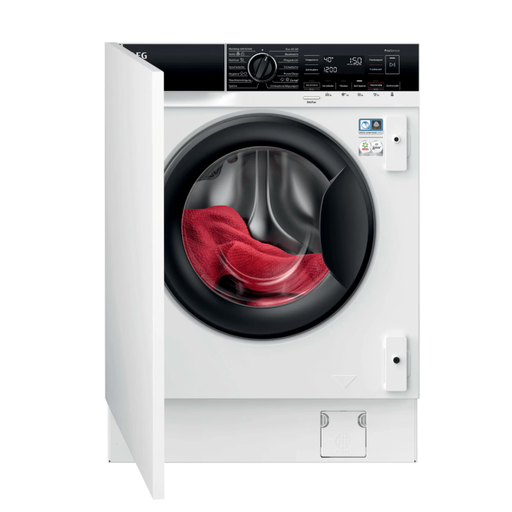 No image available
As an integrated appliance, this model is only an option if it fits the intended installation space and your covers can be tumble-dried.
8 kg wash capacity and 4 kg drying capacity; 1600 rpm; Wi-Fi.
The drying capacity is lower than the wash capacity.
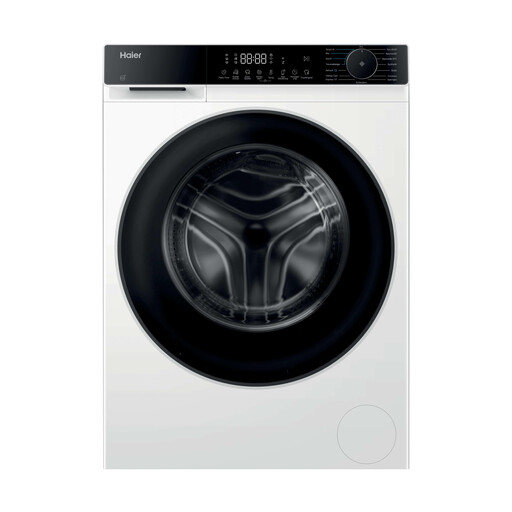 No image available
If you want to run the cycle without splitting the load, compare the combined drying capacity with the number of covers you plan to wash.
12 kg wash capacity and 8 kg drying capacity; 14 programmes; app control.
The drying capacity is lower than the wash capacity.
Only if the tumble-drying symbol also permits machine drying. Check the care label on the specific cover for the wash temperature and whether a delicate cycle is needed.
Compare the complete programme duration and the model’s wash-and-dry load limit with your load and agreed time slot. If you’re only washing, plan separately for drying afterwards.
Measure the installation space and delivery route, then check the dimensions and local connection requirements against the documentation for the specific model. For example, Bosch Home Appliances Germany gives the WNC244070 dimensions as 848 × 598 × 622 mm (H × W × D); these measurements don’t apply to other models.
No. The Consumer Advice Centre distinguishes between your statutory rights against the seller and an additional voluntary guarantee, which is subject to its own terms and conditions.
Electrical and electronic waste must not go in household rubbish. The Federal Ministry for the Environment lists authorised collection points and, subject to the applicable conditions, manufacturers or retailers as return options.