Parents with few spare uniforms
If you’ll soon need certain tumble-dryer-safe uniform items again, check the load size and duration of a complete wash-and-dry cycle. An advertised quick programme doesn’t automatically apply to a full load.


A washer-dryer can be a good fit if space is limited and the uniforms you need to wash and dry fit within its capacity for a complete wash-and-dry cycle. For large, frequent family loads, separate appliances or washing followed by suitable air-drying may be more practical. The key factors are the care labels on your clothes, the capacity and programme duration of the specific model, and its consumption figures for the way you actually plan to use it.
If you’ll soon need certain tumble-dryer-safe uniform items again, check the load size and duration of a complete wash-and-dry cycle. An advertised quick programme doesn’t automatically apply to a full load.
The amount the machine can actually dry is key to deciding whether a washer-dryer suits your regular loads or whether separate appliances would be more practical.
Check whether each uniform item is suitable for machine washing and tumble drying. A delicate-care programme doesn’t override the instructions on the care label.
A good fit if: you only have room for one appliance and the uniform items you need to dry are suitable for tumble drying.
The trade-off: Drying capacity is lower than washing capacity. Germany’s consumer advice centre also notes that washer-dryers use more than separate appliances. Check the EU energy label for the specific model.
A good fit if: you have the space and connections, and regularly wash and dry larger loads.
The trade-off: Two appliances take up more space. Germany’s consumer advice centre and the F.A.Z. buying guide suggest that separate appliances can be more economical or offer better performance if you tumble-dry frequently. Even so, compare specific models and your own usage habits.
A good fit if: the care labels say your uniform items must not be tumble-dried, or you have enough time and a suitable place to dry them.
The trade-off: Your clothes won’t necessarily be dry by the next school day. If you dry them indoors, good ventilation and heating are important, as Germany’s consumer advice centre explains.
| Buying priority | What to look for | Who it matters to most |
|---|---|---|
| Dry uniforms in time | Check the capacity and programme duration for a complete wash-and-dry cycle, as well as the quick programme’s load limit. | If I need tumble-dryer-safe uniform items ready by the next school day, I care about when the whole load is finished, not a promise of a quick programme. Around 25% of consumers put having clothes dry in time first. |
| Regular family loads | Compare the washing and drying capacities of the same model separately, and estimate the size of your usual tumble-dryer-safe load. | If we regularly have lots of laundry, I want to know whether it can be dried without running an extra cycle. Around 25% of consumers prioritise the size of their regular loads. |
| Uniform fabrics and stains | Check the care labels against the programmes and load sizes the model allows; try not to let stains dry in. | If the uniform items have different care instructions, I want to treat each one appropriately and avoid drying anything that isn’t suitable. Around 20% of consumers prioritise fabric care. |
| Energy and water use | Compare figures on the same labelling basis: complete wash-and-dry cycles, water per cycle and wash-only operation. | If the appliance will be used often, I want to assess its consumption against my usage and tariffs. Around 20% of consumers focus first on their ongoing energy and water costs. |
| Space and installation | Check the appliance dimensions, door clearance and connections in the space you have in mind; consider a water-protection system suitable for the model. | If space is limited, I need to know I can install an appliance safely without overlooking the connections it needs. Around 10% of consumers put the available space first. |
The two stated capacities can differ considerably. A large wash load won’t necessarily fit into a single complete wash-and-dry cycle.
Compare the capacity in kilograms for washing and drying with the size of your usual tumble-dryer-safe load.
LG’s German washer-dryer range includes models with separate washing and drying capacities.
The WN54C2A40 is an example for families comparing larger washing capacities and automatic dosing.
The LWR8B80600 combines a 10 kg washing capacity with a 6 kg drying capacity.
The WT1 WTW870WPM PWash&TDos is a model to compare for automatic dosing and combined 9/6 kg capacities.
Bosch offers washer-dryers as a product category for households with limited space and moderate laundry needs.
The product options below are washer-dryers suited to family loads. For each one, compare the stated washing and drying capacities with the amount you want to dry in a complete cycle.
 No image available
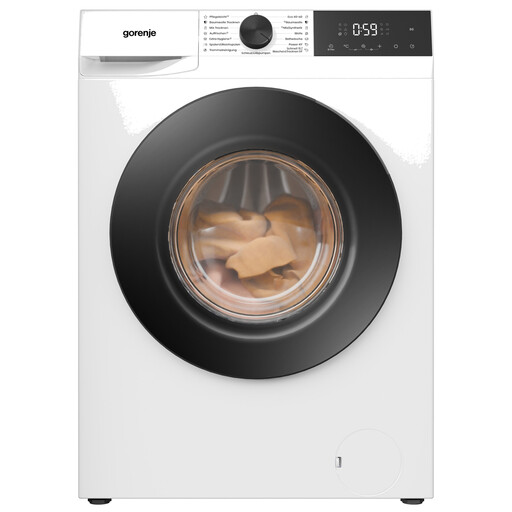
With its stated drying capacity of 6 kg, this washer-dryer may be worth considering for smaller tumble-dryer-safe loads.
Washing capacity: 10 kg. Drying capacity: 6 kg.
 No image available
The stated drying capacity of up to 7 kg may be useful when comparing models for regular family loads.
Washing capacity: 11 kg. Drying capacity: up to 7 kg.
 No image available
The 10 kg drying capacity stated in the product name may appeal to families wanting to dry larger loads in one appliance.
Washing capacity: 12 kg. Drying capacity: 10 kg. Dual Inverter heat pump.
 No image available
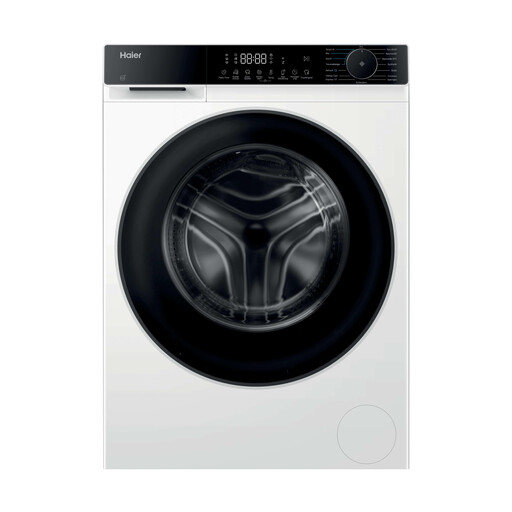
The 9 kg washing and 6 kg drying figures help you judge whether the machine is the right size for a complete cycle.
Washing capacity: 9 kg. Drying capacity: 6 kg. Spin speed: 1400 rpm. SteamCure.
 No image available
The stated drying capacity of 8 kg may suit larger family loads that are safe to tumble-dry.
Washing capacity: 12 kg. Drying capacity: 8 kg.
No. The care label on each item tells you whether it can be tumble-dried at a normal or low temperature, or whether machine drying is not allowed. GINETEX Germany explains the care symbols; check the label before every drying cycle.
Check the appliance dimensions, the space needed to open the door, the water connection and the installation instructions for the specific model. Germany’s consumer advice centre recommends an integrated water-protection system to help prevent water damage. If you rent your home, also check where the appliance can be installed and what your insurance covers.
Try not to let stains dry in, and choose your washing and drying programmes according to the care label and permitted load. Germany’s consumer advice centre also recommends dosing detergent according to the load size, how soiled the clothes are and the local water hardness.
Compare the purchase price and running costs with your own tariffs and expected usage. In Germany, your statutory rights against the seller are separate from a voluntary manufacturer’s guarantee, as the consumer advice centre explains. Check what the specific offer includes for delivery, installation and taking away your old appliance.
Household washer-dryers are covered by EU energy-labelling requirements. Since 1 March 2021, the EU label has used an A to G scale and shown figures separately for wash-only operation and complete wash-and-dry operation. End-of-life electrical appliances should be taken to a separate collection point, not put in household waste.