Shared house with space for one appliance
If washing and occasional drying need to happen in the same spot, a washer-dryer could work well. Housemates should plan for longer, uninterrupted cycles together.


If there’s only space for one appliance in your shared house and you want to machine-dry your bedding, a washer-dryer could be a good fit. The key consideration is its lower capacity for a combined wash-and-dry cycle. If you do laundry frequently and have room for two appliances, you could opt for a separate washing machine and heat-pump tumble dryer. The Verbraucherzentrale (German consumer advice centre) notes that washer-dryers use more electricity and water than separate appliances. Also check the care label, where the appliance will go, and the separate consumption figures for washing and for washing and drying.
If washing and occasional drying need to happen in the same spot, a washer-dryer could work well. Housemates should plan for longer, uninterrupted cycles together.
If several people regularly wash bedding, consider how long a combined wash-and-dry cycle will tie up the shared appliance. With two separate appliances, you can schedule washing and drying as separate tasks.
If you want to estimate running costs, compare the figures for washing alone separately from those for a complete wash-and-dry cycle.
A good fit if: there’s only space for one suitable appliance and you need to machine-dry your laundry.
The trade-off: the appliance is occupied while drying as well. For a complete cycle, bear in mind the lower wash-and-dry capacity.
A good fit if: you have space for two suitable appliances and several housemates want to plan their laundry flexibly.
The trade-off: two appliances take up more room. The Verbraucherzentrale considers separate appliances more economical than washer-dryers in terms of electricity and water use; actual figures depend on the models and how they’re used.
A good fit if: the care label says you can hang the bedding up to dry and you have a suitable space for it.
The trade-off: this option avoids machine-drying, but needs space and time. If you’re drying laundry indoors, consider the ventilation available in your home.
| Buying criterion | What to check | Who it matters to |
|---|---|---|
| Capacity for a complete cycle | Compare the washing and wash-and-dry capacities of the specific model in kg. For a complete cycle, use the lower figure as your guide. | If I want to wash and dry bedding without stopping the cycle, I’ll look at the drying capacity rather than just the washing capacity. That’s why around 29% of consumers put capacity for a complete cycle first. |
| Available washing slots | Compare the programme duration for washing and for washing and drying with your shared laundry schedule. Don’t assume quick-programme times apply to full bedding loads. | If several housemates regularly need to use the machine, I want to know how long it’ll be occupied in one go. Around 24% of consumers prioritise being able to plan washing times around their household. |
| Electricity and water use | Compare the figures per 100 cycles for washing and for washing and drying separately, using the same programme basis for each. | If we often use the dryer in our shared house, I want to know the consumption for a complete cycle, not just the wash. Around 18% of consumers put the running costs of repeated wash-and-dry cycles first. |
| Space and connections | Check the appliance dimensions, as well as the space needed to open the door and access connections. If necessary, confirm the intended location and installation with your landlord or property manager. | Before choosing an appliance for everyone, I need to know where it can go and whether the right connections are available. Around 17% of consumers prioritise a suitable location. |
| Laundry care | Check the washing temperature and whether the bedding is suitable for tumble-drying by reading its care label. | When I wash cotton bedding, I want to care for it according to its specific label and consider any special hygiene needs separately. Around 12% of consumers put laundry care first. |
The stated washing capacity doesn’t necessarily tell you how much laundry can then be dried without stopping the cycle.
Compare both capacities for the specific model, and base a complete cycle on the lower wash-and-dry figure.
The energy label gives separate consumption figures for washing and for washing and drying. So the figure for the wash cycle doesn’t describe the complete cycle.
Check the consumption figures for the setting you actually plan to use in your shared house.
The word ‘cotton’ doesn’t replace checking the care label or whether the item is suitable for tumble-drying. According to the German Environment Agency (Umweltbundesamt), high temperatures are usually unnecessary for ordinary soiling; special hygiene needs should be considered separately.
Read the bedding care instructions. If you have specific hygiene concerns, follow the advice for your particular situation.
Two appliances need floor space. Large items hung up to dry also need a suitable drying area and, indoors, sufficient ventilation.
Before settling on an option, work out together which spaces your shared house can actually use for appliances and drying.
The Bosch WNC244070 from the Series 8 is one example of a model with a 9 kg washing capacity and a 6 kg wash-and-dry capacity.
The Siemens WN54C2A40 iQ700 is one example of a model with a stated washing capacity of 10.5 kg and automatic dosing.
The LG W4WR70E61 is one example of a model with an 11 kg washing capacity and a 6 kg drying capacity.
The AEG L9WEF80690 from the 9000 Series is one example of a washer-dryer with heat-pump drying.
The Haier HWD100-B14939 from the I-Pro Series 3 is one example of a model with a 10 kg washing capacity and a 6 kg wash-and-dry capacity.
The products below include washer-dryers and separate washing machine and heat-pump tumble dryer options for bedding. If you choose separate appliances, make sure your shared house has room for both.
 No image available
This washing machine and heat-pump tumble dryer set could be a good choice if your shared house has space for two suitable appliances.
Product name states: 12 kg washing and 10 kg drying capacity.
 No image available
This washer-dryer could suit your shared house if you’re looking for one appliance that can both wash and dry.
Product name states: 12 kg washing and 10 kg drying capacity, plus a Dual Inverter Heat Pump.
 No image available
This two-appliance set could be a good fit if you want to schedule washing and drying separately and have space for both appliances.
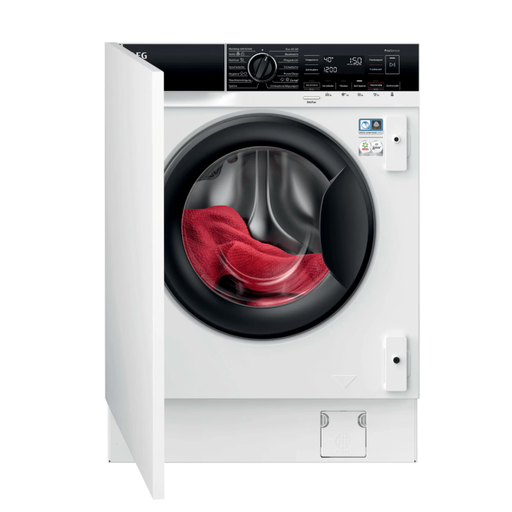 No image available
This integrated washer-dryer could be suitable if you need a built-in appliance and the space you have meets the installation requirements.
Product name states: 8 kg washing and 4 kg drying capacity. For a complete wash-and-dry cycle, the lower drying capacity is the one to bear in mind.
The Bosch WNC244070, Siemens WN54C2A40 and AEG L9WEF80690 models each have a stated capacity of 6 kg for washing and drying. For an uninterrupted cycle, use the lower figure as your guide. Also take the weight of your dry bedding into account.
No, there’s no general requirement to do so. The German Environment Agency (Umweltbundesamt) says high temperatures are usually unnecessary for ordinary soiling. For infectious illnesses, higher washing temperatures can help reduce the risk of transmission. Follow the care label and, if you have specific hygiene concerns due to a weakened immune system, seek medical advice where appropriate.
Check that the space, connections and water-protection requirements are suitable for the specific model and location. The Verbraucherzentrale recommends wiping the rubber seal and detergent drawer dry after washing and leaving them open. Follow the instruction manual for cleaning other parts of the appliance.
For a typical distance sale from a business, you generally have 14 days from delivery to cancel your purchase. For these goods, claims against the seller for defects generally become time-barred two years after delivery. A voluntary guarantee is separate from these rights.
Compare the separate figures for the wash cycle and the complete wash-and-dry cycle. The efficiency figure for washing alone doesn’t cover both processes. The Verbraucherzentrale explains that the kWh figures per 100 cycles are shown separately for each mode. The European Commission lists energy labelling and ecodesign as requirements for household washer-dryers.