A washer-dryer could be a good choice for your shared house if drying space is limited and the care label says your face cloths can be tumble-dried. For face cloths alone, a drying function isn’t essential: if you have room to hang them up, air-drying is an alternative that the German Environment Agency describes as particularly energy-efficient. Before buying, check the permitted washing and drying methods, the lower drying capacity and the time needed for a complete wash-and-dry cycle.
Which option is right for you?
Shared house with limited drying space
If there’s hardly anywhere to hang washed face cloths, check whether the fabrics are suitable for tumble-drying and bear in mind that a washer-dryer has a lower drying capacity. GINETEX GERMANY explains that care symbols specify how fabrics may be treated.
Shared house with set washing times
If several people use the same drum, make sure the planned load fits the capacity for a complete wash-and-dry cycle. The consumer advice centre points out that you should factor in the duration of a wash-and-dry cycle when planning.
Shared house focused on face cloth hygiene
If you want to wash face cloths hygienically, choose a suitable wash programme and follow the care instructions for each item. The Federal Institute of Public Health recommends washing face cloths at a minimum of 60 °C with a heavy-duty detergent containing bleach.
What should you look for when buying?
The Federal Institute of Public Health recommends washing face cloths at a minimum of 60 °C with a heavy-duty detergent containing bleach. GINETEX GERMANY points out that care symbols specify the maximum permitted wash temperature and drying method.
Washer-dryer
A good fit if: you only have space for one appliance and there’s little suitable drying space available.
Things to consider: The drum is occupied for longer during a complete wash-and-dry cycle. Wash and drying capacities need to be considered separately.
Washing machine with air-drying
A good fit if: you have a suitable place to air-dry your face cloths after washing.
Things to consider: Air-drying takes up space and time. The German Environment Agency lists clothes airers and washing lines as energy-efficient ways to dry laundry.
Washing machine and separate tumble dryer
A good fit if: you have space for two appliances and several people want to wash and dry regularly.
Things to consider: Two appliances need more floor space. You can use the washing machine again while the separate tumble dryer is running.
| Priority |
What to check when buying |
Who is it most relevant to? |
| Wash hygienically while caring for fabrics |
Check that the wash programme and temperature suit the care label; check separately whether the item is suitable for tumble-drying. |
If I want to wash used face cloths in line with hygiene recommendations and their care labels, choosing a suitable programme matters. Around 31% of consumers prioritise hygienic washing that is gentle on fabrics. |
| Make do with limited space for the appliance and drying |
Check the appliance dimensions, including the door opening, against the available space; compare wash and drying capacities. |
If there’s hardly any room to hang laundry in our shared house, I need a solution that only takes up the space of one appliance. Around 25% of consumers prioritise a small footprint and a suitable way to dry laundry. |
| Stick to shared washing times |
Check the duration and load limit of the complete wash-and-dry programme. |
If several of us use the same drum, I want to know how long it will be occupied for a complete wash-and-dry cycle. Around 19% of consumers pay particular attention to being able to plan shared washing times. |
| Keep electricity and water use down |
Compare consumption figures for the same type of cycle; take into account how often you plan to use the tumble-drying function. |
If I want to keep an eye on running costs, I compare the figures for the way we’ll actually use the appliance in our shared house. Around 25% of consumers prioritise keeping electricity and water use to a minimum. |
Common buying misconceptions
-
Confusing wash capacity with capacity for a complete wash-and-dry cycle
For the LG, AEG and Haier models mentioned, the stated drying capacity is lower than the wash capacity. So a full wash load won’t necessarily fit in a continuous wash-and-dry cycle.
Plan your load around the drying capacity and the load limit for the programme you choose, not the highest kilogram figure.
-
Assuming a quick wash or steam function provides complete care for face cloths
A short wash programme doesn’t automatically mean drying will also be quick. Nor does a refresh function prove that used face cloths have been washed in line with hygiene recommendations.
Check the care labels to choose a suitable wash programme, and compare the duration of a complete wash-and-dry cycle separately.
-
Looking only at consumption figures for washing
The energy label shows figures for washing alone separately from those for a complete wash-and-dry cycle. They relate to different ways of using the appliance.
If you plan to tumble-dry, compare complete wash-and-dry cycles on a like-for-like basis and consider air-drying as an alternative.
Key brands at a glance
LG
The W4WR7096YB washer-dryer shows why you should check wash and drying capacities separately.
- LG Deutschland lists a 9 kg wash capacity and 6 kg drying capacity for this model.
- LG’s 39-minute wash programme is for a half load, not a complete wash-and-dry cycle.
AEG
The Series 7000 L7WBA60680 washer-dryer is an example of separate capacity and consumption figures.
- AEG Deutschland lists an 8 kg wash capacity, a 5 kg drying capacity and automatic load adjustment for this model.
- The manufacturer’s figures are 47 kWh per 100 wash cycles and 265 kWh per 100 wash-and-dry cycles. These figures relate to different ways of using the appliance; they don’t measure the cost of running it in a shared house.
Haier
The G3 HWD80-BP14637T washer-dryer is a useful comparison if appliance depth is a consideration when choosing where to put it.
- Haier Deutschland lists an 8 kg wash capacity, a 5 kg drying capacity and dimensions of 595 × 507 × 850 mm.
- The advertised steam or refresh function shouldn’t be seen as a substitute for a suitable wash cycle for used face cloths.
Bosch
The WNA13470 washer-dryer also illustrates the difference between wash and drying capacities.
- Bosch Hausgeräte Deutschland lists an 8 kg wash capacity and a 5 kg wash-and-dry capacity for this model.
- Bosch marks this specific model as no longer available, so the figures are for comparison only and don’t confirm that it’s currently available to buy.
Washer-dryers at Joybuy
The Joybuy products below are washer-dryers with stated wash and drying capacities. For a continuous wash-and-dry cycle, bear in mind the lower drying capacity for each model.
 No image available
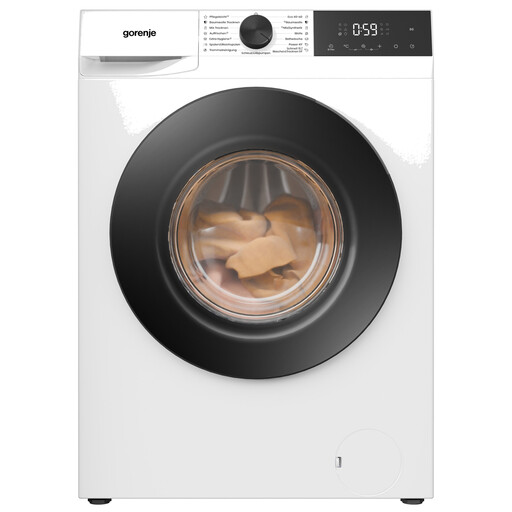
GORENJE WD5G2P1174A2DP2, 11 kg wash / 7 kg drying capacity, white
For shared wash loads, provided the load stays within the stated 7 kg drying capacity.
Wash capacity: 11 kg. Drying capacity: 7 kg.
Joybuy
 No image available
LG WT1210WWF front-loading washer-dryer, 12 kg wash / 10 kg drying capacity
An option for larger shared loads, as long as they fit within the stated drying capacity.
Wash capacity: 12 kg. Drying capacity: 10 kg.
Joybuy
 No image available
Roborock Zeo Lite, 10 kg wash / 6 kg drying capacity
For loads where the amount of laundry is matched to the stated drying capacity for a continuous cycle.
Wash capacity: 10 kg. Drying capacity: 6 kg. Energy rating: E.
Joybuy
 No image available
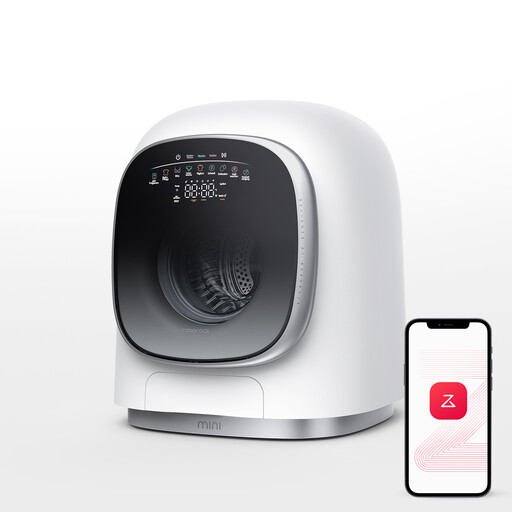
Roborock Zeo Mini, 1 kg wash / 0,5 kg drying capacity
The stated capacities are for small loads, so check whether they’re enough for the amount of laundry you plan to wash.
Wash capacity: 1 kg. Drying capacity: 0,5 kg. Energy rating: A.
Joybuy
 No image available
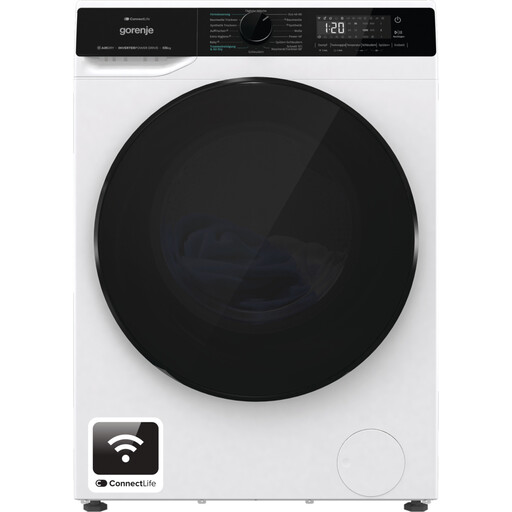
Gorenje WD2PA854ADW, 8 kg wash / 5 kg drying capacity
For shared loads that fit within the stated drying capacity for a wash-and-dry cycle.
Wash capacity: 8 kg. Drying capacity: 5 kg. Energy rating: D.
Joybuy
Frequently asked questions
Do face cloths always need to be washed at 60 °C?
The Federal Institute of Public Health recommends washing face cloths at a minimum of 60 °C with a heavy-duty detergent containing bleach. Also follow the maximum permitted temperature on the care label; this hygiene recommendation isn’t a legal requirement for buying an appliance. The German Environment Agency notes that additional measures may be relevant in certain health situations. If in doubt, ask your doctor.
Can all face cloths go in the tumble dryer?
No. Whether an item can be tumble-dried depends on its care label. A crossed-out tumble dryer symbol means the item must not be tumble-dried. Check washing and drying suitability separately.
What should a shared house check before installing an appliance in a rented home?
Check the space, water supply, drainage and safe installation, and discuss using the appliance with your landlord. The consumer advice centre recommends clarifying these points, particularly in view of possible water damage. This doesn’t mean appliances are generally prohibited in rented homes.
How should you compare consumption, and where should an old appliance go?
Compare the figures on the washer-dryer energy label for washing alone or for a complete wash-and-dry cycle, making sure you compare the same type of cycle. The Federal Ministry for the Environment explains that old electrical appliances must be handed over to authorised collection operators, such as local authority collection points or manufacturers.


