Shared houses with limited laundry slots
If you share laundry times, it matters how long a complete wash-and-dry cycle ties up the communal space. The Verbraucherzentrale identifies the combined cycle as an important point to compare.


A washer-dryer can work well in a shared house with space for just one appliance, provided the tablecloth care label allows tumble drying and the load fits the smaller wash-and-dry capacity. The Verbraucherzentrale recommends including the full wash-and-dry cycle when comparing models. If you have several loads to get through and room for two appliances, separate machines can give you more flexibility with your laundry schedule.
If you share laundry times, it matters how long a complete wash-and-dry cycle ties up the communal space. The Verbraucherzentrale identifies the combined cycle as an important point to compare.
If you wash several tablecloths together, check how much laundry the appliance can dry in a single cycle. Bosch Hausgeräte Deutschland lists different wash and wash-and-dry capacities for the WNC244070 model.
If your tablecloths differ in colour, finish or care instructions, make sure you treat each one according to its label. Libusch recommends checking the tablecloth care instructions first.
A good fit if: you only have space for one appliance and the care label allows tumble drying.
The trade-off: washing and drying use the same appliance one after the other; the drying capacity may be lower than the washing capacity.
A good fit if: you have room for two appliances or a suitable stacked setup, and need to get through several loads quickly.
The trade-off: installation needs more planning; Bosch Hausgeräte Deutschland says you need a suitable stacking kit to stack the appliances.
A good fit if: the care label rules out tumble drying or you have a suitable place to dry your laundry.
The trade-off: when air-drying indoors, good ventilation and heating are important, as the Verbraucherzentrale explains.
| Consideration | What to check before buying | Who should pay particular attention |
|---|---|---|
| Time slot and space | Length of the complete programme with a suitable load; appliance dimensions, connections and door opening. | When we share the laundry space, I want to know how long the full cycle takes and whether the appliance will fit in the space available. Around 36% of consumers have these time and space requirements. |
| Drying capacity | Separate capacity figures for washing and washing/drying, plus the programme’s load limit. | If we have several tablecloths in one load, I want to know in advance whether they will fit within the combined capacity without needing another drying cycle. Around 29% of consumers pay particular attention to the size of the drying load. |
| Fabric care | The care label on each tablecloth and the suitable wash and drying programmes. | If our tablecloths have different colours or finishes, I follow the care label on each one. Around 21% of consumers have these fabric-care requirements. |
| Running costs | Compare consumption figures for washing and the complete wash-and-dry cycle separately; also consider water use and how you plan to use the appliance. | If we tumble-dry regularly, I want to compare the running costs for the way we actually use the appliance. Around 14% of consumers give particular weight to electricity and water consumption. |
The load limit for a combined cycle may be lower. Bosch Hausgeräte Deutschland lists a 9 kg washing capacity and a 6 kg wash-and-dry capacity for the WNC244070 model.
Plan the complete cycle around the lower load limit for the programme you have chosen.
LG Deutschland gives a 39-minute time for TurboWash with a half load; Beko Deutschland’s one-hour Wash-&-Wear programme is for 1 kg of laundry. Neither figure automatically represents a complete cycle for a larger load of tablecloths.
Only compare programme times for suitable load sizes, and remember to include the drying time when looking at a washer-dryer.
The fibre alone does not determine how a tablecloth can be treated; its colour and finish may also matter.
Check the care label on each tablecloth before choosing a drying programme.
An unsuitable drying programme can damage your tablecloth and mean more work to care for it.
Consumption figures are listed separately for washing and for the complete wash-and-dry cycle. The Verbraucherzentrale also points out that many washer-dryers may use more than separate appliances.
Compare the figures with how you expect to use your appliance, and consider separate machines or air-drying too if you have enough space.
The details below apply to the specific model ranges listed and are not a general assessment of each brand.
The W4WR7096YB washer-dryer is listed with a 9 kg washing capacity and a 6 kg wash-and-dry capacity.
According to Bosch Hausgeräte Deutschland, the Series 8 WNC244070 has a 9 kg washing capacity and a 6 kg wash-and-dry capacity.
The 9000 Series L9WEF80690 washer-dryer is listed as a heat-pump model with a 9 kg washing capacity and a 6 kg wash-and-dry capacity.
The iQ700 WN54C2A40 is listed with a 10,5 kg washing capacity and a 6 kg wash-and-dry capacity.
The B3DFT510447W is listed with a 10 kg washing capacity and a 6 kg drying capacity.
This selection includes washer-dryers that wash and dry in one appliance, as well as a separate WashTower solution. Compare capacities according to each appliance’s configuration.
 No image available
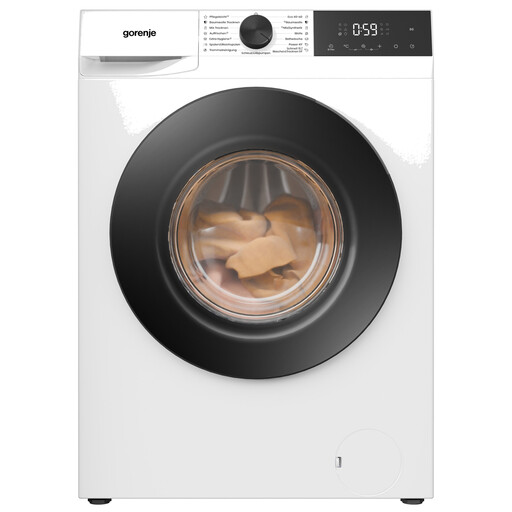
This separate washing and drying solution could suit you if you are planning to have two appliance units rather than a single washer-dryer.
Washing machine: 12 kg; heat-pump tumble dryer: 10 kg.
 No image available
The separate capacity figures make it easier to see whether your load of tablecloths will fit into one wash-and-dry cycle.
Washing: 11 kg; drying: up to 7 kg.
 No image available
The listed washing and drying capacities are useful for shared houses looking to handle larger loads in one appliance.
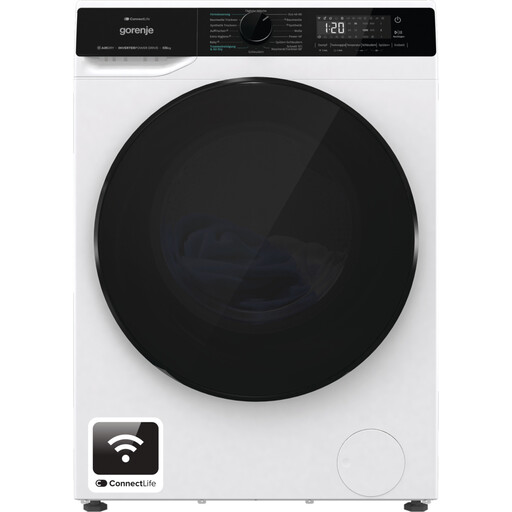
Washing: 12 kg; drying: 10 kg; Dual-Inverter heat pump; TurboWash 360°; steam function.
Check the care labels on your fabrics before drying them.
 No image available
If you are comparing a washer-dryer with a smaller combined capacity, factor the 5 kg wash-and-dry limit into your load planning.
Washing: 8 kg; washing and drying: 5 kg; 16 programmes; 1400 rpm.
 No image available
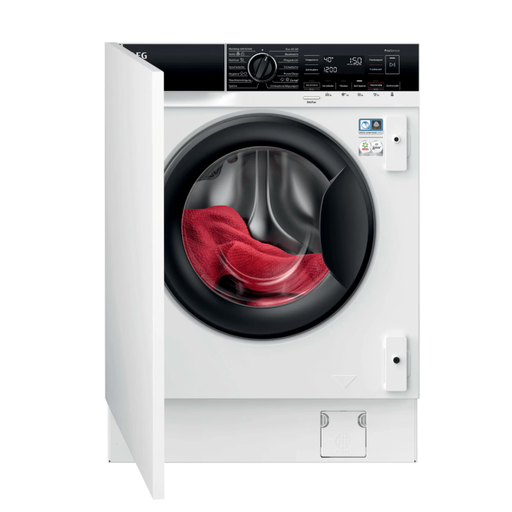
As a built-in appliance, this model is only worth considering if it suits your planned installation space and the smaller drying capacity works for you.
Washing: 8 kg; drying: 4 kg; 1600 rpm; ProSense; ProSteam.
No. The care label on each tablecloth is what matters. Colour and finish can affect how it can be treated; if tumble drying is not recommended, wash it and air-dry it appropriately instead. Libusch advises checking the care instructions first.
Set aside enough time for the complete wash-and-dry programme, taking its load limit into account. LG Deutschland’s 39-minute figure is for a half load; Beko’s one-hour Wash-&-Wear programme is for 1 kg of laundry.
Use the stated wash-and-dry capacity as your guide, rather than relying on the washing capacity alone. For the Bosch WNC244070, for example, Bosch Hausgeräte Deutschland lists 9 kg for washing and 6 kg for the combined cycle.
They refer to different operating modes: a wash cycle and a complete wash-and-dry cycle. For the way you plan to use the appliance, compare the relevant figure per 100 cycles; the Verbraucherzentrale also explains this distinction on the energy label.
Measure the space and check the connections, door opening and instructions for the specific appliance. Agree the installation arrangements and how to manage the risk of water damage with everyone involved; Bosch Hausgeräte Deutschland says a suitable stacking kit is required for a stacked setup.