A washer-dryer can be a practical choice in a small flat if you don’t have room for a second appliance or a suitable place to dry clothes, and your wash-and-dry load fits the lower drying capacity. First check the space available and the connections, then compare the separate capacity and consumption figures. The Verbraucherzentrale points out that washer-dryers use more electricity and water than a washing machine and a separate tumble dryer.
Who is a washer-dryer right for in a small flat?
Limited space for appliances and drying
If there’s no room for two appliances or a practical clothes airer, a washer-dryer can reduce the space needed for laundry appliances. The Verbraucherzentrale describes washer-dryers as space-saving combination appliances.
You regularly need dry T-shirts
If you want to wash and dry clothes without transferring them between appliances, check the capacity for a complete wash-and-dry cycle. The Verbraucherzentrale highlights that you can’t put the entire wash load straight into the drying cycle.
You’re mindful of energy use and clothing care
If you can air-dry clothes occasionally, you can weigh the convenience of machine drying against its energy and water use. Check the care instructions on your T-shirts before every drying cycle.
What should you look for when buying?
Washer-dryer
A good fit if: you’re short on space for an appliance or somewhere to dry clothes, and your combined load fits the stated wash-and-dry capacity.
The trade-off: drying capacity is lower than washing capacity, and combined cycles can use more electricity and water than separate appliances.
Washing machine with air-drying
A good fit if: you have a suitable place to dry clothes and can dry your T-shirts indoors.
The trade-off: you’ll need to make room for drying and, when drying clothes indoors, remember to ventilate the room regularly.
Washing machine and separate tumble dryer
A good fit if: you have room for two appliances and regularly want to machine-dry larger loads.
The trade-off: two appliances take up more space. The Verbraucherzentrale notes that separate appliances use less than washer-dryers.
| Criteria |
What to check before buying |
Who is this important to? |
| Space and installation |
Check the appliance dimensions, door opening, access route, connections and clearance required against the installation space. |
If there’s hardly any room for an appliance in my small flat, I want to know whether the machine and its connections will actually fit. Around 27% of consumers put installation suitability first. |
| Drying capacity |
Check the washing capacity and the capacity for a combined wash-and-dry cycle separately. |
If I want to dry a load without transferring it, I’ll need to use the lower capacity as my guide. Around 27% of consumers prioritise a suitable capacity for a complete cycle. |
| Energy use and running costs |
Distinguish the figures per 100 wash-and-dry cycles from those for wash-only cycles, and consider how you’ll use the machine. |
If I machine-dry clothes often, I want to compare the figures for that exact cycle. Around 20% of consumers put energy use first. |
| T-shirt care |
Check the washing temperature and tumble-drying symbol on each garment before starting a combined cycle. |
If my cotton T-shirts have different care instructions, I want to wash and dry each one appropriately. Around 13% of consumers prioritise fabric care. |
| Noise |
Consider the noise rating for the specific model and how close it will be to living or sleeping areas. |
If the appliance is near my living space, its noise rating matters when I’m choosing a model. Around 13% of consumers focus particularly on noise where the appliance will be installed. |
Which buying decisions often cause problems?
-
Assuming the drying capacity matches the washing capacity
You can’t automatically dry the maximum wash load in full during the same cycle.
For a continuous wash-and-dry cycle, the stated combined capacity is the one that matters.
If the wash load is larger, you may need an extra drying cycle, which takes more time and energy.
-
Comparing only the washing efficiency rating
The EU energy label lists figures for washing only and for the combined wash-and-dry cycle separately.
Compare like with like, using figures for the same type of cycle, and think about how often you’ll actually machine-dry clothes.
-
Assuming cotton is always suitable for tumble-drying
The fact that a T-shirt is made of cotton doesn’t tell you whether that particular garment can be tumble-dried.
Check the care label on each garment before drying it.
Which washer-dryer brands are worth considering?
LG
The W4WR7096YB model is listed with a 9 kg washing capacity and a 6 kg drying capacity.
- The separate capacity figures help you work out the load for a combined cycle.
- The manufacturer’s claims about fabric protection don’t replace the care instructions for each T-shirt.
AEG
The 7000 Series LWR7F65605 model is listed with a 10 kg washing capacity and a 6 kg drying capacity, and includes a ProSteam refresh function.
- AEG lists 307 kWh per 100 combined cycles and 51 kWh per 100 wash-only cycles.
- These consumption figures relate to different operating modes and should be assessed separately.
Bosch
The Series 8 WNC244070 model is listed with a 9 kg washing capacity and a 6 kg wash-and-dry capacity.
- Bosch lists dimensions of 848 × 598 × 622 mm (H × W × D) and 70 dB(A) re 1 pW.
- The noise rating doesn’t tell you how loud the appliance will seem in your particular home.
Samsung
The WD5000D Series WD90DG5B15BEEG model is listed with a 9 kg washing capacity and a 6 kg drying capacity.
- The product page lists dimensions of 600 × 850 × 600 mm (W × H × D).
- Check the details for the specific model rather than assuming claims about other appliances apply to this washer-dryer.
Siemens
The WN54C2070 iQ700 model is listed with a 9 kg washing capacity and a 6 kg wash-and-dry capacity.
- Siemens lists dimensions of 848 × 598 × 622 mm (H × W × D), as well as AquaStop and 70 dB(A) re 1 pW.
- According to the manufacturer, certain Home Connect features require an internet account and app.
Washer-dryers at Joybuy
This selection features washer-dryers that wash and dry clothes in a single appliance. If you’re planning to dry a load without transferring it, pay particular attention to the separate washing and drying capacity figures.
 No image available
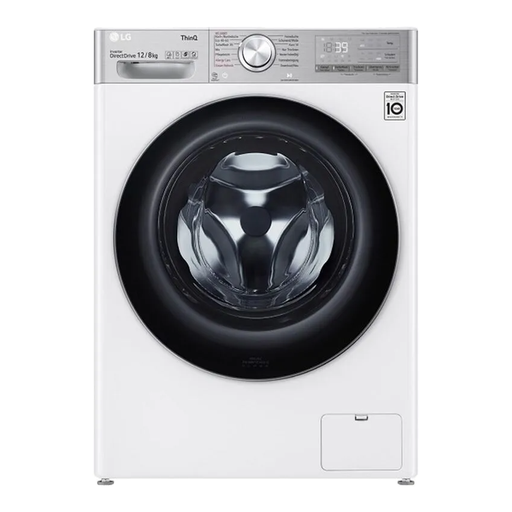
LG V9WD128H2 AI DD, 12 kg, white
Before buying, check the separate washing and drying capacity figures to see whether the appliance can handle a combined cycle.
View at Joybuy
 No image available
Roborock Zeo Lite, 10 kg washing / 6 kg drying, white
The stated drying capacity is lower than the washing capacity. For a cycle without transferring clothes, the lower figure is the one to go by.
Energy efficiency class E.
View at Joybuy
 No image available
LG WT1210WWF, 12 kg washing / 10 kg drying
The stated drying capacity is 10 kg, compared with a washing capacity of 12 kg. For a continuous cycle, the smaller load limit applies.
View at Joybuy
 No image available
Beko BM3DT4944W, 9 kg washing / 6 kg drying
The 6 kg drying capacity is lower than the 9 kg washing capacity, so use the lower figure when planning a complete wash-and-dry cycle.
1,400 rpm.
View at Joybuy
 No image available
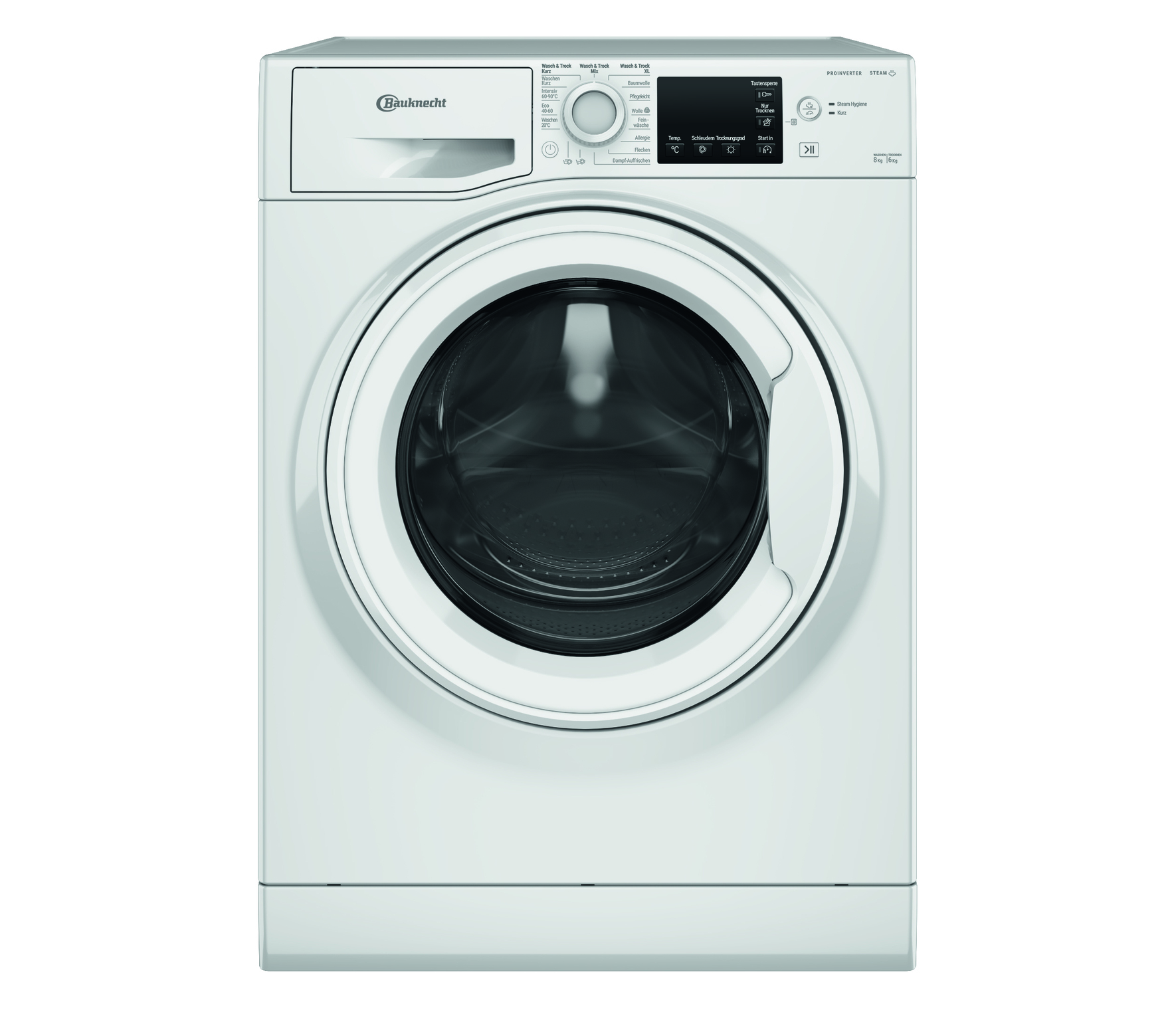
Bauknecht WD Eco Shield 8614 D, 8 kg washing / 6 kg drying
The stated drying capacity is lower than the washing capacity, so the 6 kg figure is the one that matters for a combined cycle.
1,400 rpm; energy efficiency class D.
View at Joybuy
Frequently asked questions about washer-dryers
Can I wash and dry any cotton T-shirt in the same cycle?
No, it depends on the care label on the individual T-shirt. Check the washing temperature and tumble-drying symbol on each garment. The fact that it’s made of cotton doesn’t mean it’s suitable for machine drying.
Which consumption figures should I compare for a washer-dryer?
Compare the figures for wash-only cycles separately from those for combined wash-and-dry cycles. The European Commission explains that the EU energy label includes information such as energy use per 100 cycles, water use, programme duration and noise emissions.
What should I check before delivery and installation?
Measure the installation space and access route against the dimensions of the specific model, and check the water connection and drain. Before placing your order, also confirm which delivery, installation or old-appliance removal services are available for your chosen model.
What should I do if the appliance develops a fault, and how should I dispose of my old one?
Your statutory rights and a voluntary guarantee are different forms of protection. If the appliance has a fault, contact the seller. The Verbraucherzentrale explains the difference, while the Federal Ministry for the Environment provides information on taking old electrical appliances to authorised collection points.


