Active people with a limited laundry slot
If you share laundry times, check whether the time available is long enough for washing alone or for machine drying too. A complete drying cycle keeps the appliance in use for longer.


A washer-dryer could be a good fit if you only have space for one appliance, the care label says your sportswear is suitable for tumble drying, and the shared time slot is long enough for a complete cycle. The Verbraucherzentrale (German consumer advice centre) points out that washer-dryers can use more electricity and water than separate appliances. So compare the washing and drying capacities, as well as the figures for both operating modes. If your clothes are not suitable for tumble drying, or you need to free up the laundry space quickly, a washing machine with air-drying or separate appliances may be a better option.
If you share laundry times, check whether the time available is long enough for washing alone or for machine drying too. A complete drying cycle keeps the appliance in use for longer.
The care label will tell you whether a sports or delicate cycle, followed by machine drying, is suitable. A sports cycle does not mean every garment can go in the tumble dryer.
A washer-dryer needs room for just one appliance. Even so, check that its drying capacity suits your usual loads and find out how long it will be in use for a complete wash-and-dry cycle.
A good fit if: you want to use just one appliance and can dry a suitable small load without transferring it.
The trade-off: the appliance remains in use while drying, and its drying capacity may be lower than its washing capacity.
A good fit if: the care label says your sportswear is not suitable for tumble drying and you have a suitable place to dry it.
The trade-off: drying time depends on the conditions where you dry your clothes. If you dry them indoors, remember to ventilate and heat the room.
A good fit if: you have room and connections for two appliances, and some of your laundry is suitable for tumble drying.
The trade-off: once you transfer the laundry, the washing machine may be free for the next load. A care label that says not to tumble dry still applies.
First, check the care instructions on your clothes and how much time you have. You can then compare appliance type, load size and energy and water use in context. The European Commission explains that the EU energy label gives separate figures for washing cycles and complete wash-and-dry cycles.
| What matters | What to look for | Who is this important to? |
|---|---|---|
| Appliance availability | Check the programme duration for the load you plan to wash. Don’t assume a short programme will take as long as a complete wash-and-dry cycle. | When I share the laundry space with others, I need to know when the machine will be free for the next load. Around 29% of consumers put having the appliance free on time first. |
| Fabric care | Check the washing and drying symbols on every garment. Only use a sports cycle for the fabrics and load sizes specified by the manufacturer. | For delicate performance clothing, I follow the label on each item, not just the name of the programme. Around 29% of consumers prioritise protecting their sportswear. |
| Load and space | Check the washing and drying capacities separately. Make sure the appliance’s dimensions, including space for the door and connections, fit your chosen spot. | If I only have one suitable space, the appliance needs to fit there and handle my usual loads. Around 24% of consumers prioritise available space and usable load size. |
| Energy and water use | Compare kWh per 100 cycles and water per cycle on the same programme basis. Consider washing and wash-and-dry modes separately. | If I regularly machine-dry clothes, I want to compare the figures for that specific operating mode. Around 18% of consumers prioritise the consumption of the programme they actually use. |
The larger figure may refer to washing only. If you want to run a complete cycle without transferring the laundry, the lower wash-and-dry capacity is the one that matters.
Plan your load around the stated combined capacity and the programme you choose. For example, documented models may list 9 kg for washing and 5 or 6 kg for washing and drying.
An extra drying cycle could take up another time slot.
Washing and drying instructions appear separately on the care label. A suitable washing programme does not override a warning against tumble drying.
Check the symbols on each item and remove any garments that are not suitable for tumble drying before starting the drying cycle. GINETEX Germany explains the care symbols.
You will still need a suitable place to air-dry items that cannot go in the tumble dryer.
A short programme duration may apply only to washing or to a specific small load. It does not automatically tell you how long the complete combined cycle will take.
For the model you are considering, check the load requirements and the full duration of the programme you actually plan to use. AEG lists a duration of 9:40 hours for Eco 40–60 with washing and drying at rated capacity.
A longer combined cycle could keep the shared laundry space occupied beyond your planned time slot.
The figures for washing alone and for washing plus drying relate to different operating modes. Looking at only one side of the EU energy label will not tell you about the other mode.
Compare figures on the same label basis for the operating mode you expect to use. The Verbraucherzentrale points out that washer-dryers use more electricity and water than separate appliances.
Regular machine drying affects your household’s energy and water use.
The WNA13441 is worth considering if you’re looking for a model with a dedicated sportswear programme and a short cycle for small loads.
The W4WR32963 and W4WR7096YB are worth comparing if you’re interested in quick wash programmes or delay-end planning.
The L9WSF80699 is worth considering if you’re comparing heat pump drying and separate label figures.
With a washing capacity of 8 kg and a drying capacity of 5 kg, the WTD160 WCS offers another combination to compare.
The selection includes washer-dryers and washing machines with separate tumble dryers to suit different shared laundry schedules.
 No image available
A washing machine and a separate heat pump tumble dryer in one WashTower are designed to handle washing and drying as separate appliance functions.
Washing capacity: 12 kg; tumble dryer capacity: 10 kg. The stated height is 165,5 cm. Check that your space can accommodate it.
 No image available
The combined washing and drying function may suit you if you want one appliance to handle both steps and have enough time for the complete cycle.
Washing capacity: 12 kg; drying capacity: 10 kg. The product description also lists Dual-Inverter heat pump technology, AI DD and TurboWash 360°.
 No image available
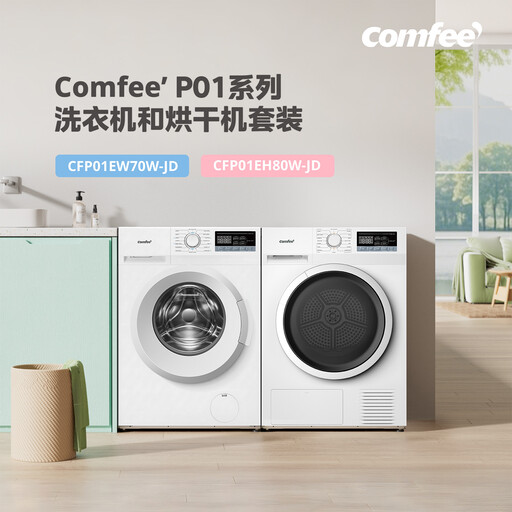
Two separate appliances let you schedule washing and drying as separate steps, but you will need space for both.
The stated capacities are 7 kg for washing and 8 kg for drying. The description lists a sports programme for the tumble dryer, a 15-minute quick wash programme and a 24-hour delay timer for the washing machine.
 No image available
A washer-dryer could work with a shared laundry schedule if your washing load is within the drying capacity and there is enough time for the complete cycle.
Washing capacity: 9 kg; drying capacity: 6 kg. The product description lists a 24-hour delay timer and energy class A (washing)/D (overall).
 No image available
The combined function may be an option if you want a single appliance. Check the programme duration for the load you actually plan to wash.
Washing capacity: 10 kg; drying capacity: 6 kg. The description lists a 60-minute wash-and-dry cycle for a suitable small load, as well as a 15-minute quick wash programme.
No. Check the washing and drying symbols on each item. A sports programme does not mean it is safe to tumble dry. Remove any items that are not suitable for tumble drying after washing.
Allow for the duration of your chosen wash cycle and, if you plan to use it, the complete drying cycle with the load you actually intend to wash. The European Commission lists cycle duration as information on the EU energy label. A quick wash programme does not automatically mean a similarly short wash-and-dry cycle.
Check the space, connections and water protection, and discuss installation and how to handle potential water damage with your landlord and insurer. The Verbraucherzentrale recommends checking these points; this does not mean there is a general ban on washer-dryers in rented homes.
On the EU energy label, compare washing alone and washing plus drying on the same programme basis. Your Europe, the European Union’s information service, says that purchases from traders come with a minimum two-year legal guarantee from the date you receive the goods. An additional manufacturer’s guarantee does not replace these rights.
Before placing your order, check with the seller what return or collection options are available for your particular old appliance. The German Federal Ministry for the Environment points out that online retailers also have take-back obligations for waste electrical and electronic equipment.