A washer-dryer could be a good fit if there’s only room for one appliance in your utility room and you want to machine-dry small loads of sportswear that’s specifically suitable for tumble drying. Check the care labels and the drying capacity of the programme you plan to use first. If you have enough space and dry clothes frequently, compare a washing machine and separate tumble dryer too: the German Consumer Advice Centre points out that typical washer-dryers use more electricity and water than separate appliances.
Who might benefit from a washer-dryer?
Anyone who takes care with technical fabrics
If you often wash synthetic sportswear, choose your wash and drying programmes according to the care label. The GINETEX care symbols, provided by the German Consumer Advice Centre, distinguish between options such as low-temperature tumble drying and a ban on tumble drying.
Households with room for just one appliance
If there’s only space for one appliance in your utility room, a washer-dryer can be a space-saving option. Before choosing one, check its dimensions and connections, as well as its lower capacity for a complete wash-and-dry cycle.
Households with lots of sportswear to wash
If you regularly have larger loads, check how much tumble-dryer-safe laundry will fit in a complete cycle without needing to be transferred. The German Consumer Advice Centre highlights the difference between the washing and drying capacities of combination appliances.
What should you look for when buying?
First, check whether your sportswear is suitable for tumble drying at all. Then consider the space available, the load size you need and the energy and water figures for the cycle you’ll actually use.
Washer-dryer
A good fit if: you have room for just one appliance and only small loads of tumble-dryer-safe laundry.
Consider: washing and drying capacities differ. The German Consumer Advice Centre also points out that washer-dryers use more electricity and water than separate appliances.
Washing machine and separate tumble dryer
A good fit if: you have room for two appliances and regularly have larger loads of tumble-dryer-safe laundry.
Consider: you’ll need space for both appliances. Even so, compare the energy and water figures for the specific models.
Wash and dry somewhere suitable
A good fit if: your sportswear can’t be tumble-dried or you don’t need to dry it in the appliance every time.
Consider: you’ll need a suitable place and time to dry your clothes. A tumble-dryer programme isn’t an option for fabrics that must not be tumble-dried.
| What matters |
What to check when buying |
Who it matters to |
| Care that’s right for your clothes |
Check the care label on each garment, along with the load limit and instructions for the programme you plan to use. |
If I wash technical sportswear, I want to choose the drying method and programme according to each garment’s care label. Around 33% of consumers put fabric care first. |
| Space and installation |
Check the appliance dimensions, door opening, water inlet and outlet, socket and installation instructions. |
If there’s room for only one appliance in my utility room, I want to know whether the model will fit and can be connected there. Around 27% of consumers pay particular attention to the space available. |
| Load size per cycle |
Compare washing and drying capacities separately, and check the load limit for the sportswear or delicate programme too. |
If I have lots of sportswear to wash, I want to know how much of it can be tumble-dried in a complete cycle. Around 20% of consumers prioritise finding the right load size. |
| Energy and running costs |
Compare energy use per 100 cycles, water use per cycle and programme duration for each operating mode on the EU energy label. |
If I tumble-dry frequently, I want to assess the figures for a complete cycle, not just for washing. Around 20% of consumers focus first on running costs. |
Common buying mistakes
-
Assuming the washing capacity is the same as the wash-and-dry capacity
With a washer-dryer, the load size for a complete cycle may be lower than the washing capacity. For example, Bosch lists a washing capacity of 9.0 kg and a wash-and-dry capacity of 5.0 kg for the WNA13441 model.
Compare both figures and check the load limit for the programme you plan to use for your sportswear.
A smaller drying load may mean extra cycles and more time.
-
Assuming a sportswear programme is suitable for all sportswear
The care label may prohibit tumble drying or specify a low temperature. A programme name doesn’t override those instructions.
Sort your clothes by care label, then choose the wash and drying programmes.
-
Comparing only the efficiency figures for washing
The EU energy label shows figures for different operating modes. Comparing only the washing cycle won’t tell you how the figures look for a complete wash-and-dry cycle.
Compare like-for-like cycle figures and consider how often you actually wash and tumble-dry your clothes.
Notable models from leading brands
Bosch
The WNA13441 model is listed with a sportswear programme for microfibre and technical fabrics.
- Bosch lists a washing capacity of 9.0 kg and a wash-and-dry capacity of 5.0 kg.
- Whether a garment can be tumble-dried still depends on its care label.
AEG
The L9WEF80690 model is a heat-pump option to consider if you tumble-dry regularly.
- AEG lists a washing capacity of 9.0 kg and a drying capacity of 6.0 kg, as well as 252 kWh per 100 complete cycles and 49 kWh per 100 washing cycles.
- Manufacturer claims about fabric care don’t prove that every sportswear fabric will benefit.
LG
The HPWD096C model adds a heat-pump washer-dryer to the comparison.
- LG lists a washing capacity of 9 kg and a drying capacity of 6 kg.
- Check the care label, as well as the programme and load limit for the specific appliance.
Miele
The WTW870WPM model is another 9/6 kg option to compare for its controls and dispensing features.
- Miele lists TwinDos, a washing capacity of 9 kg and a drying capacity of 6 kg for this model.
- A dispensing feature doesn’t prove that every detergent choice and drying option is right for every type of sportswear.
Joybuy products at a glance
The Joybuy products below include washer-dryers and a WashTower with a washing machine and separate heat-pump tumble dryer.
 No image available
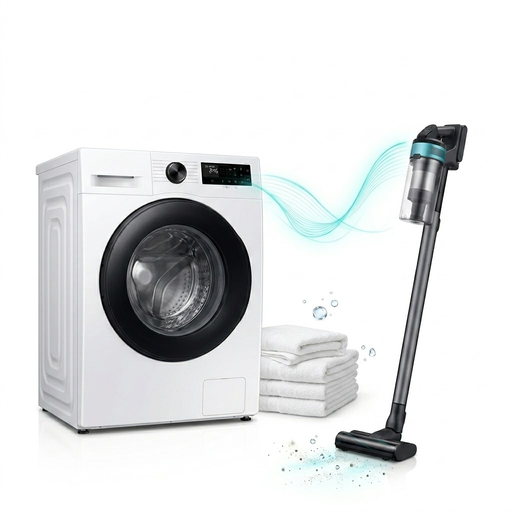
Samsung WD9BHG5U34BEEG washer-dryer with Jet 75E PetPRO
For households looking for a washer-dryer together with the Jet 75E PetPRO named in the product title.
9 kg washing capacity and 6 kg drying capacity.
View at Joybuy
 No image available
LG WT1210EGF WashTower
For households looking to stack a washing machine and separate tumble dryer as a single vertical unit.
12 kg washing capacity and 10 kg drying capacity; heat-pump tumble dryer.
The listed height is 165.5 cm; dimensions are 60 × 165.5 × 66 cm.
View at Joybuy
 No image available
LG WT1210WWF washer-dryer
For households looking to combine washing and drying in a front-loading appliance.
12 kg washing capacity and 10 kg drying capacity; Dual Inverter Heat Pump.
The listed dimensions are 85 × 60 × 66 cm.
View at Joybuy
 No image available
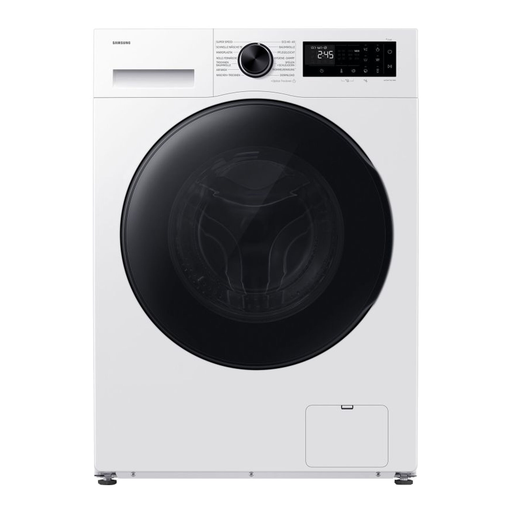
Samsung WD9BHG5U34BEEG washer-dryer
For households looking for a washer-dryer with a programme for synthetic garments, as described in the product listing.
9 kg washing capacity and 6 kg drying capacity; Microplastic Care.
View at Joybuy
 No image available
Samsung washer-dryer combination, 9/6 kg
For households looking for washing and drying functions in one appliance.
9 kg washing capacity and 6 kg drying capacity; 1400 rpm.
Energy class A for washing and D for the complete cycle.
View at Joybuy
Frequently asked questions
Can all washable sportswear be put in a washer-dryer afterwards?
No. Being washable doesn’t automatically mean a garment can be tumble-dried. A crossed-out tumble-dryer symbol means it must not be dried in an appliance; one dot inside the symbol indicates a low temperature. Check the instructions for your chosen programme too.
Which figures should I compare if I wash frequently but rarely tumble-dry?
Compare the figures for the washing cycle and complete wash-and-dry cycle separately on the EU energy label. For washer-dryers, the European Commission lists details including energy use per 100 cycles, water use per cycle and programme duration. Your running costs depend on how often you actually use each operating mode.
What should I check before installing the appliance in my utility room?
Check that the appliance dimensions and door opening suit the space, and make sure the water inlet and outlet, socket and installation instructions for the specific model are all suitable. The German Consumer Advice Centre recommends looking for an integrated water protection system. If you rent your home, you should also check whether your planned installation is permitted.


