A washer-dryer could be a good choice for a student house share if there’s only space for one appliance and you occasionally want to machine-dry sportswear that’s suitable for tumble drying. Check care labels, washing and drying capacities, and the consumption figures for both modes. If you dry clothes frequently and have room for two appliances, a washing machine and separate tumble dryer are worth considering too, as the Verbraucherzentrale notes that many washer-dryers use more energy.
Who might benefit from a washer-dryer
House shares with delicate sportswear
If you wash technical tops, sports shirts or stretchy garments, follow the care labels. Bosch Hausgeräte Deutschland recommends a gentle wash cycle as a possible alternative if there’s no suitable sports programme. AEG describes low-temperature drying for its L9WEF80690 model, but you should still check the care instructions for each garment.
House shares with a shared washing machine
When several people share an appliance, both the washing and drying capacity matter, as does the time the machine is occupied by a full wash-and-dry cycle. For example, AEG and Beko list different washing and drying capacities for their models.
House shares with space for just one appliance
A washer-dryer could be an option if there isn’t room for two appliances. Check the dimensions, connections and installation requirements in advance. The Verbraucherzentrale recommends discussing the arrangements in a rented home with your landlord.
What to look for when buying
Washer-dryer
A good fit if: There’s space for just one appliance in your house share and you’d like to dry suitable laundry occasionally without transferring it between machines.
The trade-off: Drying capacity is lower than washing capacity. Compare the energy and water consumption and programme duration for both modes.
Washing machine and air-drying
A good fit if: You have a suitable, well-ventilated place to dry your laundry after washing.
The trade-off: You’ll need space to dry your clothes and, if drying indoors, you’ll need to make sure the room is well ventilated.
Separate washing machine and tumble dryer
A good fit if: You have the space and connections for two appliances, and your house share regularly has larger loads of laundry that can be tumble-dried.
The trade-off: Two appliances take up more space. The Verbraucherzentrale and the F.A.Z. Kaufkompass list separate appliances as an option to compare if you dry clothes frequently.
| Buying priority |
What to check |
Who it matters most to |
| Caring for sportswear |
Check the care symbols and whether the chosen wash or drying programme is suitable for each garment. |
If I wash technical clothing, I want to follow the care label and only machine-dry it if the label says it’s suitable. Around 28% of consumers put appropriate fabric care first. |
| Keeping up with the laundry in a house share |
Compare the washing and drying capacities and programme duration with your usual household loads. |
If several people use the same appliance, I want to know how much laundry a full wash-and-dry cycle can actually handle and how long the machine will be occupied. Around 22% of consumers prioritise getting through shared laundry loads. |
| Space and connections |
Check the appliance dimensions, including the space needed for connections and the door to open, at the intended location. Confirm the installation and connections in advance. |
If there’s only one suitable spot, I want to make sure the appliance and connections will fit and that we’ve agreed how it will be installed in our house share. Around 22% of consumers put space and installation first. |
| Running costs |
Compare consumption figures for washing and for washing with drying separately. Take water consumption and how you’ll actually use the appliance into account. |
If we use the appliance regularly as a household, I want to compare consumption figures based on our wash and drying cycles. Around 17% of consumers focus primarily on running costs. |
| Everyday noise |
Check the noise rating and which stage of the cycle it applies to, and consider where you plan to install the appliance. |
If the appliance will be near living or study areas, I want to know which stage of the cycle the stated noise level applies to. Around 11% of consumers prioritise quiet washing. |
Common misconceptions to avoid
-
Confusing washing capacity with the capacity for a complete wash-and-dry cycle
For example, the AEG L9WEF80690 and Beko BM3DT4944W models are listed as having a 9 kg washing capacity but a 6 kg drying capacity. So a full wash load can’t necessarily be washed and dried in one go.
Compare the drying capacity with your usual loads of laundry that can be tumble-dried, and allow for an extra drying cycle if needed.
Extra drying cycles can keep a shared appliance occupied for longer.
-
Assuming a sports programme means clothes are suitable for tumble drying
Whether an item is suitable for washing and drying depends on the garment. A sportswear programme doesn’t replace the care instructions on the label.
Sort clothes by their care labels and make sure you have a suitable place to dry any items that aren’t approved for tumble drying.
-
Comparing only the washing efficiency class or a single consumption figure
The energy label gives separate figures for washing alone and for washing with drying. A figure for one mode can’t be directly compared with the figure for the other.
Compare like-for-like figures on the label and consider how often you expect to use each mode.
-
Checking the space and connections only after ordering
Dimensions vary between models. If you rent your home, you may also need to consider installation and the risk of water damage.
Measure the exact space and check the connections and installation arrangements with your housemates before buying. If necessary, ask your landlord or a qualified professional too.
An unsuitable location could mean extra installation work.
Brands to consider
AEG
The 9000 Series includes the L9WEF80690, a heat pump washer-dryer that offers a point of comparison for caring for laundry suitable for tumble drying.
- For this model, AEG lists a 9 kg washing capacity, a 6 kg drying capacity and separate consumption figures.
- Claims about fabric care come from the manufacturer and don’t replace the care label or checking whether an item is suitable for tumble drying.
LG
The W4WR7096YB combines a 9 kg washing capacity with a 6 kg drying capacity, making it a useful point of comparison for house-share laundry loads.
- The separate capacities make it easier to distinguish between washing and drying loads when planning.
- LG’s claim of “18% more fabric protection” is based, according to the manufacturer, on a comparison using 2 kg of cotton underwear. It doesn’t mean the model offers a general benefit for sportswear.
Beko
The freestanding BM3DT4944W offers a point of comparison for capacity, installation dimensions and spin noise.
- Beko lists a 9 kg washing capacity and a 6 kg drying capacity for this model.
- Beko states that the appliance is 57 cm deep and produces 76 dB(A) during the spin cycle. The manufacturer’s description of AquaWave movement doesn’t prove that a particular sports fabric is suitable for the machine.
Siemens
The WN54C2A40 washer-dryer is a point of comparison for a higher washing capacity alongside a more limited drying capacity.
- Siemens lists a 10.5 kg washing capacity, a 6 kg capacity for washing and drying, and i-Dos.
- The automatic dosing function doesn’t change the need to consider washing and drying capacities separately and check care labels.
Bosch
Bosch Hausgeräte Deutschland describes programmes and gives advice for sportswear. What matters is what the specific model on offer actually provides.
- Bosch recommends a gentle wash cycle as a possible alternative if there’s no suitable sports programme.
- According to Bosch, the WNA13491 model with a Sportswear programme is no longer available. Its programmes and dimensions can’t automatically be assumed to apply to other models.
Washer-dryers at Joybuy
The following Joybuy products are washer-dryers with separate washing and drying capacities, designed for shared use in a busy house-share household.
 No image available
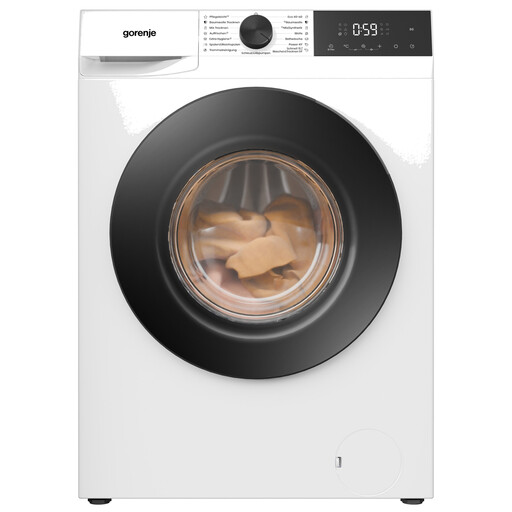
GORENJE WD5G2P1174A2DP2 washer-dryer, 11 kg/7 kg
For a house share that wants to plan washing and drying loads separately.
Washing: 11 kg; drying: up to 7 kg. Only tumble-dry sportswear if the care label says it’s suitable.
View at Joybuy
 No image available
LG WT1210WWF washer-dryer, 12 kg/10 kg
For larger house-share loads, where washing and drying capacities need to be considered separately.
Washing: 12 kg; drying: 10 kg. Only machine-dry sportswear if the care label says it’s suitable.
View at Joybuy
 No image available
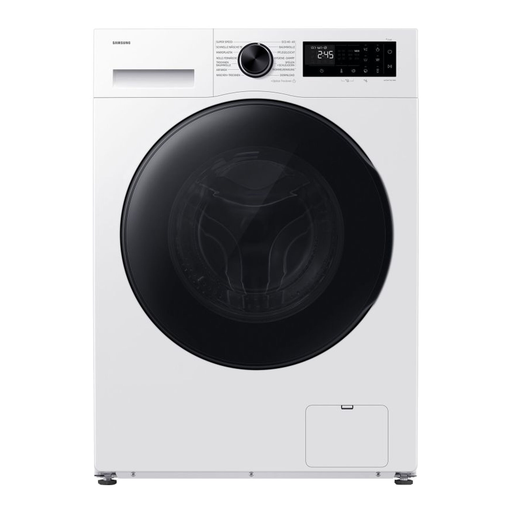
Samsung WD9BHG5U34BEEG washer-dryer, 9 kg/6 kg
For a house share comparing a washer-dryer with clearly stated capacities for each type of load.
Washing: 9 kg; drying: 6 kg. For sportswear, check the care label to see if it’s suitable for tumble drying.
View at Joybuy
 No image available
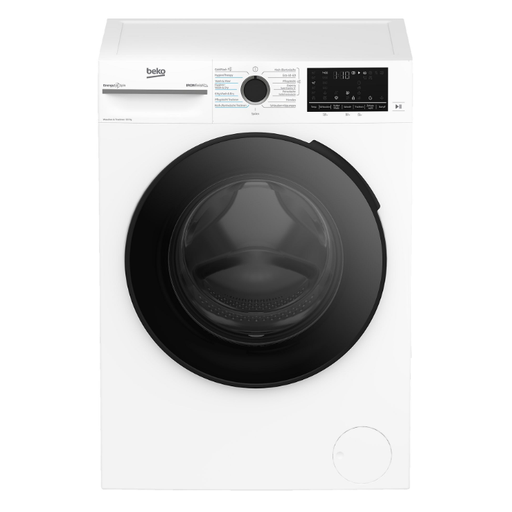
Beko BM3DT4944W washer-dryer, 9 kg/6 kg
For house shares looking to compare washing and drying capacities with the available installation space before buying.
Washing: 9 kg; drying: 6 kg. Beko lists 76 dB(A) during the spin cycle. Only dry sportswear in line with the care label.
View at Joybuy
 No image available
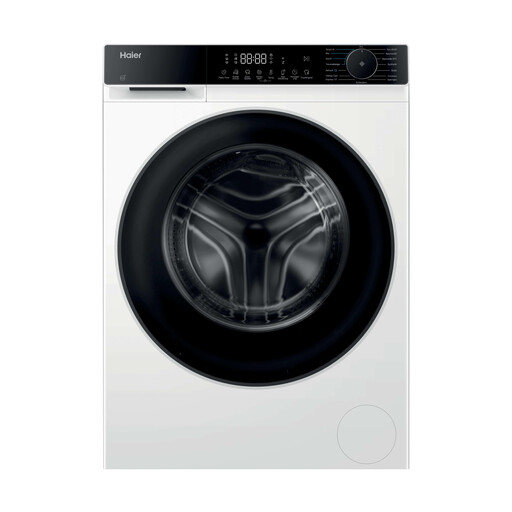
Haier X5 Series HWD120-BP14357U1 washer-dryer, 12 kg/8 kg
For larger wash loads, with the lower drying capacity factored into your house-share plans.
Washing: 12 kg; drying: 8 kg. Only machine-dry sportswear if the care label says it’s suitable.
View at Joybuy
Frequently asked questions
Can I tumble-dry all my sportswear in a washer-dryer after washing it?
No, not just because the appliance has a drying function. Check the care label on each item. Bosch Hausgeräte Deutschland specifically points out the importance of laundry symbols. A sports wash programme doesn’t automatically mean an item is suitable for tumble drying.
How can we prevent smells in a shared washing machine?
Don’t leave wet laundry sitting in the machine for long, and dry the seal and detergent drawer after washing. The Verbraucherzentrale also recommends leaving the door open to let the machine dry and cleaning the lint filter regularly, if the appliance has one. Follow the instructions for your model.
How can our house share estimate the running costs?
First work out how often you’ll only wash clothes and how often you’ll use a combined wash-and-dry cycle. Compare the separate kWh figures per 100 cycles for those two types of use, and factor in water consumption and any installation costs. Without knowing how often you’ll use each mode and what your tariff is, it’s not possible to work out a cost in pounds per housemate.
What rights do I have if an appliance bought from a business seller is faulty?
According to official EU consumer information, when consumers buy goods from a business seller in the EU, they have a legal guarantee of at least two years from receipt of the goods, which they can claim from the seller. This is separate from any additional manufacturer’s guarantee.
Which energy label applies to washer-dryers in Germany?
The Umweltbundesamt describes the A to G scale that has been in use since March 2021. For a washer-dryer, also compare the figures for washing alone separately from those for the combined wash-and-dry cycle.


