A house share with stained table linen
You want to choose the wash programme and drying method based on the care label on your cotton tablecloths, rather than assuming that the fabric alone tells you which temperature or drying method is safe.


A washer-dryer could work well for your house share if you only have space for one appliance, the care label allows tumble drying and the tablecloth load fits within the drying capacity. If you can hang the tablecloths out to dry, or housemates need to use the machine for another load while the first is drying, weigh the space saved against the longer time the appliance is in use and its energy and water consumption. For typical washer-dryers, the Verbraucherzentrale notes higher electricity and water consumption than with two separate appliances.
You want to choose the wash programme and drying method based on the care label on your cotton tablecloths, rather than assuming that the fabric alone tells you which temperature or drying method is safe.
You need to know whether tablecloths that are suitable for tumble drying can be dried in one appliance, and whether its usable drying capacity is enough for your load.
If several people use the same appliance, you’ll need to work out whether the load limit and the time needed for a complete wash-and-dry cycle fit around the available laundry slots.
A good fit if: you have little space for drying, the care label allows tumble drying and the load is within the limit for the relevant programme.
Things to weigh up: The drum is occupied while the laundry dries. Check the washing and drying capacities separately.
A good fit if: you have somewhere to hang your laundry, or the care label says not to tumble dry it.
Things to weigh up: Large tablecloths need plenty of room to dry. If you dry them indoors, good ventilation is important.
A good fit if: you have space for both appliances, regularly wash loads that can be tumble dried and want to keep using the washing machine while another load dries.
Things to weigh up: Two appliances take up more space, and you’ll need to transfer the laundry between them. For typical washer-dryers, the Verbraucherzentrale notes higher electricity and water consumption than with two separate appliances.
| Priority | What to check when buying | Who it matters most to |
|---|---|---|
| Fabric care | Check the care symbols on each tablecloth and match them to the right wash and drying programmes. Cotton alone does not mean an item is suitable for tumble drying. | If I want to remove stains from a cotton tablecloth, I need to match its care symbols to the right programme. Around 33% of consumers put proper fabric care first. |
| Appliance space and drying space | Check the appliance dimensions, access to the installation space and how much room you actually have to hang laundry. | If I don’t have a suitable place to dry large tablecloths, I want to know whether one appliance can meet my drying needs. Around 27% of consumers prioritise appliance and drying space. |
| House-share laundry rota and load limit | Compare the dry weight of a typical load with the wash-and-dry capacity and programme limit. Allow for the time needed to complete the full cycle. | With a shared laundry rota, I want to know when the machine will be free again with a fully dried load. Around 20% of consumers put the laundry rota and load limit first. |
| Electricity and water consumption | For the same model, compare the figures for washing alone and washing with drying separately, and consider how often you expect to use the drying function. | When weighing up running costs, I compare the figures for the setting I’ll actually use. Around 20% of consumers consider consumption a top priority. |
Washing and drying capacities can differ. If your load exceeds the wash-and-dry limit, you may need to split it into smaller loads.
Compare the weight of a typical tablecloth load with the wash-and-dry capacity and the limit for your chosen programme.
Smaller loads may mean extra cycles and keep the shared machine occupied for longer.
Care symbols distinguish between washing instructions and whether an item can be tumble dried. So a cotton tablecloth isn’t automatically suitable for the tumble dryer.
Check the care label on every tablecloth before starting a continuous wash-and-dry programme. GINETEX Germany explains what the care symbols mean.
The EU energy label distinguishes between washing and washing with drying. For typical washer-dryers, the Verbraucherzentrale notes higher electricity and water consumption than with two separate appliances.
Compare the figures for the setting you’ll actually use, and consider how often your house share will need to dry laundry.
Higher consumption when using the wash-and-dry setting can affect your running costs.
Programme duration and maximum load depend on the specific programme and model. Manufacturers’ short cycle times may apply to a limited load.
Check the programme duration alongside its stated load limit, rather than focusing only on the shortest cycle.
The LG W4WR7096YB is a washer-dryer with a 9 kg washing capacity and a 6 kg drying capacity.
The AEG LWR7F65605 from the 7000 Series has a 10 kg washing capacity and a 6 kg drying capacity.
The Bosch WNC244070 from the Series 8 has a 9 kg washing capacity and a 6 kg drying capacity.
The Beko B3DFT510447W has a 10 kg washing capacity and a 6 kg drying capacity.
The Siemens WN54C2A40 iQ700 has a 10.5 kg washing capacity and a 6 kg wash-and-dry capacity.
The Joybuy models below are washer-dryers. For tablecloths, it’s important to check the separate washing and drying limits. Also check the programme details for your particular load.
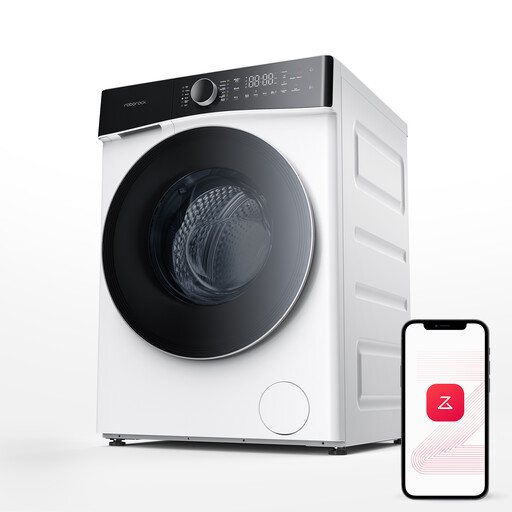 No product image available
For a house share looking to combine washing and drying in one appliance. For a complete cycle, bear in mind the stated drying limit of 6 kg.
The product name lists a 10 kg washing capacity and a 6 kg drying capacity.
 No product image available
For a house share looking for one appliance to handle both washing and drying. The stated washing capacity is higher than the drying capacity.
The product name lists a 9 kg washing capacity, 6 kg drying capacity and 1,400 rpm. It gives energy ratings of A for washing and D overall.
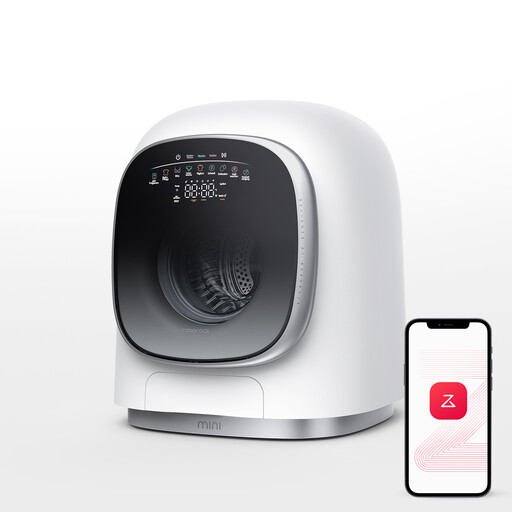 No product image available
The stated drying capacity of 0.5 kg is limited to a very small load. Check the dry weight of your tablecloth before choosing this model.
The product name lists a 1 kg washing capacity and a 0.5 kg drying capacity.
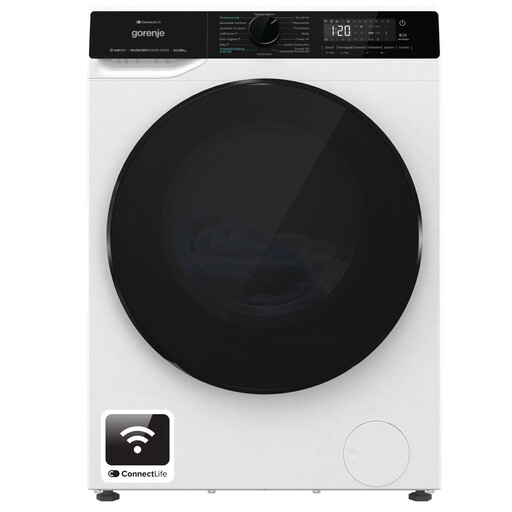 No product image available
Listed as a washer-dryer for a house share. Before washing a tablecloth load, check the separate washing and drying limits, as well as the programme conditions.
The product name lists 10.5 kg, 1,400 rpm and a Wash-&-Dry-60 programme.
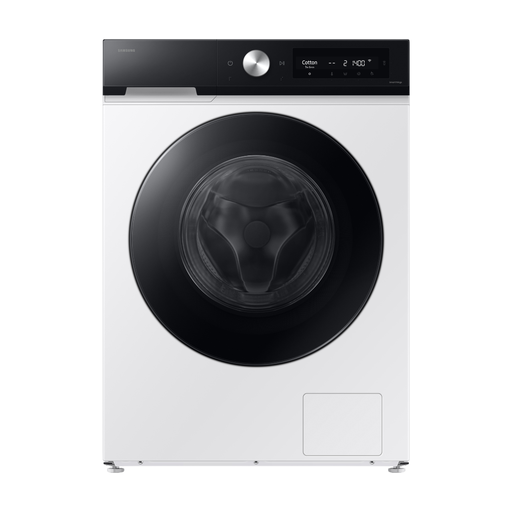 No product image available
For a house share looking for one appliance to wash and dry. Before buying, check which figures the 11+6 kg refers to for washing and drying.
The product name also lists SuperSpeed and energy rating D.
No. The fabric alone doesn’t tell you whether a tablecloth can be tumble dried. Check the drying symbol on the care label for each tablecloth; a crossed-out symbol means it must not be tumble dried.
No. The European Commission describes Eco 40–60 as a programme for normally soiled cotton laundry that can be washed at 40 °C or 60 °C according to its textile label. For stains, check the care label and choose a suitable treatment. A high temperature isn’t always necessary.
Check with your landlord that you’re allowed to install the appliance in your chosen location. The Verbraucherzentrale recommends doing this; it doesn’t mean washer-dryers are automatically prohibited in rented homes.
New household washer-dryers must meet EU labelling requirements. The European Commission explains the A to G scale, which has been in use since 1 March 2021. The German Federal Environment Ministry explains that online retailers must accept returns of old electrical appliances. Check with the retailer you’re buying from to find out how this works and whether collection is available.