A washer-dryer could work for tea towels if there’s nowhere to dry them after your shared laundry slot and the load is within its wash-and-dry capacity. Allow for the full cycle time and check the care label and instruction manual for a suitable wash programme: Germany’s consumer advice centre recommends washing tea towels at a minimum of 60 °C, but the “Eco 40–60” programme name alone doesn’t confirm that the wash actually reaches 60 °C. If air-drying is an option, or you regularly have larger loads, you could also consider a washing machine with air-drying or separate appliances.
Who might benefit from a washer-dryer?
Households with a set laundry slot
When several people share laundry times, what matters is whether the full wash-and-dry cycle will finish before the next slot. The European Commission lists programme duration on the energy label; also check how long the programme intended for your load takes.
Households short on drying space
If it’s difficult to hang tea towels up after washing, weigh up the drying capacity and the space available for the appliance together. Germany’s consumer advice centre describes washer-dryers as space-saving combination appliances.
Households prioritising hygiene
If you change your tea towels regularly and wash them according to their care labels, check that the appliance has a suitable programme. Germany’s consumer advice centre recommends changing tea towels at least once a week and washing them at a minimum of 60 °C.
What should you look for when buying?
Washer-dryer
A good fit if: you only have space for one appliance and can’t hang the towels up after your laundry slot.
The trade-off: washing and drying run one after the other, so the full programme time and the lower wash-and-dry capacity need to fit your available slot.
Washing machine with air-drying
A good fit if: you can take the towels out after washing and dry them somewhere suitable.
The trade-off: the machine is free again once the wash has finished, but you’ll need drying space and time outside your booked laundry slot.
Separate washing machine and tumble dryer
A good fit if: you have the floor space and connections for two appliances, and often need to wash larger or multiple loads.
The trade-off: two appliances take up more space and you’ll need to transfer the laundry between them. Germany’s consumer advice centre says washer-dryers use more electricity and water than separate appliances; compare the specific energy label figures on a like-for-like basis.
| What matters |
What to check when buying |
Who will find this important? |
| Full cycle time |
Programme duration for the intended wash-and-dry cycle and load; check whether there’s a delay timer or remaining-time display. |
If I share the appliance with others, the full cycle needs to fit into my booked slot. Around 34% of consumers put total cycle time first. |
| Suitable wash programme |
Check the care label and manual for a 60 °C programme suitable for the towels; don’t assume that programme names such as “Eco 40–60” mean the wash actually reaches 60 °C. |
If I want to care for my tea towels properly, I need to be able to check the temperature and programme for this specific model. Around 33% of consumers prioritise a suitable wash programme. |
| Energy and water use when drying |
Compare electricity use per 100 wash-and-dry cycles and water use per cycle separately from washing alone. |
If I regularly use the machine to dry laundry, I want to know the running costs of a complete cycle. Around 20% of consumers put electricity and water use first. |
| Space and drying capacity |
Check the appliance dimensions and the separate capacity figures in kilograms for washing and for washing and drying. |
If I have limited hanging space, I need an appliance that fits and can dry the required amount without transferring the load. Around 13% of consumers prioritise space and drying capacity. |
Common buying misconceptions
-
Confusing wash capacity with wash-and-dry capacity
Several example models have a lower stated drying capacity than washing capacity. So a larger wash load won’t necessarily fit into one continuous wash-and-dry cycle.
Plan your load around the stated wash-and-dry capacity, not the higher washing capacity.
A larger load may need an extra drying cycle, keeping the shared appliance in use for longer.
-
Assuming a quick or steam programme will fully wash your tea towels
An advertised short programme may only apply to a specific load size or a different purpose. “Eco 40–60” on its own doesn’t confirm an actual wash temperature of 60 °C.
Check the details for the specific programme and load against the care label, and look in the manual for a suitable 60 °C programme.
-
Looking only at washing costs
The EU energy label shows separate figures for washing and for a complete wash-and-dry cycle. If you regularly use the dryer, you should also consider the consumption for the full cycle.
Compare cycles on a like-for-like basis, and consider air-drying or separate appliances if you have the space.
Brands and model examples
These details relate to the specific models and product ranges mentioned, not to each brand as a whole.
LG
The W4WR7096YB model is listed with a 9 kg washing capacity and a 6 kg drying capacity.
- LG lists TurboWash for this model; the quick wash applies under certain load conditions.
- A quick wash doesn’t mean the full wash-and-dry cycle for tea towels will be short.
Bosch
The WNC244070 washer-dryer is listed with a 9 kg washing capacity and a 6 kg wash-and-dry capacity.
- Bosch lists features including Auto Dry, AquaStop and a reload function for this model.
- Check the actual programme duration and whether there’s a wash programme suitable for tea towels.
AEG
The L9WEF80690 washer-dryer is listed with a 9 kg washing capacity and a 6 kg drying capacity; AEG describes this model as using heat-pump drying.
- The drying technology is specified for this particular model.
- The 9-hour-40-minute duration listed for Eco 40–60 at rated capacity on the related but different L9WSF80699 model can’t be applied to the L9WEF80690 or other programmes.
Siemens
The WN54C2A40 washer-dryer is listed with a 10.5 kg washing capacity and a 6 kg wash-and-dry capacity.
- Siemens lists i-Dos and Home Connect for this model.
- Internet access and an account are required for certain connected features. The higher washing capacity doesn’t increase the amount that can be washed and dried in one cycle.
Beko
The BM3DT4944W model combines a 9 kg washing capacity with a 6 kg drying capacity; its stated depth is 57 cm.
- The depth figure can help when checking whether the appliance will fit into a tight space.
- Also check the full installation dimensions and the clearance needed at the appliance’s location.
Joybuy product selection
This selection includes washer-dryers and a separate washing machine and tumble dryer set. Compare drying capacity, programme duration and the space required with your shared laundry slot.
 No image available
LG WT1210EGF WashTower
Could be a good option if a washing machine and heat-pump dryer in the WashTower format fit your available space.
Washing: 12 kg; drying: 10 kg. The product name also lists AI DD, TurboWash 360°, ThinQ Smart App and 1.350 rpm.
View at Joybuy
 No image available
LG WT1210WWF front-loading washer-dryer
Could suit you if you want to wash and dry in the same appliance and its drying capacity matches your load.
Washing: 12 kg; drying: 10 kg. The product name lists Dual Inverter Heat Pump, AI DD, TurboWash 360°, a steam function and the ThinQ app.
View at Joybuy
 No image available
TCL CP1210WA0 washer-dryer
An option if you’re looking for a washer-dryer with a delay timer to help coordinate with shared laundry times.
Washing: 10 kg; drying: 6 kg. The description lists a 24-hour delay timer. The 60-minute wash-and-dry programme is described as an emergency option for a shirt or blouse, not as the duration for a load of tea towels.
View at Joybuy
 No image available
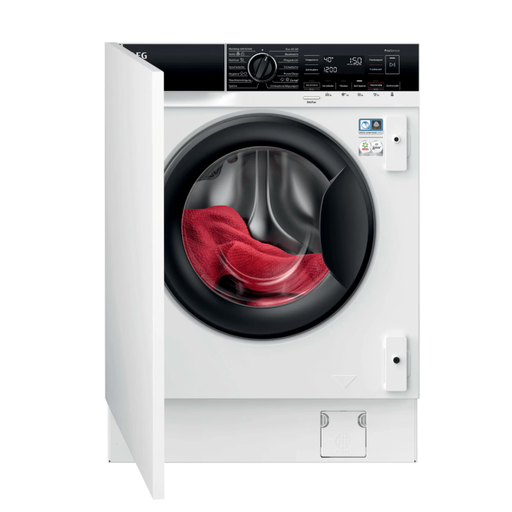
AEG LWR8WI7680 8000 PowerCare built-in washer-dryer
Could be a good option if a built-in appliance fits your available space and the lower drying capacity meets your needs.
Washing: 8 kg; drying: 4 kg. Eco 40–60 wash and dry is listed as taking 5 hours 40 minutes; the programme name doesn’t confirm an actual 60 °C wash. The description also lists 1.600 rpm and Wi-Fi.
View at Joybuy
 No image available
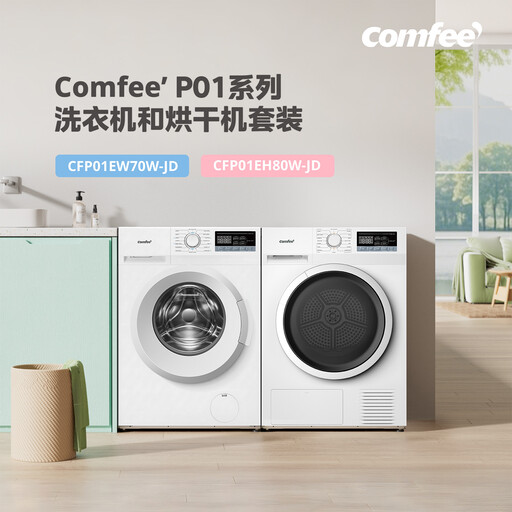
Comfee CFP01EW70W-JD washing machine and CFP01EH80W-JD heat-pump dryer
This two-appliance set is an alternative if you have room to install both appliances and can transfer the laundry after washing; it isn’t a single washer-dryer.
The washing machine is listed with a 7 kg capacity; the dryer is a separate heat-pump model. The washing machine description lists a delay timer from 0 to 24 hours.
View at Joybuy
Frequently asked questions
Does “Eco 40–60” mean tea towels are washed at 60 °C?
No. The programme name alone doesn’t confirm that the towels are actually washed at 60 °C. Check the care label and the model-specific instruction manual for a suitable programme.
What should I do with tea towels between two booked laundry slots?
Let used towels dry thoroughly and change them regularly. Germany’s consumer advice centre recommends changing tea towels at least once a week and washing them at a minimum of 60 °C; if they’re heavily soiled, it may be sensible to change them sooner.
What should I check before installation and shared use?
Measure the space and access route, and check the installation instructions for the specific model as well as the connections available. Also check whether your booked slot includes the drying cycle; a delay timer won’t shorten the cycle.
Which figures should I compare to understand running costs?
On the EU energy label, compare the figures for the complete wash-and-dry cycle separately from those for washing alone. These include energy use per 100 cycles, water use and programme duration; your individual costs will also depend on how you use the appliance and your tariff.


