Who might benefit from a washer-dryer?

Households with nowhere to dry laundry

If there’s hardly any room for a clothes airer in your flat, a washer-dryer can combine washing and drying in the space occupied by one appliance. However, this alone doesn’t tell you how much energy it uses: the Verbraucherzentrale highlights the additional electricity and water used for drying.

Households with lots of kitchen laundry

If you change your tea towels regularly, consider choosing a suitable wash programme and following the care instructions on the fabric. A refresh function is no substitute for a wash cycle. The Verbraucherzentrale recommends washing kitchen towels at a minimum of 60 °C, provided the fabric is suitable for this temperature.

Households keeping an eye on costs

If you can air-dry your laundry, it’s worth weighing up the extra consumption of a complete wash-and-dry cycle. The Umweltbundesamt lists clothes airers and washing lines as particularly energy-efficient ways to dry laundry.

What should you look for when choosing one?

Consideration What to check before buying Who is this important to?
Space and installation Check the appliance’s external dimensions, delivery route, door opening and required connections. If I only have room for one appliance, I want to be sure the machine and its connections will actually fit. Around 33% of consumers put space requirements first.
Wash programme for tea towels Check the care label and choose a wash programme suitable for the fabric; don’t mistake a refresh function for washing. If I want to wash used tea towels appropriately, I pay particular attention to the programme and care label. Around 27% of consumers prioritise this.
Consumption when drying Compare the electricity and water figures for complete wash-and-dry cycles separately from those for wash-only cycles. If I can often hang my washing up to dry, I want to weigh up the extra consumption involved in machine-drying it. Around 20% of consumers prioritise running costs.
Washing and drying without unloading Check the drying capacity and programme duration; the stated washing capacity won’t necessarily be suitable for a complete wash-and-dry cycle. If I want my laundry finished in one uninterrupted cycle, drying capacity is the key factor for me. Around 20% of consumers prioritise this.

Common buying and usage mistakes

  • Comparing only the energy rating for washing

    The energy label shows consumption for washing and drying separately from consumption for washing alone. If you look at only one figure, you’ll miss the consumption for a complete drying cycle.

    Compare both sets of figures and consider how often you’d actually use complete wash-and-dry cycles.

  • Assuming the washing and drying capacities are the same

    Many washer-dryers have a lower stated drying capacity than washing capacity. You may therefore need a smaller load for a continuous cycle.

    When planning a wash-and-dry cycle, use the drying capacity of the specific model as your guide. You may otherwise need to remove some of the laundry or run another drying cycle.

  • Confusing a refresh function with washing tea towels

    A refresh function that uses no wash water doesn’t replace a wash cycle for used kitchen towels. The Verbraucherzentrale recommends washing kitchen towels at a minimum of 60 °C, provided the care label and fabric allow this temperature.

    Check the care label and choose a suitable wash programme; change your towels regularly.

  • Automatically buying a washer-dryer just for a few tea towels

    If you only want to machine-dry a few towels, you may not use the extra drying function much in everyday life. The space-saving benefit is most relevant if you have nowhere suitable to dry laundry.

    Consider whether you’d regularly want to machine-dry other laundry as well as tea towels, and whether you have a suitable, well-ventilated place to dry it.

Brands and specific model examples

AEG

The 9000 SensiDry range includes washer-dryers with heat pump technology. For the specific L9WEF80690 model, its freestanding design and model number are useful points of comparison.

  • AEG lists a washing capacity of 9 kg and a drying capacity of 6 kg for the L9WEF80690. Its stated label values are 252 kWh per 100 complete operating cycles and 49 kWh per 100 wash cycles.
  • These manufacturer and label figures apply to this model and its specified cycles; they don’t prove that the appliance is worth buying for just a few tea towels.

LG

The V7WD96H1A washer-dryer may appeal to households considering extra programmes alongside the basic functions. Check the full model number, including the final ‘A’.

  • LG lists a washing capacity of 9 kg and a drying capacity of 6 kg for this model.
  • Claims about steam and fabric protection are made by the manufacturer. The fabric-protection test explained on the product page related to other LG models and isn’t independent proof of performance on tea towels.

Siemens

The iQ700 WN54C2070 comes with specific measurements you can compare against the space available if room is limited.

  • Siemens lists dimensions of 848 × 598 × 622 mm (H × W × D), plus a washing capacity of 9 kg and a drying capacity of 6 kg.
  • The stated noise level is 70 dB(A) re 1 pW. Check this figure carefully if you plan to install the appliance near living or sleeping areas.

Samsung

The WD5000T WD8ETA049BX/EG is a version with a washing capacity of 8 kg and a drying capacity of 5 kg. Checking the full model number helps you distinguish between similarly named versions.

  • Samsung lists dimensions of 600 × 850 × 600 mm for this model. The product description refers to AirWash as a refresh function that uses no wash water.
  • A refresh function doesn’t replace washing used tea towels. Don’t mistake advertised extra features for proof that a particular wash cycle is suitable.

Washer-dryers at Joybuy

The following Joybuy products combine washing and drying in one appliance. For tea towels, the key considerations are still whether there’s a suitable wash programme and how often you’ll actually want to machine-dry them.

LG WT1210WWF washer-dryer, 12 kg washing capacity and 10 kg drying capacity

LG WT1210WWF washer-dryer, 12 kg washing and 10 kg drying capacity

This model may suit you if you need washing and drying functions in one appliance, taking up the space of a single machine.

It has a stated washing capacity of 12 kg and drying capacity of 10 kg, as well as Dual Inverter heat pump technology. For a continuous wash-and-dry cycle, the drying capacity is the one that matters.

View at Joybuy
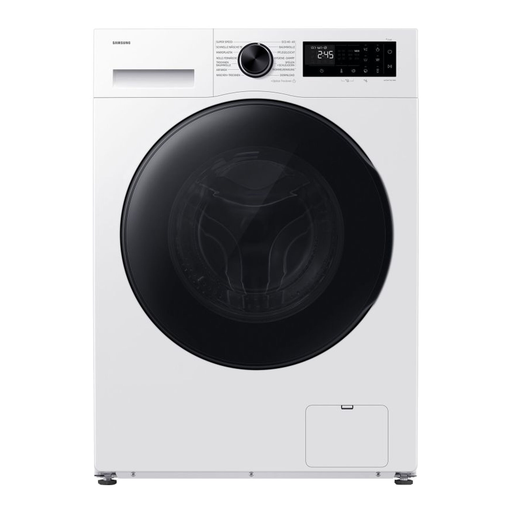
Samsung WD9BHG5U34BEEG washer-dryer, 9 kg washing capacity and 6 kg drying capacity

Samsung WD9BHG5U34BEEG washer-dryer, 9/6 kg

Combining washing and drying in one appliance may work well if you want to use the space available for a single machine.

The product name lists a washing capacity of 9 kg and a drying capacity of 6 kg. The drying capacity is lower than the washing capacity for a continuous wash-and-dry cycle.

View at Joybuy

Samsung washer-dryer, 9 kg washing capacity and 6 kg drying capacity, energy rating A for washing and D overall

Samsung washer-dryer, 9/6 kg, energy rating A (washing) and D (overall)

This washer-dryer may suit households looking to combine washing and drying in one appliance.

The product name lists a washing capacity of 9 kg and a drying capacity of 6 kg, along with energy ratings of A for washing and D for the complete cycle. Bear in mind the lower drying capacity when running a continuous wash-and-dry cycle.

View at Joybuy
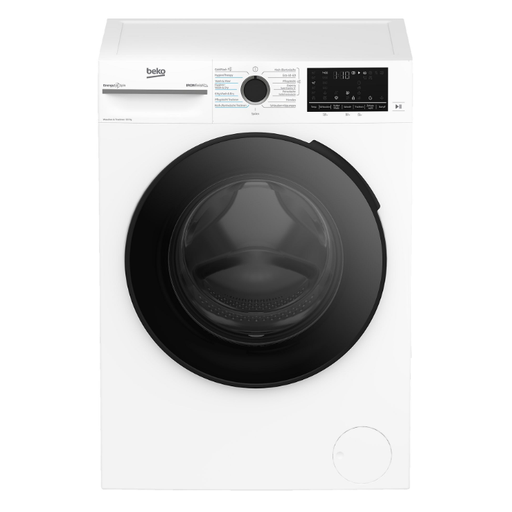
Beko BM3DT4944W washer-dryer, 9 kg washing capacity and 6 kg drying capacity

Beko BM3DT4944W washer-dryer, 9/6 kg

If you need both functions in one appliance, you can assess this model by looking at its separate washing and drying capacities.

The product name lists 9 kg for washing and 6 kg for drying. It also lists SteamCure and energy rating D; bear in mind the lower drying capacity when running a continuous cycle.

View at Joybuy
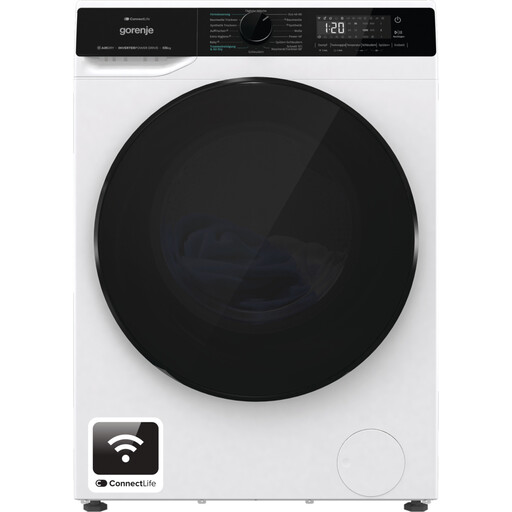
Gorenje WD2PA854ADW, DE washer-dryer, 8 kg washing capacity and 5 kg drying capacity

Gorenje WD2PA854ADW, DE washer-dryer, 8/5 kg

This appliance may suit you if you’re looking for a washer-dryer with these stated capacities and want to check that its dimensions fit the space available.

The product name lists a washing capacity of 8 kg and a drying capacity of 5 kg, as well as dimensions of 59,5 × 84,5 × 51 cm. For a continuous wash-and-dry cycle, the drying capacity is the one that matters.

View at Joybuy

Frequently asked questions

Is a steam or refresh programme enough for used tea towels?

No. Don’t rely on it as a substitute for a suitable wash cycle. The Verbraucherzentrale recommends washing kitchen towels at a minimum of 60 °C, provided the care label allows this temperature. According to Samsung, its AirWash function refreshes items without using wash water.

How do I compare the energy consumption of a washer-dryer?

Compare the consumption for a complete wash-and-dry cycle separately from the figure for wash-only cycles. The EU energy label shows these figures separately. The Verbraucherzentrale also highlights the additional electricity and water needed for drying.

Can I dry a full wash load straight away?

Only if the load doesn’t exceed the drying capacity of the specific model. The stated drying capacity of the models mentioned here is lower than their washing capacity, so check both figures. You may need to remove some of the laundry or run another drying cycle.

How should I care for the machine after washing damp kitchen towels?

Don’t leave wet laundry in the drum for long. After washing, dry the grooves in the rubber door seal and the detergent drawer. The Verbraucherzentrale also recommends leaving the compartments open to dry and cleaning the fluff filter regularly, following the instructions.

What should I check before installing one in a rented flat?

Check the exact installation location, connections and delivery route, and discuss the intended location with your landlord. The Verbraucherzentrale highlights the importance of suitable connections and the risk of potential water damage.