What should you look for when buying?
Washer-dryer with separate wash cycles
A good fit if: you have limited space for appliances and regularly want to tumble-dry towels.
Consider: Separate loads take time; for a continuous cycle, the lower wash-and-dry capacity applies.
Washer-dryer followed by air-drying
A good fit if: you have room for one appliance and can hang up towels or outdoor clothing that isn’t suitable for tumble-drying.
Consider: You’ll need drying space and time; a no-tumble-drying instruction on the care label isn’t overridden by using a delicate programme.
Separate washing machine and tumble dryer
A good fit if: you have space for two appliances and frequently tumble-dry several separate loads.
Consider: Two appliances take up more space. Compare the consumption figures for the specific models and consider your actual needs.
Washing machine with air-drying
A good fit if: you have space to dry clothes and don’t need to tumble-dry them.
Consider: Drying takes longer and uses space; always follow the care instructions for each garment.
| Priority |
What to check when buying |
Who is this important to? |
| Separating laundry by fabric and care needs |
Check the care labels and suitable programmes for each fabric; a programme called “Outdoor” alone doesn’t prove that it’s suitable. |
If I have muddy outdoor clothing and towels at home, I want a suitable wash routine for each fabric instead of one catch-all mixed-load programme. Around 31 % of consumers say textile care is their top priority. |
| Drying capacity |
Compare the washing capacity and the capacity for a complete wash-and-dry cycle separately; check the load limit for the programme you choose. |
If I want to wash and dry a load without transferring it, the permitted load for the whole cycle matters to me. Around 25 % of consumers rank this as their main priority. |
| Washing towels |
Check that the temperature settings and programmes match the towels’ care labels. |
When I wash towels, I want to be able to choose a suitable temperature without putting unsuitable outdoor clothing in the same load. Around 25 % of consumers put towel care first. |
| Energy use and space |
Compare electricity use per 100 cycles and water use per cycle on the same label basis; also consider the space needed for air-drying or separate appliances. |
If I have lots of separate loads, I need to weigh up the space available against the energy consumption of the drying method I actually use. Around 19 % of consumers focus on this question of space and energy use. |
The EU energy label shows, among other things, electricity consumption per 100 cycles and water consumption per cycle. For towels, the Umweltbundesamt recommends 40 or 60 °C for hygiene reasons. The care label and the specific fabrics should also guide your choice of temperature.
Washer-dryers at Joybuy
These washer-dryers combine washing and drying in one appliance. When caring for towels and outdoor clothing, plan for separate loads and check the capacity of the relevant drying cycle.
 No image available
LG WT1210WWF washer-dryer
An option if you want washing and drying in one appliance and need to handle different fabrics separately.
Washing capacity: 12 kg; drying capacity: 10 kg.
Featuring Dual Inverter Heat-Pump technology.
View at Joybuy
 No image available
Samsung washer-dryer, 9 kg/6 kg
An option if you want washing and drying in one appliance for separate laundry loads.
Washing capacity: 9 kg; drying capacity: 6 kg; spin speed: 1400 rpm.
Energy ratings: A (washing)/D (overall).
View at Joybuy
 No image available
Roborock Zeo Lite washer-dryer, grey
An option if you’re looking for a washer-dryer for separate wash and dry loads.
Washing capacity: 10 kg; drying capacity: 6 kg; energy rating E.
Featuring Zeo-Cycle drying technology, a LintClear system and automatic dosing.
View at Joybuy
 No image available
Beko BM3DT4944W washer-dryer, 9 kg/6 kg
An option if you’re looking for one appliance for separate wash and dry loads.
Washing capacity: 9 kg; drying capacity: 6 kg; spin speed: 1400 rpm.
Featuring SteamCure; energy rating D.
View at Joybuy
 No image available
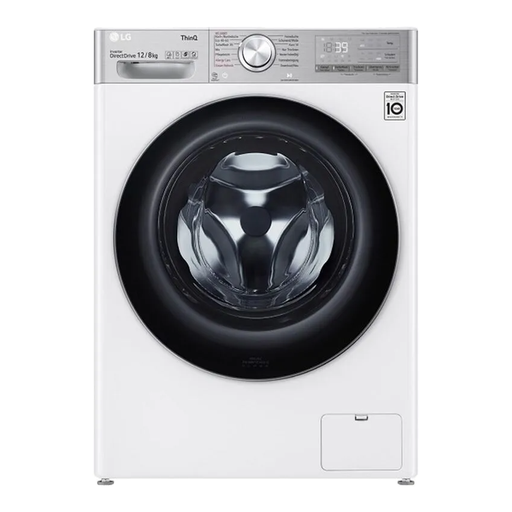
LG V9WD128H2 AI DD washer-dryer, 12 kg
An option if you want washing and drying in one appliance and plan to separate your laundry according to its care labels.
View at Joybuy
Frequently asked questions
Can I wash muddy outdoor outerwear with towels?
Not as a general rule. GORE‑TEX advises against washing its relevant outerwear with heavily soiled clothing. Check the care labels for both loads and wash items with different care requirements separately. GORE‑TEX’s advice doesn’t automatically apply to every outdoor fabric.
Do towels always need to be washed at 60 °C?
No. The Umweltbundesamt recommends washing towels at 40 or 60 °C for hygiene reasons. You should also follow the care label on each towel.
Can every outdoor jacket go in the tumble dryer?
No. The drying symbol on the specific garment is what matters. GORE‑TEX recommends gentle tumble-drying on a warm setting for suitable outerwear, but expressly says that designated SHAKEDRY fabrics must not be tumble-dried.
What capacity should I use for a continuous wash-and-dry cycle?
Plan around the stated wash-and-dry capacity, not just the maximum washing capacity. For example, AEG lists 9 kg for washing and 6 kg for washing and drying on the L9WEF80690. Also check the load limit for the programme you choose.
How do I compare the electricity consumption of washer-dryers?
Compare the EU energy label figures for the same operating mode and usage basis, particularly electricity consumption per 100 cycles. To work out your personal electricity costs, you’ll also need your tariff and an estimate of how many complete wash-and-dry cycles you’ll use.


