Homes without space to dry clothes
If it’s impractical to dry towels on an airer and there’s only room for one appliance, a washer-dryer could be the answer.


If there’s no room for a second appliance and nowhere suitable to dry clothes, a washer-dryer can wash and dry towels in the space taken up by a single appliance. First, check that it will fit in your laundry area and that its drying capacity is large enough for your usual load. If you do have space to dry clothes, it’s also worth comparing air-drying or separate appliances, as Germany’s consumer advice centre says washer-dryers use more electricity and water than a washing machine and separate tumble dryer.
If it’s impractical to dry towels on an airer and there’s only room for one appliance, a washer-dryer could be the answer.
If you want to wash and dry several towels in one go, pay more attention to the drying capacity than the larger washing capacity.
If you can air-dry your laundry sometimes, weigh the convenience of a washer-dryer against its electricity and water use.
A good choice if: you have space for just one appliance and nowhere else practical to dry towels.
The trade-off: Germany’s consumer advice centre warns that washer-dryers use more electricity and water than a washing machine and separate tumble dryer.
A good choice if: you have a suitable place to hang laundry and would rather not use a tumble dryer.
The trade-off: hanging laundry takes time and space. If you dry it indoors, remember to ventilate the room properly to manage the extra moisture.
A good choice if: you can safely fit two suitable appliances.
The trade-off: two appliances need more space, unless you can stack them safely. Bosch home appliances says both appliances must be suitable and used with a compatible stacking kit.
Germany’s consumer advice centre says washer-dryers use more electricity and water than a washing machine and separate tumble dryer. Use the points below to compare your towel loads with the space you have available.
| What matters | What to check before buying | Who should pay particular attention? |
|---|---|---|
| Space needed | Measure the alcove, access route, connections and space needed to open the door; check the dimensions of the specific model. | If I only have a small laundry area, I want to know in advance whether the appliance will fit, including its connections and door clearance. Around 33% of consumers put finding a suitable space for the appliance first. |
| Drying capacity | Compare your usual towel load with the stated washing and drying capacities, and check the limits for the programme you plan to use. | If I want to dry all my towels without taking some out or splitting the load, drying capacity matters most. Around 27% of consumers prioritise a suitable load size. |
| Energy and water use | Compare figures for the complete wash-and-dry cycle separately from those for washing alone, and only compare like with like. | If I use the machine to dry clothes regularly, I want to understand the electricity and water needed for the full cycle. Around 20% of consumers pay particular attention to consumption. |
| Fabric care | Check the care symbols on your towels and choose washing and drying programmes accordingly. | If my towels have different care symbols, I want to choose a suitable programme without going against the care instructions. Around 20% of consumers put fabric care first. |
A washer-dryer can have different washing and drying capacities. If you want to wash and dry towels in one uninterrupted cycle, the drying capacity is what matters.
Compare your usual load with the drying capacity and programme requirements of the specific model. Germany’s consumer advice centre gives the example of washer-dryers being able to dry only part of a wash load straight away.
A larger wash load may mean extra drying cycles, as well as more time and energy.
The rating for washing alone doesn’t tell you how the complete wash-and-dry cycle performs.
On the EU energy label, compare the figures for the cycle you actually plan to use, making sure they’re based on the same criteria.
Stacking is only an option if both appliances are suitable and can be secured safely together.
Before deciding, check the available height, the appliance instructions and which stacking kit is compatible. Bosch home appliances recommends checking that both appliances are suitable before stacking them.
A compatible stacking kit may be needed to stack the appliances safely.
Care symbols may limit the washing temperature or rule out tumble-drying.
Check the care label before choosing a programme. GINETEX Germany explains that the number in the wash tub indicates the maximum permitted washing temperature.
LG lists a washing capacity of 9 kg and a drying capacity of 6 kg for its W4WR7096YB washer-dryer.
Bosch home appliances lists dimensions of 848 × 598 × 590 mm for its freestanding Series 4 WNA13441, with a washing capacity of 9 kg and a wash-and-dry capacity of 5 kg.
Samsung lists a washing capacity of 9 kg, a drying capacity of 6 kg and dimensions of 600 × 850 × 600 mm for the WD90DG5B15BEEG.
Beko lists a washing capacity of 8 kg, a drying capacity of 5 kg and a width of 60 cm for its freestanding BM3DT4844W1.
The Joybuy products below are washer-dryers that wash and dry in a single appliance. In particular, compare the drying capacity and dimensions with your needs.
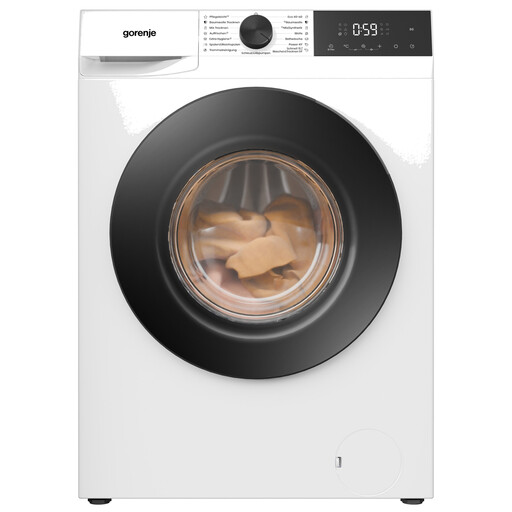 No image available
The stated drying capacity helps you check whether it suits your towel load.
Washing capacity: 11 kg; drying capacity: 7 kg.
Appliance dimensions: 59,5 × 84,5 × 59 cm.
 No image available
Compare the stated drying capacity with the amount of towels you want to dry in one go.
Washing capacity: 12 kg; drying capacity: 10 kg.
Appliance dimensions: 85 × 60 × 66 cm.
 No image available
Drying capacity is the key figure if you want to dry towels without splitting the load.
Washing capacity: 9 kg; drying capacity: 6 kg.
Appliance dimensions: 85 × 60 × 64,5 cm.
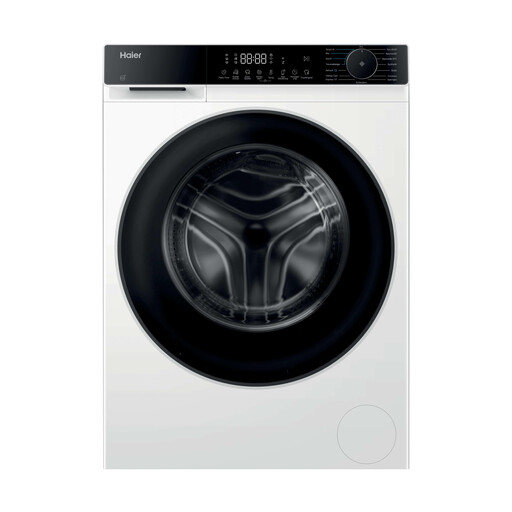 No image available
Check whether the drying capacity suits your usual towel load.
Washing capacity: 12 kg; drying capacity: 8 kg.
Appliance dimensions: 85 × 60 × 67 cm.
 No image available
The stated drying capacity gives you a useful point of comparison for your towel load.
Washing capacity: 10 kg; drying capacity: 6 kg.
The product title lists energy efficiency class E.
Only if the load is within the drying capacity for the specific appliance and programme. For example, Bosch home appliances lists a washing capacity of 9 kg for the WNA13441, but a wash-and-dry capacity of 5 kg.
No. Germany’s Federal Environment Agency says there’s generally no need to boil or disinfect ordinary household laundry. If someone in your household has a contagious illness, washing at a higher temperature may help prevent it spreading. Follow the care label and ask a doctor if you’re unsure.
Measure the alcove, access route and space needed to open the appliance door. Check the water connection, drainage and the model’s installation requirements, too. If you want to stack two appliances, make sure they’re both suitable and secure them with a compatible stacking kit, as Bosch home appliances explains.
For complete cycles, compare the energy label figures for the wash-and-dry cycle, particularly electricity use per 100 cycles and water use per cycle. Figures for washing alone tell you something different.
According to Germany’s consumer advice centre, the seller of a new appliance is generally responsible for faults that were already present when it was delivered for two years from the date of delivery. This is separate from a manufacturer’s guarantee. The consumer advice centre explains that retailers obliged to take back large electrical appliances must accept an old appliance when you buy a corresponding new one. You can also use local authority collection points.