A washer-dryer is worth considering if you have no space for a second appliance or a suitable place to air-dry clothes, and the care labels on your workwear say it can be tumble-dried. The Verbraucherzentrale (German consumer advice centre) points out that conventional washer-dryers may use more electricity and water than separate washing machines and tumble dryers. So compare the figures for the cycles you’ll actually use, and bear in mind the lower drying capacity. Also check the care instructions for every item and, for protective clothing or potential contamination, check your workplace’s requirements first.
Who is a washer-dryer suitable for?
Working people with nowhere to dry clothes
If you’re allowed to wash everyday workwear at home but have little room to hang it up or fit a second appliance, the space it takes up is a key consideration. The Verbraucherzentrale highlights the space-saving benefit of washer-dryers.
Working people who change outfits regularly
If you often wash several work outfits at once, check whether the lower drying capacity and having your only appliance tied up will work with your routine. The Verbraucherzentrale points out that you may not be able to dry a full wash load in the same appliance straight away.
Working people with delicate fabrics
Check each item separately to see whether it can be washed and tumble-dried. GINETEX Germany explains that care symbols specify the maximum treatment permitted.
What to look for when buying a washer-dryer
The Verbraucherzentrale gives the space saved as a practical reason to choose a washer-dryer. The European Commission’s EU label lists separate consumption figures for washing and for washing and drying.
| What matters |
What to check before buying |
Who should pay particular attention |
| Space |
Check the appliance dimensions against your laundry nook, allowing room for connections, the door to open and easy access to the controls. |
If I have very little floor and drying space, the appliance needs to fit along with the clearance it requires. Around 33% of consumers put available space first. |
| Drying capacity and cycle |
Check the washing capacity and the capacity for a complete wash-and-dry cycle separately. |
If I regularly wash several work outfits, I want to know whether the smaller drying load fits my routine without needing another cycle. Around 27% of consumers prioritise drying capacity and a predictable cycle. |
| Fabric care |
Check the care label for washing and drying instructions for each item; confirm workplace requirements for protective clothing or potential contamination. |
If my workwear has different care instructions, I need to check the permitted treatment for each item individually. Around 20% of consumers put fabric care first. |
| Running costs |
Compare the consumption figures on the EU label for the cycles you’ll use, rather than looking at washing alone. |
If I wash and dry frequently, I want to understand the consumption of the cycles I actually use. Around 20% of consumers prioritise running costs. |
Common washer-dryer buying mistakes
-
Assuming the drying capacity is the same as the washing capacity
Bosch Hausgeräte Deutschland lists a 9 kg washing capacity and a 5 kg capacity for washing and drying in one cycle for the Bosch WNA14441.
Compare your usual workwear load with the stated drying capacity, and don’t base your decision on washing capacity alone.
A larger wash load may need to be split across several drying cycles, keeping your only appliance occupied for longer.
-
Assuming that washable means suitable for tumble-drying
According to GINETEX Germany, care symbols specify the maximum treatment permitted. There may also be workplace requirements for certain protective clothing. For waste collection, the DGUV explicitly states that clothing must not be taken home for washing by the wearer.
Check the instructions for both washing and drying for each item, and confirm your workplace’s cleaning rules if the clothing is protective or may be contaminated.
Items that are not suitable for tumble-drying will still need an appropriate place to dry.
-
Comparing only the washing efficiency rating
The European Commission’s EU label lists separate figures for washing and for the wash-and-dry cycle. The Verbraucherzentrale notes that conventional washer-dryers may use more electricity and water than separate appliances.
Compare the figures for the cycles you’re likely to use, and take their respective capacities into account.
If you use the wash-and-dry cycle frequently, its electricity and water consumption will affect your running costs.
Notable brands and model examples
Bosch
The WNA14441 is an example of a model with a 9 kg washing capacity and a 5 kg wash-and-dry capacity.
- Bosch lists Auto Dry and Aqua Stop for this model.
- The wash-and-dry load is smaller than the wash load; Bosch Hausgeräte Deutschland specifies a maximum of 5 kg.
LG
LG describes the HPWD096C as a heat pump washer-dryer with a 9 kg washing capacity and a 6 kg drying capacity.
- LG lists an A energy rating for both the washing and wash-and-dry cycles on this model.
- Its 6 kg drying capacity is lower than its 9 kg washing capacity; the label rating applies to this model.
Miele
The WTD160 WCS is an example of a model with an 8 kg washing capacity and a 5 kg drying capacity. Miele publishes dimensions of 850 × 596 × 637 mm (H × W × D).
- The published model dimensions make it easy to check whether it will fit in your laundry nook.
- Miele describes this model as a condenser dryer with water cooling; the dimensions don’t replace a check of the installation space required.
Bauknecht
The WATK Sense 96 41 N is an example of a model with a manufacturer-stated depth of 54 cm.
- Bauknecht lists programmes for stains and wool on this model.
- The stated depth alone doesn’t tell you how much room you’ll need for connections, opening the door and accessing the controls.
Washer-dryers on Joybuy
This selection features washer-dryers for a laundry nook with space for one appliance. Compare the stated washing and drying capacities with the size of your usual load.
 No image available
Roborock Zeo Lite, white, 10 kg washing/6 kg drying
This washer-dryer combines washing and drying, making it a practical choice for a laundry nook with room for just one appliance.
Capacity: 10 kg washing and 6 kg drying. The product title also lists Zeo-Cycle drying technology, automatic dosing and an E energy rating.
View on Joybuy
 No image available
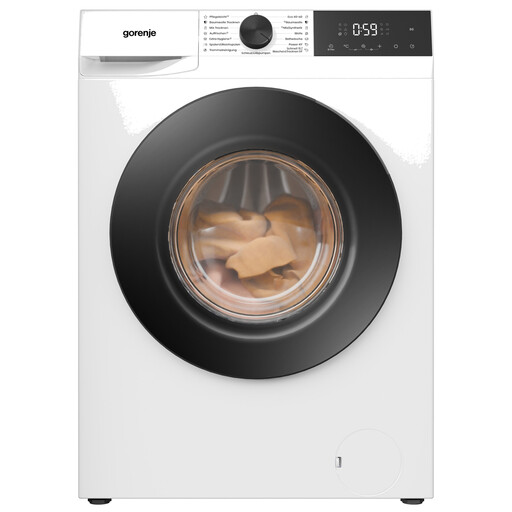
GORENJE WD5G2P1174A2DP2, 11 kg washing/7 kg drying, white
This freestanding appliance combines washing and drying in one, making it a good fit for a laundry nook with space for one machine.
Capacity: 11 kg washing and 7 kg drying. For a complete wash-and-dry cycle, the stated drying capacity is the one to bear in mind.
View on Joybuy
 No image available
LG WT1210WWF, 12 kg washing/10 kg drying
This front-loading washer-dryer combines washing and drying in one appliance, making it suitable for a small laundry nook.
Capacity: 12 kg washing and 10 kg drying. The product title also mentions a Dual Inverter heat pump.
View on Joybuy
 No image available
Samsung washer-dryer, 9 kg washing/6 kg drying
Washing and drying are combined in one appliance, making this a practical option for a laundry nook with room for just one machine.
Capacity: 9 kg washing and 6 kg drying. The product title also lists 1400 rpm, an A energy rating for washing and an overall D rating.
View on Joybuy
 No image available
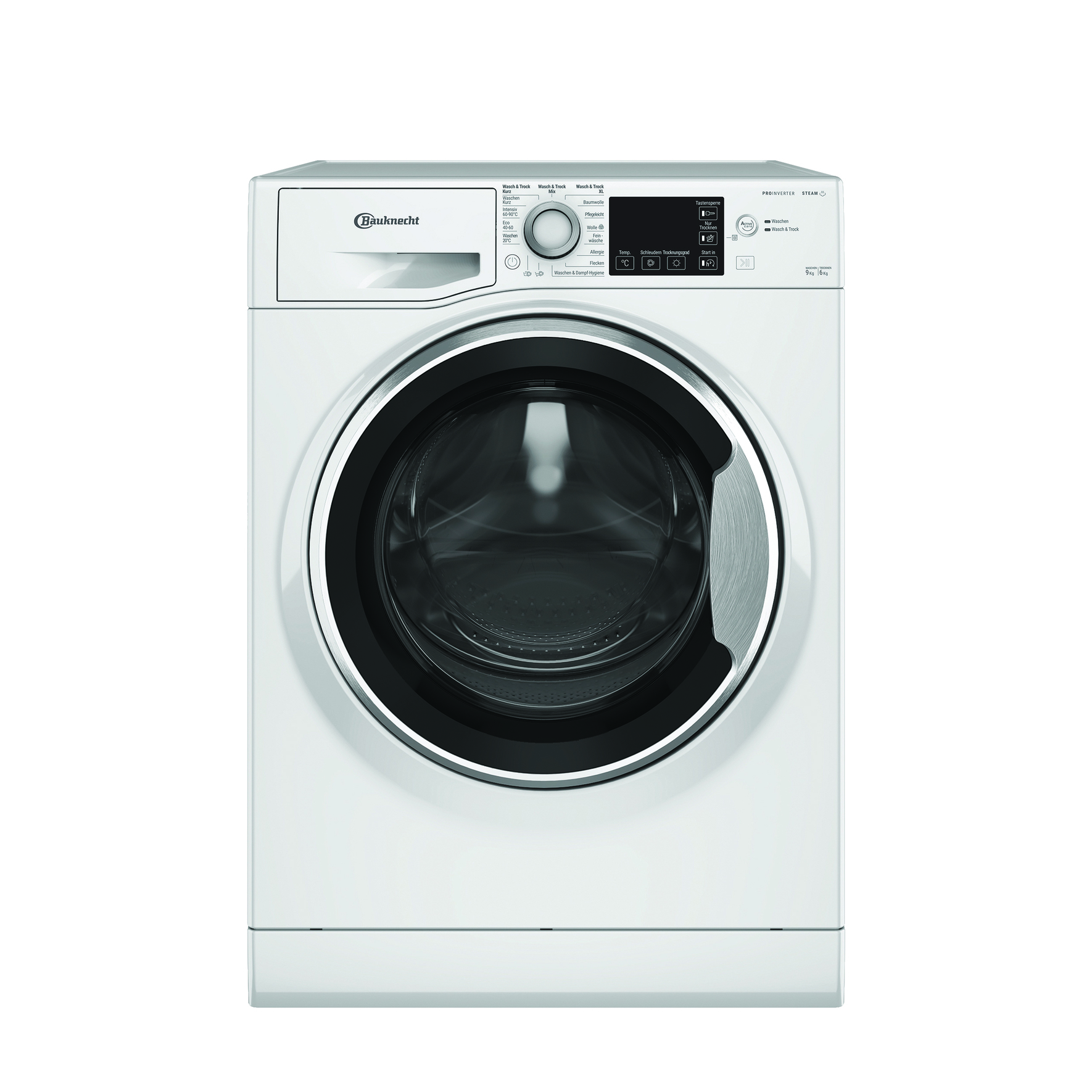
Bauknecht WADR ACTIVE 9614 D, 9 kg washing/6 kg drying
This washer-dryer combines washing and drying in one appliance, making it a practical choice for a laundry nook with space for one machine.
Capacity: 9 kg washing and 6 kg drying. The product title also lists 1400 rpm and a D energy rating.
View on Joybuy
Frequently asked questions about washer-dryers for workwear
Can all washable workwear be tumble-dried at home in a washer-dryer?
No. The care label must say that both washing and drying are permitted. Workplace cleaning requirements may apply to protective or contaminated workwear. For waste collection, the DGUV explicitly prohibits washing the relevant used protective and work clothing at home. This does not apply as a blanket rule to all workwear.
Can I start a drying programme straight after a full wash load?
Only if the amount of laundry is within the drying capacity of the programme you’ve selected. Bosch Hausgeräte Deutschland, for example, lists a 9 kg washing capacity for the WNA14441 washer-dryer, but a maximum of 5 kg for washing and drying in one cycle.
What should I check before installing a washer-dryer in a small laundry nook?
Check the dimensions of the specific model against the space available, and allow extra room to open the door, connect the appliance and access the controls. Also check the installation instructions and your existing water and electricity connections. The published appliance dimensions alone don’t show how much space you’ll need overall.
Which figures are useful when comparing running costs?
Compare the EU label’s consumption figures for washing alone and for the wash-and-dry cycle. The European Commission also lists water consumption and the duration of the stated cycle. Your own estimate will also depend on how often you use the appliance and your electricity tariff.


