House shares with regularly soiled aprons
If you wash shared kitchen textiles, check the care labels and choose wash and drying programmes to suit each fabric. A steam or hygiene programme doesn’t automatically mean that disinfection is necessary.


A washer-dryer could work well for your house share if your aprons are suitable for tumble drying, you’re short on drying space and you can plan around the appliance being in use for longer. Compare the capacity for a complete wash-and-dry cycle separately from the washing capacity. If you can hang your laundry up to dry, or several people need to use the appliance one after another, a washing machine with air-drying or a separate tumble dryer are also options.
If you wash shared kitchen textiles, check the care labels and choose wash and drying programmes to suit each fabric. A steam or hygiene programme doesn’t automatically mean that disinfection is necessary.
If there’s little room for a clothes airer or a second appliance, a washer-dryer could be a space-saving combination. What matters is whether the care label says your aprons can be tumble dried, and whether the load is within the drying capacity.
If several people need to coordinate their laundry, check how long a complete wash-and-dry programme takes. The combined appliance will be in use for the whole cycle.
A good fit if: Your aprons are suitable for tumble drying, drying space is limited and your house share can plan around a longer, uninterrupted appliance cycle.
The trade-off: The capacity for washing and drying may be lower than the washing capacity alone; compare the two figures separately.
A good fit if: You have a suitable place to hang your laundry and don’t need the aprons to be dry straight away.
The trade-off: Air-drying takes up space and time, but avoids the electricity used by machine drying.
A good fit if: You have enough floor space and your house share wants to manage washing and drying separately for back-to-back loads.
The trade-off: Two appliances need more space. Check the tumble dryer’s energy efficiency and capacity against the amount of laundry you usually wash.
| Priority | What to check before buying | Who is it most important to? |
|---|---|---|
| Apron care | Check the care label, permitted washing temperature and tumble-drying suitability for each apron. | If I want to clean aprons in a way that suits the fabric, I’ll follow the label for the programme and temperature rather than relying on a marketing claim. Around 33% of consumers prioritise this kind of fabric-appropriate care. |
| Drying with limited space | Check the tumble-drying symbol and compare the capacities for washing and for washing and drying separately. | If we have very little room to hang laundry, I want to know whether the aprons are suitable for tumble drying and can be dried in an appropriately sized load. Around 25% of consumers put this option first when drying space is limited. |
| Shared use of the appliance | Check the duration and load limit for a complete cycle on the programme you want to use. | If several people use the appliance, I want to plan its use so everyone can coordinate their laundry times. Around 25% of consumers prioritise knowing when a shared appliance will be free. |
| Running costs | Compare the energy-label figures for washing and drying and for washing alone separately. | If we often use machine drying, I want to compare the energy consumption for this setting with how we actually use it. Around 17% of consumers focus primarily on running costs and potential ongoing expenses. |
The EU energy label for washer-dryers distinguishes between a complete wash-and-dry cycle and washing alone. So compare the setting your house share is most likely to use.
For the Bosch WNG24442, Bosch lists a capacity of 9 kg for washing and 6 kg for washing and drying. A load that fits the washing capacity alone may therefore need an extra drying cycle or a suitable place to hang it up.
Plan a complete cycle around its stated drying capacity, as well as the limit for the programme you choose.
The figures for washing alone and for a complete wash-and-dry cycle relate to different settings. Frequent machine drying can increase energy consumption.
Compare the label figures for the setting your house share will use regularly.
Beko’s Wash-&-Wear programme is specifically listed for 1 kg of laundry. This time estimate doesn’t automatically apply to a complete cycle with a larger load.
Check the duration and load limit for the specific programme you want to use, then plan your shared appliance time accordingly.
Washing and machine drying have separate care instructions. The German Environment Agency generally considers disinfectants unnecessary in ordinary households. An unsuitable programme can damage textiles, while unnecessary products or programmes can create extra work.
Read both care instructions and distinguish routine household cleaning from a specific hygiene concern.
For the Serie 6 WNG24442, Bosch lists a capacity of 9 kg for washing alone and 6 kg for washing and drying.
LG lists a washing capacity of 9 kg and a drying capacity of 6 kg for the W4WR7096YB washer-dryer.
For the B5DBT6941W, Beko lists a washing capacity of 9 kg and a drying capacity of 6 kg. The Wash-&-Wear programme on the WDW85141Steam1 is limited to 1 kg.
For the iQ700 WN54C2A40, Siemens lists a capacity of 10.5 kg for washing alone and 6 kg for washing and drying.
Miele lists a washing capacity of 8 kg and a drying capacity of 5 kg for the WT1 WTD160 WCS.
The Joybuy models below include washer-dryers and a washing machine and tumble dryer in a stacked tower configuration. Before choosing, compare the capacities for each setting with your usual apron loads and the space you have available.
 No image available
A relevant option if you want to use a washing machine and separate tumble dryer in a stacked tower configuration.
The product name lists a 12 kg washing machine and a 10 kg heat pump tumble dryer.
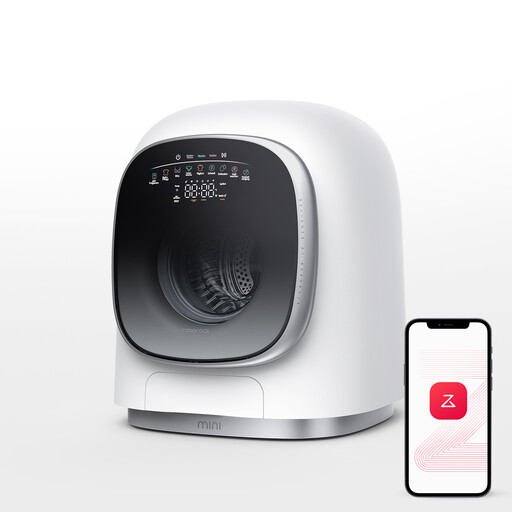 No image available
An option if you want to wash and dry small loads of laundry in one appliance.
The product name lists a washing capacity of 1 kg and a drying capacity of 0.5 kg, as well as a low-temperature drying cycle. Plan the load around the lower drying capacity.
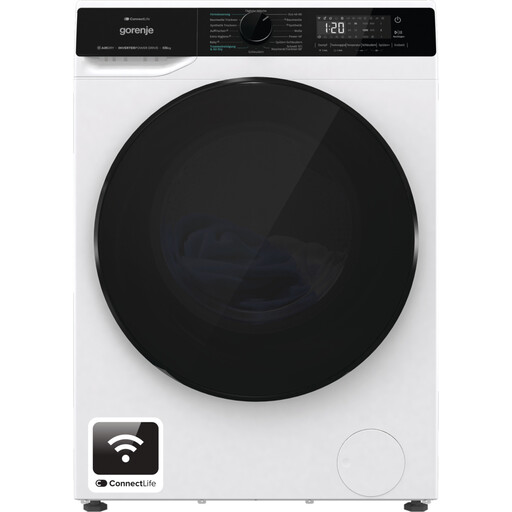 No image available
A relevant option if you’re considering a washer-dryer with the Connect Life features and multiple programmes listed in the product name.
The product name lists 16 programmes. Check the separate capacities for washing and for a complete wash-and-dry cycle before planning your loads.
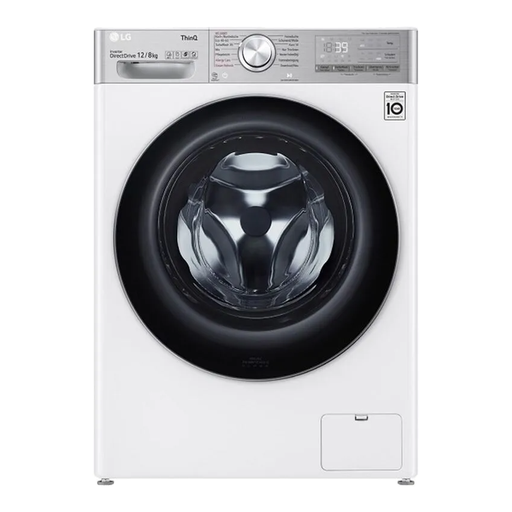 No image available
A possible appliance combination if you want to wash and dry your laundry in one machine.
The product name lists a capacity of 12 kg. Before planning your loads, check the capacity figures for washing and for a complete wash-and-dry cycle separately.
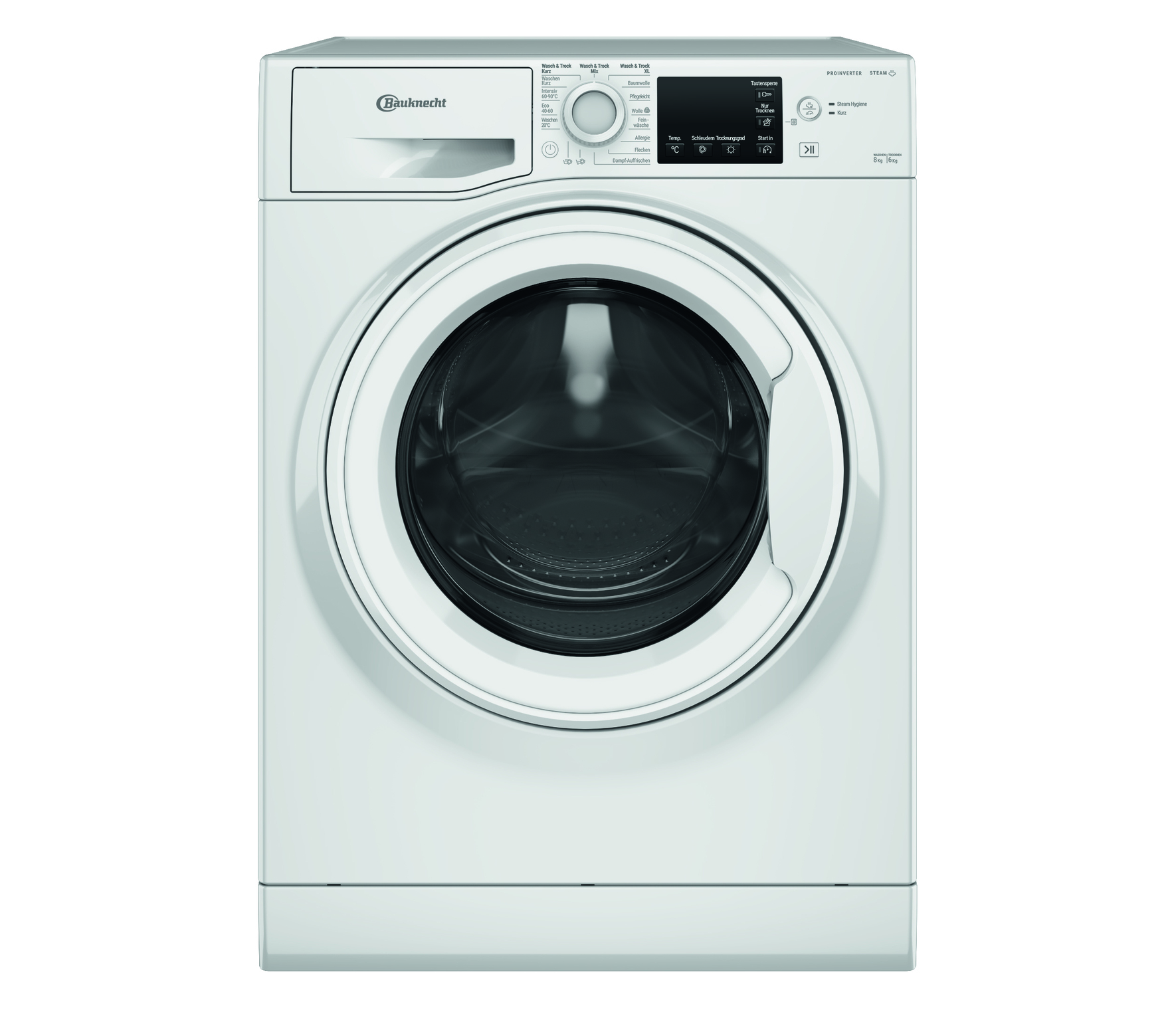 No image available
A relevant option if you want to compare a washer-dryer with the washing and drying features listed in the product name.
The product name lists a washing capacity of 8 kg and a drying capacity of 6 kg, as well as a Stains 40° programme. Bear the lower drying capacity in mind when planning a complete cycle.
No. “Washable” doesn’t tell you whether machine drying is allowed. Check both care instructions on each apron. If it isn’t suitable for machine drying, you’ll need another way to dry it, whether or not you have a washer-dryer.
The German Environment Agency generally considers disinfectants unnecessary in ordinary households. You can’t determine what’s needed in the event of specific contamination just from the name of a washing programme.
Check the dimensions of the specific appliance against the space where it will go, and follow the model’s instructions for connecting and setting it up. For example, Bosch lists dimensions of 848 × 598 × 622 mm (H × W × D) for the WNC244070; these dimensions don’t apply to other appliances.
Don’t keep the machine closed when the inside is still damp. The consumer advice centre warns that unpleasant smells can develop if a damp machine is left closed. Also follow the cleaning instructions in the manual for your specific appliance.
The EU energy label for washer-dryers distinguishes between a complete wash-and-dry cycle and washing alone. Compare the figures for the setting that matters to your house share. For a consumer purchase from a business seller in the EU, you’re generally entitled to a two-year statutory guarantee from the date you receive the goods. This is separate from any voluntary manufacturer’s warranty.