Households without space to dry laundry
If there’s no room in your small flat for a clothes airer or a second appliance, a washer-dryer can make use of a single space. The Verbraucherzentrale considers washer-dryers a space-saving solution.


A washer-dryer can be a practical all-in-one solution for a small flat if there’s no room for a clothes airer and the care labels allow tumble drying. First, check the space and connections, then compare the smaller drying capacity with the energy and water use for both operating modes. If you can hang your aprons up to dry, an additional drying cycle may not be necessary; the Verbraucherzentrale notes that washer-dryers use more electricity and water than separate appliances.
If there’s no room in your small flat for a clothes airer or a second appliance, a washer-dryer can make use of a single space. The Verbraucherzentrale considers washer-dryers a space-saving solution.
If your aprons have different care symbols, check the washing temperature and permitted drying method separately. GINETEX explains what each care label means.
If you often wash small loads of aprons, check that the drying capacity and the figures for a combined cycle suit your needs. The Verbraucherzentrale points out that washing and wash-and-dry consumption figures need to be considered separately.
A good fit if: you have little space for drying and the care labels say your aprons are suitable for tumble drying.
Consider: The permitted drying load may be smaller than the wash load; compare the figures for the combined cycle too.
A good fit if: you have room for one appliance, but can hang your aprons up to dry or their care labels say not to tumble dry them.
Consider: You’ll need to make time and space for drying; in return, you can skip the machine-drying cycle.
A good fit if: you have space for both appliances and often wash larger loads that are suitable for tumble drying.
Consider: You’ll need a suitable space for two appliances. If you plan to stack them, make sure the specific models are compatible.
The care label determines whether an apron can be tumble dried. GINETEX explains the care symbols, while the European Commission and the Verbraucherzentrale cover the separate consumption figures for washing and washing and drying.
| What matters when buying | What to check | Who is this especially important for? |
|---|---|---|
| Space and installation | Check the appliance dimensions, the height and depth of the space, the door opening, connections and model-specific installation requirements. | If there’s only limited space in my small flat, I need to make sure the appliance and its connections will actually fit. Around 33% of consumers put available space first. |
| Apron care | Check the care labels and choose suitable washing and drying programmes; observe temperature limits. | If my aprons have different care symbols, I want to distinguish between the washing temperature and the permitted drying method. Around 27% of consumers prioritise appropriate apron care. |
| Small drying loads | Check the separate capacities for washing and washing and drying, as well as the conditions for any quick programme. | If I need individual aprons again soon, I want to know whether they’ll fit in a combined drying cycle. Around 20% of consumers pay particular attention to small drying loads. |
| Electricity and water use | Compare the consumption figures and programme duration for both operating modes on the same basis. | If I wash and dry frequently, I want to compare the figures for the exact operating mode I use. Around 20% of consumers put running costs first. |
The permitted wash-and-dry load may be smaller than the wash load. For example, Bosch lists a washing capacity of 8 kg and a wash-and-dry capacity of 5 kg for the WKD28490.
Compare both capacity figures with the amount you actually want to dry in one go.
An oversized wash load may mean you need to run an additional drying cycle.
The European Commission and the Verbraucherzentrale distinguish between washing and washing and drying on the energy label.
Compare consumption figures only for the same operating mode and on the same basis.
The additional drying cycle uses more electricity and may also use more water.
Washing and drying symbols give different care instructions. According to GINETEX, the number inside the wash tub indicates the maximum permitted temperature; check the drying symbol separately.
Check both care symbols before starting a combined wash-and-dry cycle. If tumble drying isn’t allowed, take the apron out after washing and dry it according to the label.
Using an unsuitable drying method can damage the fabric.
Space requirements and installation instructions vary by model. AEG prohibits removing the appliance cover from the front-loading models covered by its instructions; depending on the model, heat pump models may require a recess height of more than 87 cm.
Check the full dimensions and installation requirements for the specific model against your available space.
If the appliance doesn’t fit in the intended space, you’ll need to plan a different location.
The built-in washer-dryer WKD28490 is one option if you have a suitable space for an integrated appliance.
The L9WEF80690 is a heat pump model for shoppers who want to compare published consumption figures and installation requirements.
The W4WR7096YB is a documented model with specified washing and drying capacities.
The WN54C2070 gives you a specific model to compare if appliance dimensions and the stated noise level are important to you.
The WD8ETA049BX/EG adds a model with stated washing and drying capacities of 8 kg and 5 kg respectively to the comparison.
The appliances below are washer-dryers for households that want to combine washing and drying in one machine. Always check the care label on your aprons and make sure the drying capacity suits your needs.
 No image available
An all-in-one option with stated washing and drying capacities that should suit the size of your actual apron load.
12 kg washing and 10 kg drying capacity; Dual Inverter Heat-Pump.
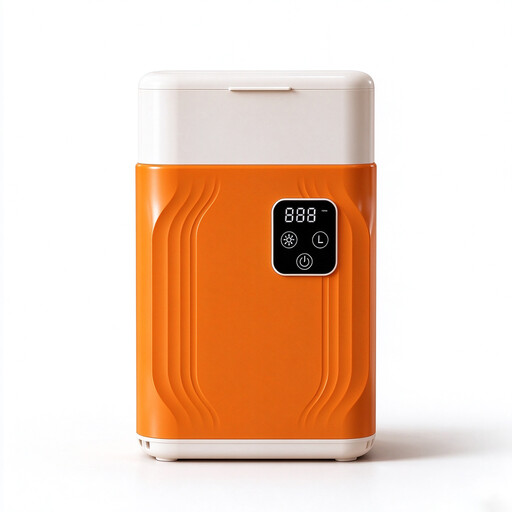 No image available
Described as a foldable mini washing machine with a portable dryer; before buying, check that its capacity is enough for the number of aprons you need to wash.
 No image available
Wash and dry in one appliance; compare the stated drying capacity with the size of your apron load.
10 kg washing, 6 kg drying; energy rating E.
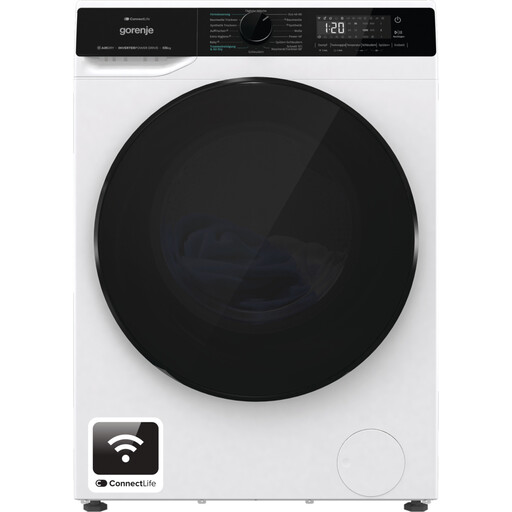 No image available
Designed for a combined wash-and-dry load; note that the stated drying capacity is lower than the washing capacity.
8 kg washing and 5 kg wash-and-dry capacity; 1400 rpm; energy rating D.
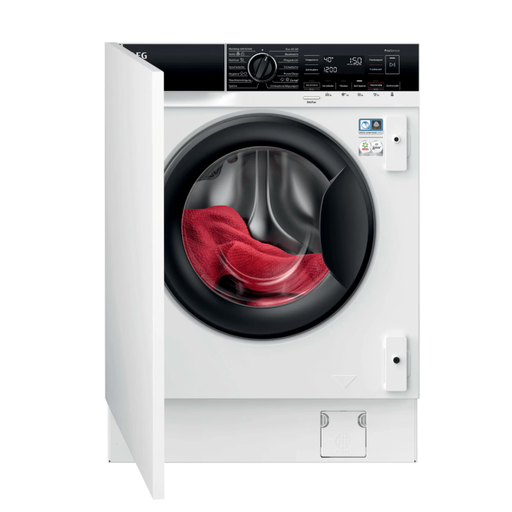 No image available
Suitable for a built-in installation, provided the specified dimensions and installation requirements match your particular space.
8 kg washing and 4 kg drying capacity; 1600 rpm; energy rating A/D.
No. The drying symbol must allow tumble drying. GINETEX distinguishes between washing and drying symbols; a crossed-out tumble dryer symbol means machine drying isn’t permitted.
Measure the space and compare it with the installation requirements for your chosen model. AEG prohibits removing the appliance cover from the front-loading models covered by its instructions; depending on the model, AEG heat pump models may need a recess height of more than 87 cm. These requirements don’t automatically apply to other brands.
Compare the figures for washing and washing and drying separately, using the same basis. The European Commission outlines EU energy-labelling requirements for this product group, and the Verbraucherzentrale also explains the separate consumption figures.
Don’t leave wet laundry in the drum for long, and dry the door seal and detergent drawer after washing. The Verbraucherzentrale also recommends leaving the machine to dry and checking the fluff filter regularly, following the appliance instructions. Always follow the care instructions for your aprons.