Who is a washer-dryer suitable for?

Families short on space

If there isn’t room for two large appliances, a washer-dryer combines washing and drying in one machine. The key is whether its lower drying capacity suits your usual loads. The Verbraucherzentrale lists saving space as one potential benefit of combination appliances.

Families with lots of laundry

If you often run several loads one after another, consider how long a complete wash-and-dry cycle takes and whether the appliance will be tied up while the next load waits. The Verbraucherzentrale points out that a combination appliance can’t take the next load while it’s drying.

Families mindful of fabric care and consumption

If you only machine-dry some of your laundry, check the care symbols on your socks and the separate label figures for washing and wash-and-dry cycles. The European Commission explains the energy, water and cycle-duration information shown on the energy label.

What should you look for when buying?

A washer-dryer as a single appliance

A good fit if: you’re short on space and the load you want to dry together is within the stated drying capacity.

The trade-off: The appliance is occupied until the combined cycle has finished drying, and the drying capacity may be lower than the washing capacity.

A washing machine and separate tumble dryer

A good fit if: your family regularly gets through larger loads one after another and you have room for two appliances.

The trade-off: Two appliances need more space; actual consumption depends on the models you compare and how you use them.

Wash and air-dry suitable socks

A good fit if: you don’t need every pair dry straight away and have a suitable place to dry them.

The trade-off: You’ll need time and space for drying. The Verbraucherzentrale recommends good ventilation and heating when drying laundry indoors to help prevent mould.

What matters What to check before buying Who should consider it?
Capacity and laundry routine Compare the washing and wash-and-dry capacities, as well as the duration of a complete combined cycle. When we have several family loads to get through, it matters whether a combined cycle holds up the next wash. Around 33% of consumers put capacity and laundry flow first.
Space and installation Check the appliance dimensions, access route and water connections at the intended installation spot. If there’s no suitable space for two appliances, the combination appliance must fit the available space and connections. Around 25% of consumers prioritise space and installation.
Consumption and running costs Compare energy per 100 cycles and water per cycle for the same type of cycle. If I use the appliance frequently, I want to assess washing and drying cycles separately and compare the costs with my usage. Around 25% of consumers focus mainly on consumption and running costs.
Caring for cotton socks Check the washing temperature and tumble-drying symbol on each pair of socks. If my socks have different care symbols, I don’t want to assume that every pair can be machine-dried. Around 17% of consumers prioritise suitable sock care.

Common buying mistakes

  • Looking only at the larger kg figure

    In the examples documented here, the stated wash-and-dry capacity is lower than the washing capacity alone. So a full wash load may not be able to dry completely in the same cycle.

    Compare both figures with the loads you actually want to wash and then dry.

    If a wash load exceeds the drying capacity, you may need additional drying loads and have to wait longer.

  • Using the washing efficiency rating as a guide to drying

    The EU energy label lists figures separately for the wash-only cycle and the complete wash-and-dry cycle.

    Compare consumption figures on the same cycle basis, and factor in how often you actually use the drying function.

  • Automatically drying all cotton socks

    The material description alone doesn’t tell you whether every pair is suitable for tumble-drying. Care symbols show the washing temperature and whether tumble-drying is permitted.

    Sort your socks by their care labels and dry pairs without a suitable tumble-drying symbol outside the appliance.

  • Assuming that saving space means getting through laundry faster

    While a washer-dryer completes a combined cycle, it isn’t available for the next load. An independent test by F.A.Z. Kaufkompass describes longer drying times and smaller drying loads for combination appliances than for separate machines.

    Compare the space available with the cycle duration and the number of loads you run one after another.

Washer-dryer brands at a glance

LG

The W4WR7096YB is one specific option to compare, with a 9 kg washing capacity and 6 kg drying capacity, if that combined load size suits your family’s routine.

  • LG lists AI DD and combined operation for this model.
  • The drying capacity is lower than the washing capacity. LG’s stated fibre-protection claim is based on a test with other specified LG models and doesn’t prove suitability for cotton socks in everyday family use.

Bosch

For the WNG24443, Bosch lists a 10.5 kg washing capacity and 6 kg for a continuous wash-and-dry cycle.

  • Bosch gives the dimensions as 848 × 598 × 590 mm and lists AquaStop for this model.
  • The 6 kg drying capacity is lower than the washing capacity, so a full wash load can’t necessarily be dried in the same cycle.

AEG

The L9WEF80690 is a heat-pump washer-dryer with a 9 kg washing capacity and 6 kg drying capacity.

  • For this model, AEG lists 49 kWh per 100 wash cycles and 252 kWh per 100 wash-and-dry cycles. These figures relate to different test cycles.
  • Manufacturer claims about gentle treatment don’t prove that the appliance is suitable for every pair of socks. Always follow the care label and choose suitable settings.

Siemens

For the iQ700 WN54C2A40, Siemens lists a 10.5 kg washing capacity and 6 kg for washing and drying.

  • i-Dos and Home Connect are listed as features of this model.
  • The higher washing capacity doesn’t increase the stated drying capacity. Some connected features require an app and accounts.

Beko

The BM3DT4944W is a freestanding washer-dryer with a 9 kg washing capacity and 6 kg drying capacity.

  • For this model, Beko lists a width of 60 cm, a depth of 57 cm and a spin noise level of 76 dB(A).
  • The manufacturer’s claims about AquaWave treatment aren’t independent confirmation of a specific effect on cotton socks.

Washer-dryers at Joybuy

The models below are washer-dryers for households looking to combine washing and drying in one appliance. Compare the stated capacities and check which drying capacity applies to your sock loads before buying.
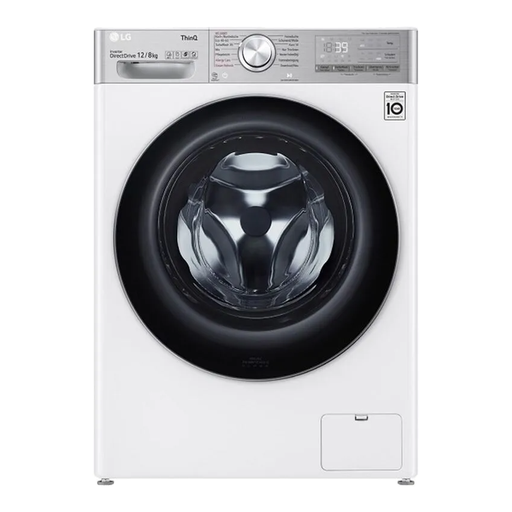
LG V9WD128H2 AI DD washer-dryer, 12 kg, white

LG V9WD128H2 AI DD washer-dryer, 12 kg, white

Listed as a washer-dryer with a 12 kg capacity in the product title; check which cycle the figure refers to and what the drying capacity is.

AI DD is listed as a feature in the product title.

View at Joybuy

Roborock Zeo Lite washer-dryer, 10 kg washing and 6 kg drying

Roborock Zeo Lite washer-dryer

The stated capacities can help you compare the appliance with your family’s loads; the drying capacity is lower than the washing capacity.

10 kg washing and 6 kg drying; energy class E. Zeo-Cycle drying is listed in the product title.

View at Joybuy
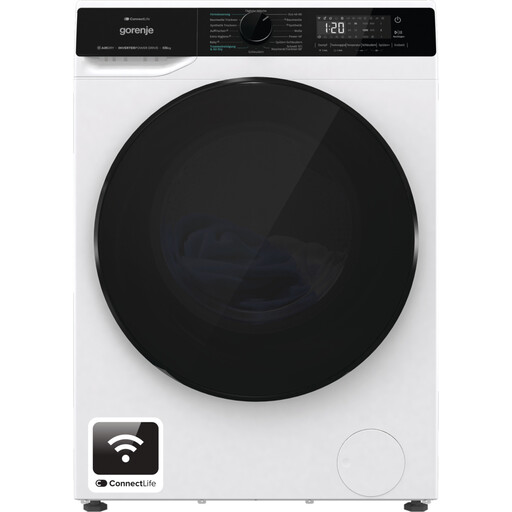
Gorenje WD2PA854ADW washer-dryer

Gorenje WD2PA854ADW washer-dryer

Described as a freestanding washer-dryer for households; check the separate washing and drying capacities against your typical load.

The product title lists 8 kg and 16 programmes. The drying capacity is lower than the washing capacity.

View at Joybuy
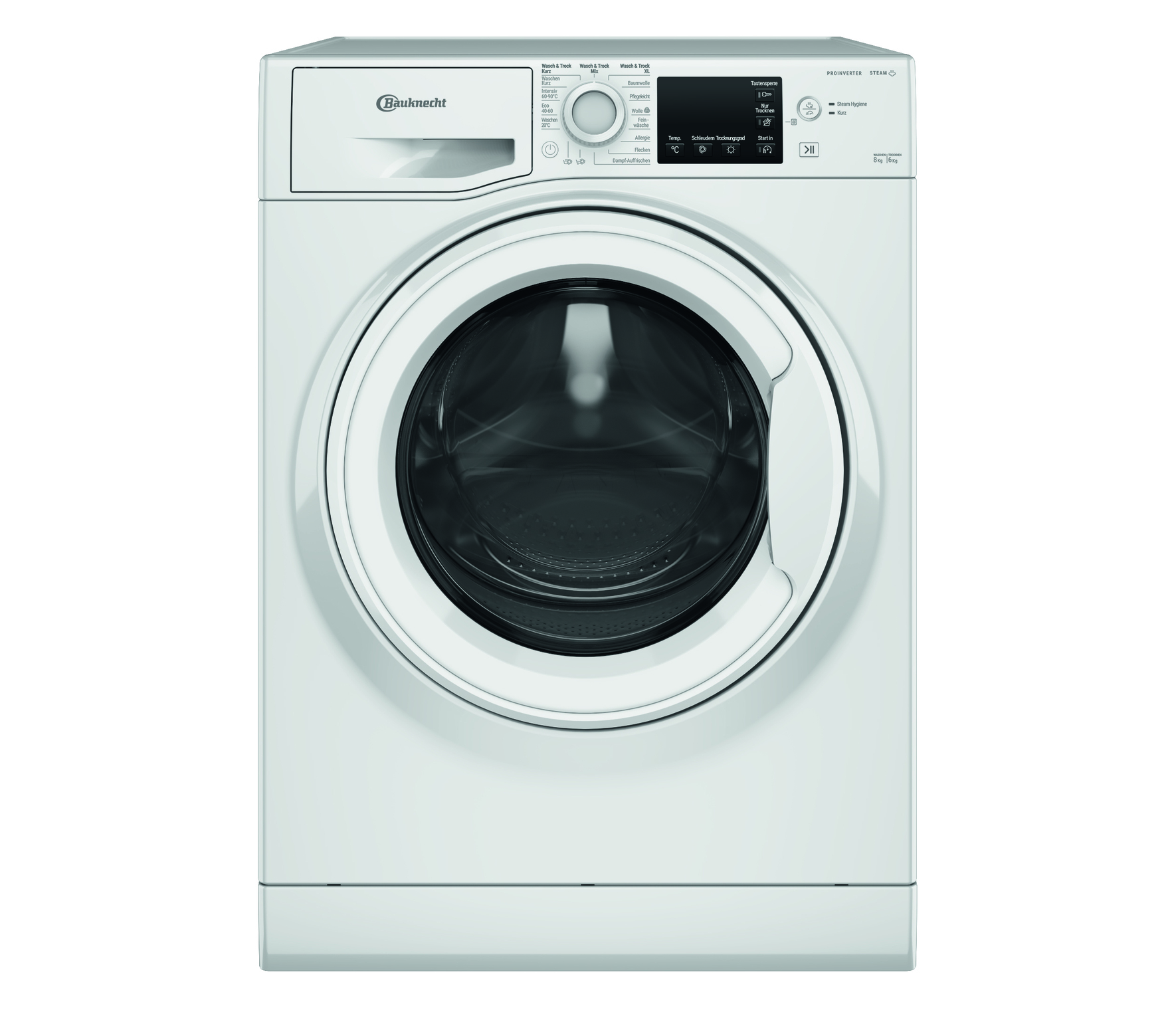
Bauknecht WD Eco Shield 8614 D washer-dryer, 8 kg washing and 6 kg drying

Bauknecht WD Eco Shield 8614 D washer-dryer

The capacity figures help you assess the size of a combined wash-and-dry load; the drying capacity is lower than the washing capacity.

The product title lists 8 kg washing, 6 kg drying and 1400 rpm; it also gives energy efficiency class D.

View at Joybuy
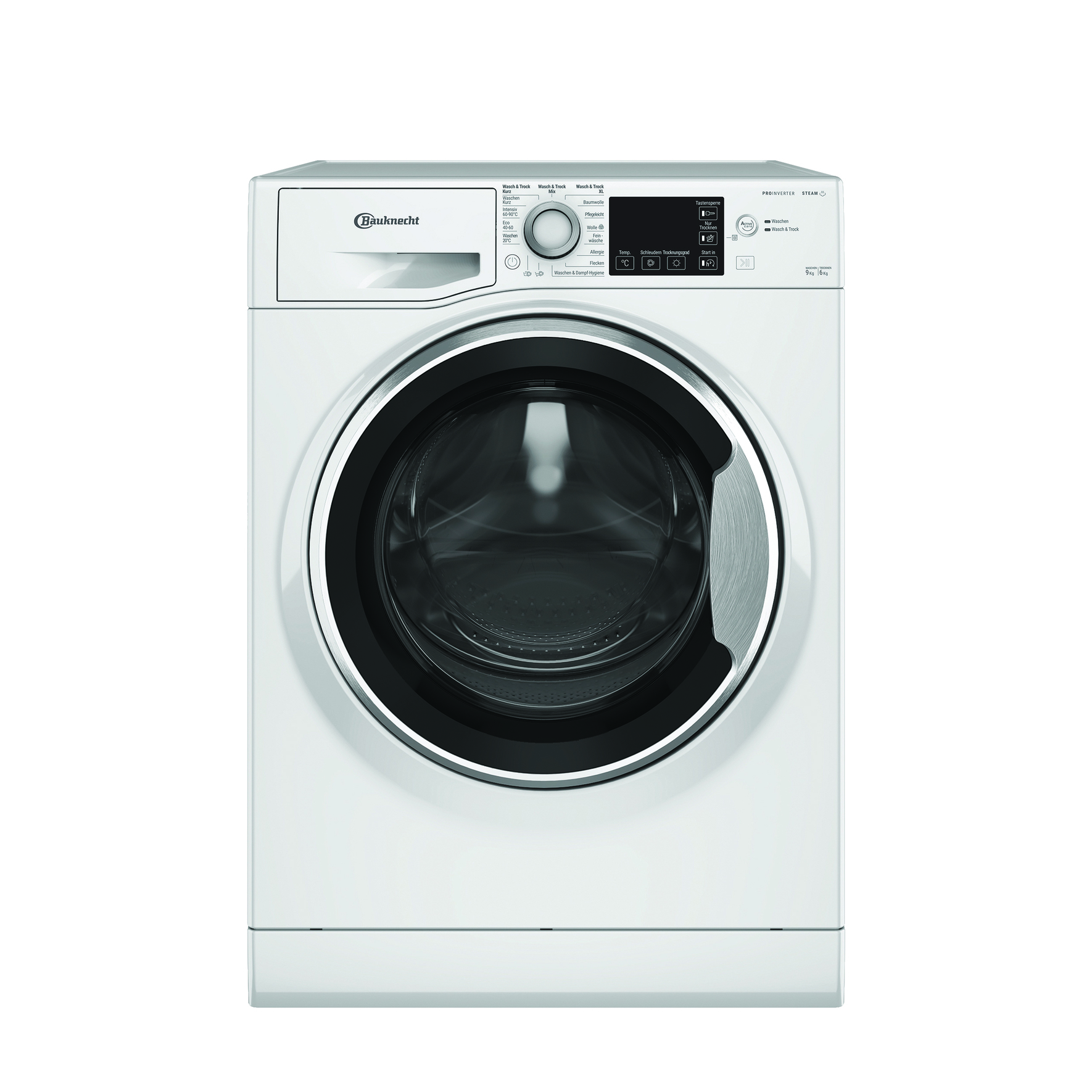
Bauknecht WADR ACTIVE 9614 D washer-dryer, 9 kg washing and 6 kg drying

Bauknecht WADR ACTIVE 9614 D washer-dryer

For family life, compare your wash load with the lower drying capacity before planning a complete combined cycle.

The product title lists 9 kg washing, 6 kg drying and 1400 rpm.

View at Joybuy

Frequently asked questions

Can I wash and dry all my cotton socks using a combined programme?

No, not based on the material description alone. The number inside the wash tub shows the maximum recommended washing temperature; the tumble-drying symbol tells you whether machine-drying is possible and under what conditions. Check the care symbols on each pair of socks.

Which capacity matters for a continuous wash-and-dry cycle?

For a cycle without removing the laundry, it’s the stated wash-and-dry capacity that matters, not just the higher washing capacity. Compare both figures with the load you actually want to wash and dry.

What running costs can I find on the energy label?

The EU energy label gives energy figures per 100 cycles and water per cycle. For washer-dryers, washing and wash-and-dry figures are shown separately. Your actual costs also depend on how often you use each cycle and the electricity and water rates that apply to you.

What should I check before installing one in a rented home?

Check the installation and connection instructions for the specific model, along with the available space, water connections and access route. Also check the arrangements in your rented home and any insurance considerations relating to water damage. This is something to assess based on your circumstances, not a blanket ban on using the appliance.

What should I do with my old washer-dryer?

Old electrical appliances shouldn’t go in household waste; take them to an authorised collection point instead. The German Federal Ministry for the Environment describes retailers’ take-back obligations under certain conditions. When you buy, check whether take-back or collection can be arranged in your case.