If you have space to hang clothes in your utility room and only want to machine-dry socks occasionally, a washing machine with air-drying will usually be enough, as you can skip the electric drying cycle. A washer-dryer may be a better option if you only have room for one appliance and want to dry clothes without transferring them between machines. Compare the capacity and energy and water consumption for the full wash-and-dry cycle, and check the care labels on your socks. The Verbraucherzentrale notes that washer-dryers use more electricity and water than separate appliances.
Which option is right for you?
Homes with limited space
If there’s only room for one appliance in your utility room, a washer-dryer can combine washing and drying in a single machine. The key is to check whether its capacity for a full cycle suits the amount of laundry you have. The Verbraucherzentrale highlights the space-saving benefit of combination appliances.
Homes with space to dry clothes
If you wash cotton socks regularly and have somewhere to hang them, you can avoid using the electric drying cycle. The Umweltbundesamt points out that quick programmes don’t automatically save energy, so check the programme and care label rather than focusing only on how long the cycle takes.
Homes with lots of laundry
If you often have other laundry to wash as well as socks, consider how much can be washed and dried in a single cycle. A separate appliance takes up extra space, but it can run at the same time as your washing machine.
What should you look for when buying?
Washing machine and air-drying
A good fit if: You have space to hang clothes in your utility room and can fit drying them into your routine.
The trade-off: You’ll need to hang the laundry up yourself, but you won’t use electricity for a machine drying cycle.
Washer-dryer
A good fit if: You only have space for one appliance and want to dry tumble-dryer-safe laundry without transferring it between machines.
The trade-off: Wash and dry capacities may differ. The Verbraucherzentrale says a full cycle can use more electricity and water than using separate appliances.
Washing machine and separate tumble dryer
A good fit if: You have room for two appliances and regularly do several loads of laundry.
The trade-off: You’ll need more space and have to transfer the laundry between appliances, but you can wash and dry clothes at the same time.
| Priority |
What to check when buying |
Who it matters most to |
| Appliance space and somewhere to dry clothes |
Appliance dimensions, including door clearance and connections; space for a clothes airer. |
If I don’t have room in my utility room for either a clothes airer or a second appliance, a single-appliance option is especially relevant. Around 36% of consumers say available space is their main priority. |
| Electricity and water consumption |
On the EU label, compare standard wash cycles and full wash-and-dry cycles separately; consider water consumption and how you’ll use the appliance. |
If I usually hang my socks up and only machine-dry them occasionally, I want to weigh up the consumption for that specific use. Around 29% of consumers say running costs are their main priority. |
| Load size and throughput |
Check the wash capacity and full-cycle capacity in kg separately, and compare them with the total amount of laundry you have. |
If I regularly wash other items along with my socks, it matters how much laundry can be finished without splitting the load. Around 21% of consumers who need to get through lots of laundry say this is a priority. |
| Sock care |
Check the maximum wash temperature and tumble-drying symbol on the care label. |
If I want to follow the care instructions for my cotton socks, I check each label rather than relying on the fabric description alone. Around 14% of consumers put fabric care first. |
Common buying mistakes
-
Comparing only the wash capacity
The capacity for washing and drying can be considerably lower than the wash capacity alone. For the WNA13441 model, Bosch Hausgeräte Deutschland lists a 9 kg wash capacity and a 5 kg capacity for a full wash-and-dry cycle.
If you want to finish a load without transferring it, plan around the capacity for a full cycle.
Otherwise, a larger wash load may need an extra drying cycle or have to be split.
-
Assuming wash-only consumption is the same as for a full cycle
The EU label lists standard wash cycles separately from full wash-and-dry cycles. Consumption figures are only useful to compare when they’re based on the same type of cycle.
Check the figures for both modes separately, and consider how often you’ll actually use the machine to dry your laundry.
If you only look at the wash figure, you could underestimate the electricity and water needed for regular drying.
-
Putting every cotton sock in the tumble dryer without checking
The cotton content alone doesn’t tell you the permitted wash temperature or whether the socks are suitable for tumble-drying.
Check the care label on the specific pair: the number in the wash symbol indicates the maximum permitted temperature, while the tumble-drying symbol shows whether and how machine drying is allowed.
-
Assuming a quick programme is an energy-saving programme
The Umweltbundesamt points out that quick programmes save time, but aren’t automatically more energy-efficient than longer programmes.
Choose a programme to suit your laundry and its care label, and compare energy figures rather than focusing only on the cycle time.
Brands to consider
Bosch
The WNA13441 model is an example of a washer-dryer with separate wash and full-cycle capacities.
- Bosch lists a programme for small loads for this model.
- Its capacity for a full cycle is 5 kg, compared with 9 kg for washing. A programme for small loads doesn’t mean that every quick programme is suitable for every sock or uses less energy.
AEG
The freestanding Serie 7000 LWR7AMZ48WD is an example of a model with separate capacity and label figures.
- AEG lists an 8 kg wash capacity and a 5 kg drying capacity. For this model, the manufacturer states 47 kWh per 100 wash cycles and 265 kWh per 100 full cycles.
- These energy figures apply to the label cycles for this model, not every type of use. At the time of research, the manufacturer’s website listed it as out of stock.
Siemens
The iQ700 WN54C2A40 is an example of a model with a 10.5 kg wash capacity and a 6 kg capacity for a full cycle.
- Siemens lists automatic dosing and a width of 598 mm for this model.
- The higher wash capacity doesn’t change the 6 kg limit for a full wash-and-dry cycle.
Miele
The WT1 WTW870WPM PWash&TDos 9/6kg is an example of a model with automatic detergent dispensing.
- Miele lists a 9 kg wash capacity and a 6 kg drying capacity, as well as TwinDos, for this model.
- Whether the extra features are useful for you depends on your laundry and how you use the appliance, not just on cotton socks.
Washer-dryers at Joybuy
This selection includes washer-dryers for washing and occasional machine drying. Compare the stated wash and drying capacities with the amount of laundry you actually have.
 No image available
Samsung washer-dryer, 9 kg/6 kg, 1400 rpm
For anyone who wants to combine washing and occasional drying in one appliance.
9 kg wash capacity and 6 kg drying capacity; 1400 rpm.
Energy class A (washing)/D (Overall); Wi-Fi and voice control.
View at Joybuy
 No image available
Roborock Zeo Lite Grey washer-dryer, 10 kg/6 kg
For anyone weighing up a combination appliance with a higher wash capacity than drying capacity.
10 kg wash capacity and 6 kg drying capacity; energy class E.
Zeo-Cycle drying, LintClear self-cleaning system and automatic dosing.
View at Joybuy
 No image available
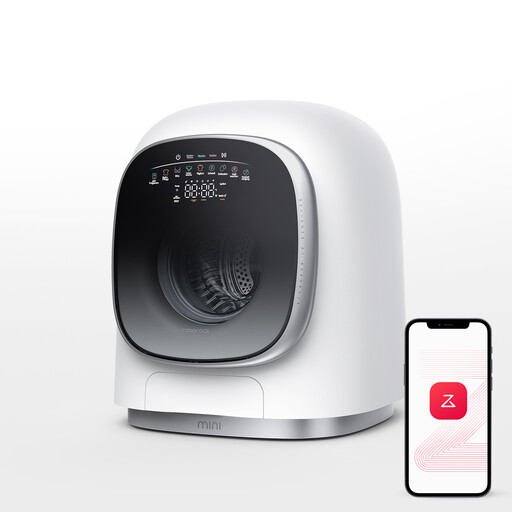
Roborock Zeo Mini washer-dryer, 1 kg/0.5 kg
For anyone looking for a combination appliance for very small loads of laundry.
1 kg wash capacity and 0.5 kg drying capacity; more than 20 wash and dry programmes.
Low-temperature drying and automatic dosing; energy class A.
View at Joybuy
 No image available
Beko BM3DT4944W washer-dryer, 9 kg/6 kg
For anyone who wants to compare the wash and drying capacities of a freestanding washer-dryer.
9 kg wash capacity and 6 kg drying capacity; 1400 rpm; energy class D.
SteamCure and ProSmart Inverter Motor.
View at Joybuy
 No image available
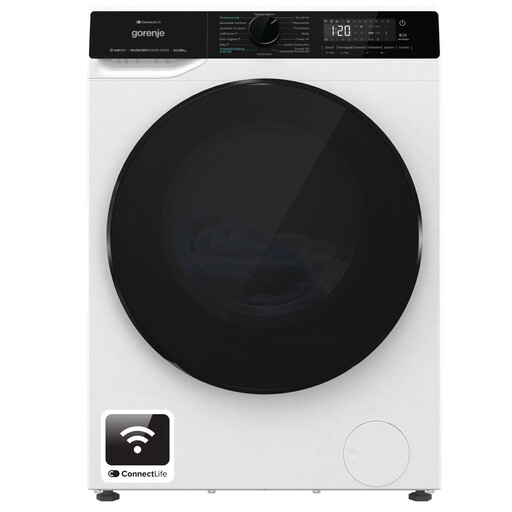
Gorenje WD2PA1X64ADW DE washer-dryer
For anyone considering a combination appliance with several wash and drying options.
10.5 kg; 54 litres; 1400 rpm; 16 programmes.
Connect Life, Total AquaStop and Wash & Dry 60'.
View at Joybuy
Frequently asked questions
Can I always wash cotton socks at 60 °C and then tumble-dry them?
No, not based on the fabric description alone. The number in the wash symbol indicates the maximum permitted temperature, while the tumble-drying symbol shows whether and how machine drying is allowed. Check the care label on the specific pair.
Which figures on the EU energy label should I compare separately?
For washer-dryers, the standard wash cycle and the full wash-and-dry cycle are listed separately. Compare consumption and capacity on the same cycle basis. The European Commission states that the EU energy label has used a scale from A to G since 1 March 2021.
What should I check before installing an appliance in my utility room?
Check the dimensions, installation space and connections against the installation instructions for the specific appliance. If you rent your home, the Verbraucherzentrale recommends checking with your landlord that installation is permitted and finding out how any potential water damage would be covered. This doesn’t mean that every installation requires permission.
What happens to my old appliance when I replace it?
In Germany, old electrical appliances must not go in household rubbish. The Umweltbundesamt lists recycling centres as a drop-off option and explains that large old appliances can be returned free of charge when you buy a corresponding new appliance, including with online purchases that include delivery. Check the arrangements when you place your order.


