Homes without space for drying
You only have room for one appliance and can’t easily dry duvet covers on a clothes airer. The appliance’s dimensions and its capacity for a complete wash-and-dry cycle are key.


If there’s no room next to your washing machine for a tumble dryer or clothes airer, a washer-dryer could be a convenient all-in-one solution. First, check the available space, the door opening and the drying capacity of the specific model: this may be lower than its washing capacity. If you can hang your duvet covers out to dry, the German Environment Agency recommends air-drying as an energy-saving alternative. If you often use a tumble dryer, compare the energy use of the complete wash-and-dry cycle.
You only have room for one appliance and can’t easily dry duvet covers on a clothes airer. The appliance’s dimensions and its capacity for a complete wash-and-dry cycle are key.
You wash large duvet covers or several at once, and want to know whether the whole load can be dried in the machine or needs to be split.
You can air-dry duvet covers and want to avoid an additional machine-drying cycle. You’ll need the space and time to hang them up.
Whether a washer-dryer is right for you depends above all on whether you need to tumble-dry duvet covers or can hang them out to dry, and how much space you have.
A good choice if: you only have room for one appliance and can’t air-dry duvet covers.
Consider: The combined drying capacity may be lower than the washing capacity. Germany’s consumer advice centre also notes that washer-dryers use more electricity and water than separate appliances.
A good choice if: you have a suitable place to hang your washing and want to keep energy use during drying down.
Consider: You’ll need extra space and time to hang your washing. The German Environment Agency recommends a clothes airer or washing line as an energy-efficient way to dry clothes.
A good choice if: you have space for two appliances, or can safely stack compatible models.
Consider: You’ll need space for two appliances. Stacking may require a suitable stacking kit, and you’ll need to check that it’s compatible with both appliances.
| What matters when buying | What to check | Who it matters most to |
|---|---|---|
| Space in your laundry area | Check the appliance dimensions and door opening against the available space and delivery route. Bosch lists dimensions of 848 × 598 × 565 mm (H × W × D) for the WNA14441; these measurements apply to this model only. | I only have space for one appliance, so I need to know in advance whether it will fit in the space, including when the door is open. Around 36% of consumers say available space is their main concern. |
| Drying duvet covers in one continuous cycle | Check the washing and drying capacities separately, and follow the care label and programme guidance. Bosch lists 9 kg for washing and 5 kg for washing and drying for the WNA14441; AEG lists 9 kg and 6 kg respectively for the L9WEF80690. | If I want to dry duvet covers without transferring them to another appliance, the load must fit the drying capacity. Around 29% of consumers put completing the drying cycle in one go first. |
| Running costs | If you regularly use the machine to dry clothes, compare the energy use of the complete wash-and-dry cycle, not just the washing figure. For the L9WEF80690, AEG lists 49 kWh per 100 wash cycles and 252 kWh per 100 complete wash-and-dry cycles. | If I often use a tumble dryer, I also want to take energy and water use into account. Around 21% of consumers prioritise running costs. |
| Care suited to the fabric | Check the care label and choose a suitable programme for each duvet cover. Bosch recommends closing zips before washing. | When I wash different types of duvet cover, I follow the care label and choose a suitable programme rather than expecting one feature to do everything. Around 14% of consumers put fabric-appropriate bedding care first. |
A high washing capacity doesn’t mean you can dry the same amount of laundry in the next cycle. Bosch lists 9 kg for washing and 5 kg for washing and drying for the WNA14441.
Plan a complete cycle around the stated drying capacity and programme information. If the load is too large, you may need to run an additional drying cycle.
The EU energy label lists figures separately for the wash cycle and the complete wash-and-dry cycle. For the AEG L9WEF80690, AEG lists 49 kWh per 100 wash cycles and 252 kWh per 100 complete cycles. These figures relate to the respective label cycles for this model.
If you regularly use the machine to dry clothes, compare the figures for complete cycles and consider air-drying as an alternative too.
Stacking appliances may also be an option in a small laundry area, as long as the specific models are suitable. Bosch notes that you need to check compatibility before using its stacking kit.
Before deciding, check the installation instructions for both appliances and whether you need a suitable stacking kit.
Stacking may require an additional kit that’s compatible with both appliances.
The WNA14441 is a specific example of a washer-dryer with published dimensions.
The L9WEF80690 is a heat pump washer-dryer with published figures for the complete cycle.
LG lists the HPWD096C as a heat pump washer-dryer with stated washing and drying capacities.
Samsung publishes capacity, dimensions and energy label information for the WD5000H WD9BHG5U34BXEG.
The WN44G242 is an example of the dimensions and capacity available, but it isn’t a reliable basis for choosing an appliance that’s currently on sale.
This selection includes washer-dryers for washing and tumble-drying duvet covers in a small laundry area.
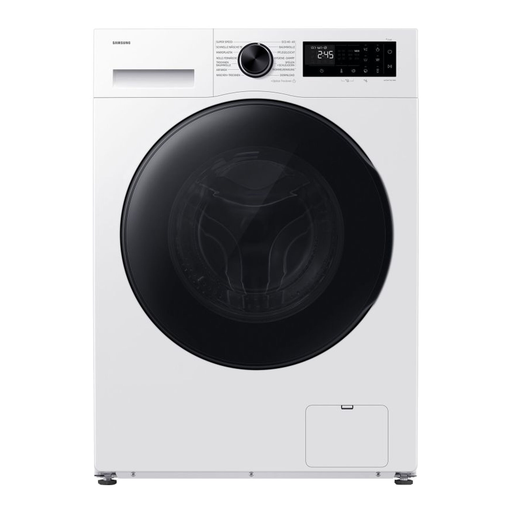 No image available
The stated drying capacity of 6 kg helps you check whether the planned bedding load will fit.
Washing capacity: 9 kg; drying capacity: 6 kg; spin speed: 1400 rpm. Check the care label and programme guidance for the duvet cover you’re washing.
 No image available
The stated washing and drying capacities of 9 kg and 6 kg give you specific figures to compare for bedding.
Spin speed: 1400 rpm; the product name lists energy class D. Check that the combined drying capacity is enough for your load.
 No image available
The stated drying capacity of 10 kg is worth considering for larger loads. Still, check the care instructions for each duvet cover.
Washing capacity: 12 kg; drying capacity: 10 kg; Dual Inverter heat pump dryer.
 No image available
The separate capacity figures help you judge whether your bedding load will fit in a complete cycle.
Washing capacity: 9 kg; drying capacity: 6 kg; energy classes according to the product name: A for washing and D overall.
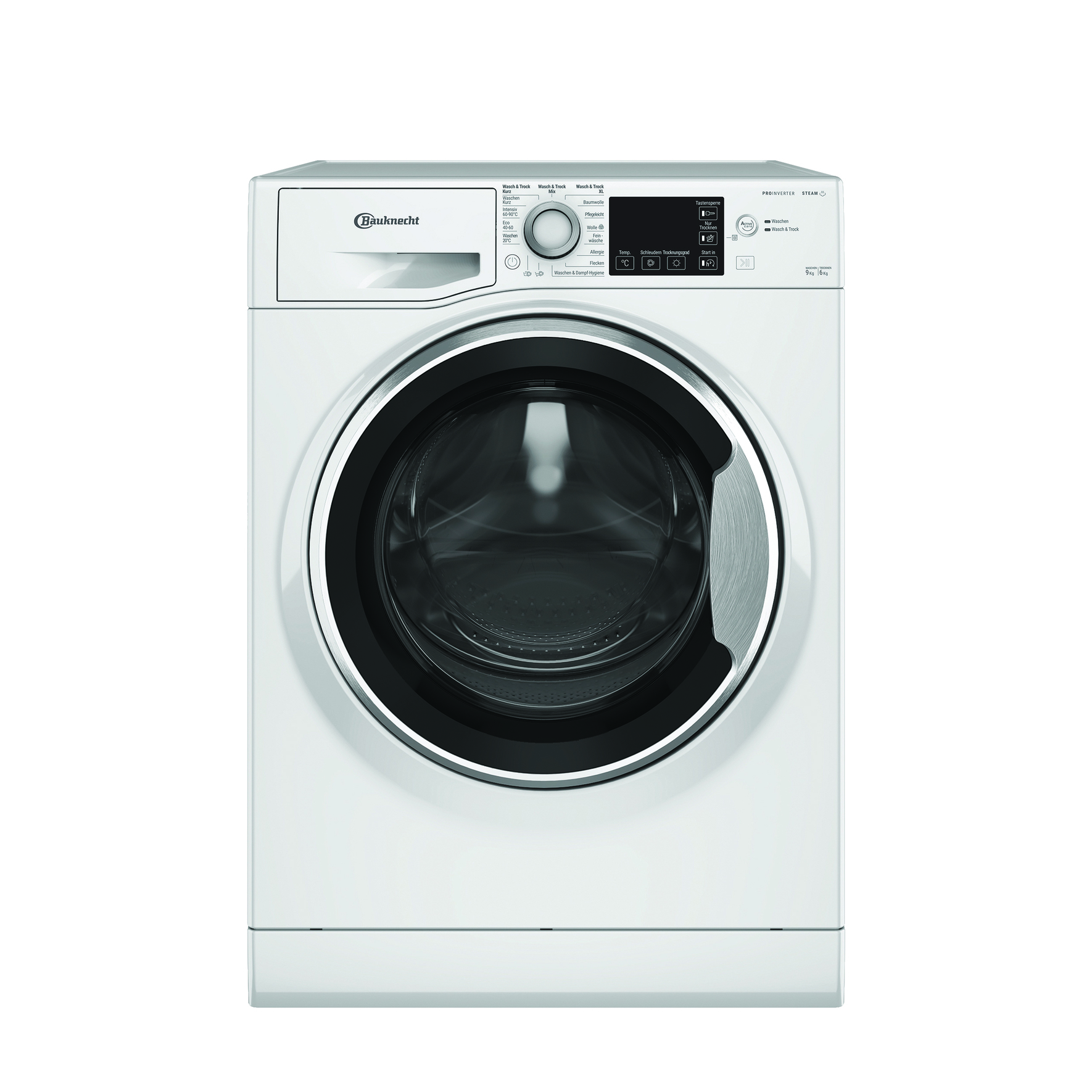 No image available
The stated drying capacity of 6 kg is what matters for your planned bedding load, not just the washing capacity.
Washing capacity: 9 kg; drying capacity: 6 kg; spin speed: 1400 rpm; energy class D according to the product name.
Only if the care label allows tumble-drying and the duvet cover, together with the rest of the load, fits the drying capacity and programme of your specific appliance. The higher washing capacity isn’t what matters here.
Compare the energy use in kWh per 100 complete wash-and-dry cycles with the equivalent figure for other appliances. The EU energy label lists the wash and wash-and-dry cycles separately. Your actual costs will also depend on how you use the appliance and your energy tariff.
Measure the space and the route to the installation area, and follow the installation and connection instructions in the specific manual. Germany’s consumer advice centre also recommends discussing installation with your landlord if you rent; this doesn’t mean that permission is always required.
Bosch recommends closing zips and choosing a programme to suit the fabric and care label. These care instructions don’t replace checking whether the duvet cover is suitable for tumble-drying.
Germany’s consumer advice centre notes that washer-dryers use more electricity and water than a washing machine and separate tumble dryer. To make the right choice for you, also consider the energy use of the specific models and whether you can air-dry your washing.