Which option is right for you?

Households with large bedding loads

If you wash several duvet covers or larger ones, check that the dry load is within the lower wash-and-dry capacity too. The Verbraucherzentrale and HEA explain that washing capacity and combined wash-and-dry capacity should be considered separately.

Households short on space

If there’s room for only one appliance in your utility room, a washer-dryer can make installation easier. Even so, measure the door clearance, route into the room and connections, and include somewhere to hang laundry in your comparison.

Households that use a tumble dryer frequently

If you regularly tumble-dry duvet covers, consider the energy use of the complete wash-and-dry cycle and the care instructions on your fabrics. HEA explains that the energy label shows separate figures for washing and for washing plus drying.

What should you look for when buying?

Wash and tumble-dry

Suitable if: you have space for only one appliance and want to dry tumble-dryer-safe duvet covers without transferring them to another machine.

Bear in mind: the drying load is smaller than the wash load, and the complete cycle has its own energy-use figures.

Wash and then hang out to dry

Suitable if: you have a suitable place to dry your duvet covers after washing.

Bear in mind: you may not use the drying function much with this approach; when drying laundry indoors, good ventilation is important.

Separate appliances or somewhere to hang laundry

Suitable if: your utility room has the space, connections and layout for a separate setup or for hanging laundry.

Bear in mind: two appliances need more floor space; with separate washing and drying, you’ll need to transfer the laundry between them. The Verbraucherzentrale points out that washer-dryers use more electricity and water than separate appliances.

What matters What to look for when buying Who is most affected?
Capacity for the complete cycle Compare the weight of a typical dry load with the wash and wash-and-dry capacities; check the programme guidance. If my usual duvet covers are large, I want to know whether the whole load will fit through washing and drying without splitting it. Around 36% of consumers put suitable capacity first.
Space and installation Measure the space and route into the room; check door clearance, water inlet and drainage, and installation requirements. If my utility room is short on space, I need to be sure the appliance will fit safely and can be used there. Around 29% of consumers prioritise the space available.
Energy use for your intended use Compare kWh per 100 cycles for the programme you’ll actually use; don’t treat washing and washing plus drying as equivalent. If I tumble-dry frequently, I want to take the energy use of the complete cycle into account. Around 21% of consumers prioritise running costs.
Fabric care Check the care label on your duvet covers against the approved wash and dry programmes. If looking after the fabric properly matters more to me than the shortest possible cycle, I’ll choose based on the labels on my duvet covers. Around 14% of consumers put fabric care first.

Common buying mistakes

  • Confusing wash capacity with capacity for the complete cycle

    The permitted wash-and-dry load may be smaller than the wash load alone. For models with a 9 kg wash capacity and a 6 kg wash-and-dry capacity, the limit for a continuous cycle is 6 kg.

    Check both capacity figures and the programme guidance for the specific model against the weight of your usual dry load of duvet covers.

  • Comparing only the energy use for washing

    The energy label lists separate figures for washing and for the complete wash-and-dry cycle. The Verbraucherzentrale also highlights the higher energy and water use of many washer-dryers compared with separate appliances.

    Compare the figure for the way you actually plan to use the appliance, and consider separate appliances or hanging your laundry to dry if you have the space.

  • Checking only the appliance dimensions against the alcove

    Door clearance, hoses and the requirements for levelling the appliance also matter when you’re installing it.

    Measure the space and route into the room, and check the installation instructions for your chosen model before ordering.

  • Assuming a drying programme is suitable for every duvet cover

    Different materials and care labels may call for different wash temperatures and drying methods.

    Check the care labels first and use only suitable programmes. Bosch Hausgeräte Deutschland also recommends fastening zips before washing.

Brands and models at a glance

LG

The W4WR7096YB is a useful point of comparison for households looking for a 9 kg washer and 6 kg washer-dryer in one appliance.

  • LG Deutschland lists a 9 kg wash capacity and a 6 kg wash-and-dry capacity for the W4WR7096YB.
  • The 6 kg limit applies to the complete cycle. Manufacturer information about features does not confirm that every duvet cover can be tumble-dried.

Bosch

The WNG24443 has a higher wash capacity than wash-and-dry capacity, so it may suit households that mainly wash larger loads.

  • Bosch Hausgeräte Deutschland lists a 10.5 kg wash capacity, a 6 kg wash-and-dry capacity and an appliance depth of 590 mm.
  • The appliance depth does not include extra room for connections and operation; the wash capacity does not apply to the complete drying cycle.

AEG

The L9WEF80690 is a 9/6 kg model with heat-pump drying. Its energy figures can help you compare it with other models for your intended use.

  • AEG Deutschland lists 252 kWh per 100 wash-and-dry cycles and 49 kWh per 100 wash cycles.
  • The label figures are based on standardised test cycles and don’t measure the energy used when you dry your own duvet covers.

Beko

The BM3DT4944W is a freestanding 9/6 kg model; you can compare its stated depth with the measurements of your intended space.

  • Beko Deutschland lists an appliance depth of 57 cm and an airborne noise emission of 76 dB(A) during spinning.
  • The appliance depth doesn’t replace measuring the clearance needed for the door, hoses and installation.

Siemens

The WN54C2A40 iQ700 offers a 10.5 kg wash capacity and a 6 kg wash-and-dry capacity for households that mainly wash larger loads.

  • Siemens Hausgeräte Deutschland lists an appliance depth of 622 mm for this model.
  • The lower capacity applies to the complete wash-and-dry cycle; the manufacturer says that some connected features require an internet connection and accounts.

Joybuy product selection

This selection includes washer-dryers and a WashTower unit with a washing machine and tumble dryer. When comparing models for duvet covers, always check wash and drying capacities separately.
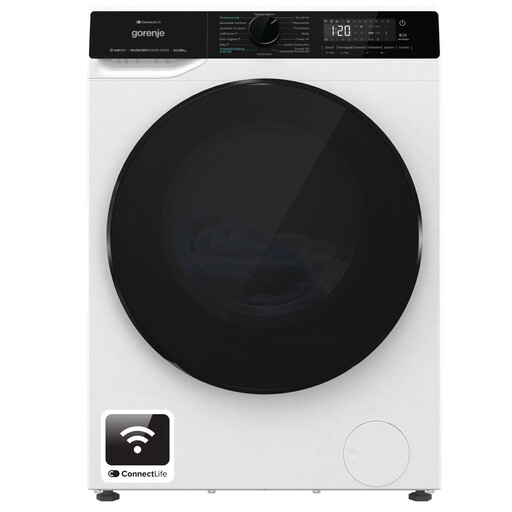
Gorenje WD2PA1X64ADW DE washer-dryer

Gorenje WD2PA1X64ADW DE washer-dryer

For households looking to combine washing and tumble-drying in one appliance; check the capacity for the complete cycle against your load of duvet covers.

The product title lists 16 programmes, AllergySteam, Total AquaStop and ‘Wash & Dry 60’.

View at Joybuy

Roborock Zeo Lite White washer-dryer, 10 kg wash capacity and 6 kg drying capacity

Roborock Zeo Lite White washer-dryer

For households looking to wash and dry duvet covers in one combined appliance; base the continuous load on the drying capacity.

10 kg wash capacity and 6 kg drying capacity; energy rating E. The product title lists Zeo-Cycle drying, automatic dosing and a self-cleaning LintClear system.

View at Joybuy

LG WT1210EGF WashTower with a 12 kg washing machine and 10 kg heat-pump tumble dryer

LG WT1210EGF WashTower, 12 kg washing machine and 10 kg heat-pump tumble dryer

A potential alternative with a separate washing machine and tumble dryer stacked in one unit, if your utility room is suitable for this setup.

12 kg wash capacity and 10 kg drying capacity. The product description also lists a ‘Duvets’ wash programme; check the care labels on your duvet covers.

View at Joybuy

LG WT1210WWF washer-dryer with a 12 kg wash capacity and 10 kg drying capacity

LG WT1210WWF washer-dryer, 12 kg wash capacity and 10 kg drying capacity

For households looking to combine washing and drying in one freestanding appliance; the lower capacity applies to the complete cycle.

12 kg wash capacity and 10 kg drying capacity. The product title lists Dual Inverter Heat-Pump technology and AI DD.

View at Joybuy
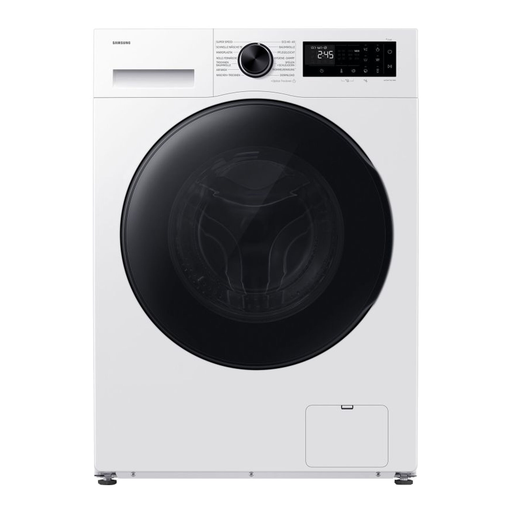
Samsung WD9BHG5U34BEEG washer-dryer with a 9 kg wash capacity and 6 kg drying capacity

Samsung WD9BHG5U34BEEG washer-dryer, 9 kg wash capacity and 6 kg drying capacity

For households looking to wash and dry duvet covers in one freestanding washer-dryer; check that your load is within the 6 kg drying capacity.

The product title lists AI Ecobubble, QuickDrive, Microplastic Care and 1400 RPM.

View at Joybuy

Frequently asked questions

Can I dry a full 9 kg wash load in the same appliance?

Not with a 9/6 kg model: the limit for a continuous wash-and-dry cycle is 6 kg. Check the weight of your usual load and follow the programme guidance for the specific appliance; wash capacity alone doesn’t tell you whether large duvet covers are suitable for tumble-drying.

What should I check before installing an appliance in my utility room?

Measure the space and route into the room, and check door clearance, water inlet and drainage, the floor and the installation instructions for your chosen model. For appliances stacked on top of one another, make sure you have a stacking kit suitable for that specific pair.

How should I care for duvet covers in a washer-dryer?

Choose the temperature, wash programme and tumble-drying setting according to the care label on each duvet cover. Bosch Hausgeräte Deutschland recommends fastening zips before washing; its advice doesn’t replace the care label on your fabric.

Which energy-use figure is relevant to the way I’ll use the appliance?

If you tumble-dry, compare the label figures for washing plus drying; if you only wash, the figures for wash cycles are the right ones to check. HEA explains the separate figures on the washer-dryer energy label. Your personal costs will also depend on your tariff and how often you use the appliance.

What are the rules in Germany for energy labels, cancellations and old appliances?

The Federal Institute for Materials Research and Testing explains the EU rules for energy labels on washing machines and washer-dryers, which have applied since 1 March 2021. For a typical online consumer purchase, you generally have a 14-day right to cancel; the Verbraucherzentrale says this period starts when the contract is concluded or the goods are received. Old appliances must be handed in at authorised collection points; collection from your home by a retailer depends on the legal requirements and the agreed terms. Cancellation rights, rights relating to faulty goods and a voluntary manufacturer’s guarantee are separate matters.