What should you look for when buying?
First, decide whether you need to tumble-dry your laundry. Then check the care labels and compare the load limits and consumption figures for the right programme based on the amount of laundry you usually wash.
| Buying consideration |
What to look for |
Who will find this especially important? |
| Space for the appliance and somewhere to dry laundry |
Measure the appliance’s height, width and depth, as well as the space needed to open the door. |
If there’s barely room in my laundry area, the appliance needs to fit with the door open, and I don’t have space for an extra drying rack. Roughly 31 % of consumers put space for the appliance and somewhere to dry laundry first. |
| Cleaning and fabric care |
Check the washing temperature and drying symbol on each cloth, and choose the programme and temperature accordingly. |
When I wash face cloths, I want to choose the temperature and drying method based on each item’s care label, rather than relying on steam alone. Around 31 % of consumers prioritise suitable cleaning and fabric care. |
| Electricity and water consumption |
On the EU energy label, compare the figures for 100 wash cycles and 100 wash-and-dry cycles separately. |
If I can hang my cloths up to dry, I want to weigh up whether tumble-drying is worth the extra consumption for me. Around 23 % of consumers focus primarily on electricity and water consumption. |
| Load size and cycle |
Compare the amount of laundry you usually wash with the wash-and-dry capacity and the limit for your chosen programme. |
If I want to wash and dry several cloths without transferring them between cycles, the load limit for the full cycle is key. Around 15 % of consumers prioritise load size and cycle. |
Washer-dryers at Joybuy
The Joybuy products below combine washing and tumble-drying in one appliance. For each model, compare its dimensions, the figures for both settings and the drying capacity that suits the amount of laundry you usually wash.
 No image available
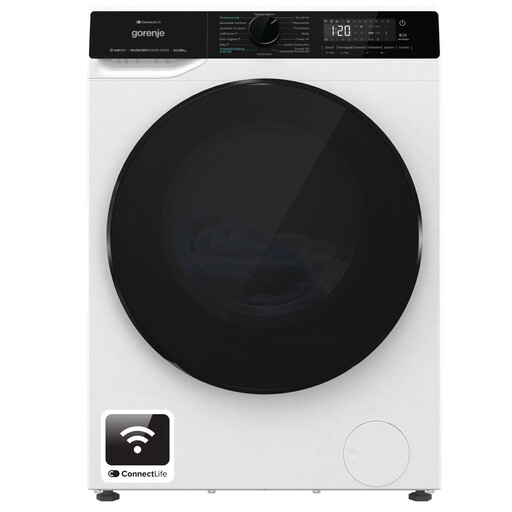
Gorenje WD2PA1X64ADW/DE
An option if you want to wash and tumble-dry in one appliance; first check that the cloth and programme are suitable for each other.
Gorenje lists a 10,5 kg washing capacity and 1.400 U/min for this model. The product details also list 16 programmes and AllergySteam; check the drying limit for the programme you choose.
View at Joybuy
 No image available
LG WT1210WWF
Could suit households looking to wash and dry larger loads in a front-loading appliance.
The Joybuy product details list a 12 kg washing capacity, a 10 kg drying capacity and heat pump drying. For a full cycle, the lower drying capacity is the one to bear in mind.
View at Joybuy
 No image available
Samsung washer-dryer, 9 kg / 6 kg
An all-in-one option if you want to wash and dry in the same appliance and its drying capacity suits your load.
The Joybuy product details list a 9 kg washing capacity, a 6 kg drying capacity, 1.400 U/min and AI EcoBubble. The energy classes shown are A for washing and D for the overall rating.
View at Joybuy
 No image available
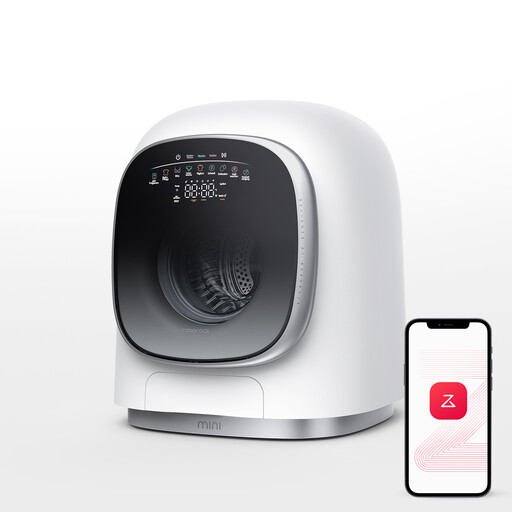
Roborock Zeo Mini Washer Dryer
The small stated load capacity may suit very small loads; check whether it’s enough for your cloths.
The Joybuy product details list a 1 kg washing capacity, a 0,5 kg drying capacity and more than 20 washing and drying programmes. For a full wash-and-dry cycle, the lower drying limit applies.
View at Joybuy
 No image available
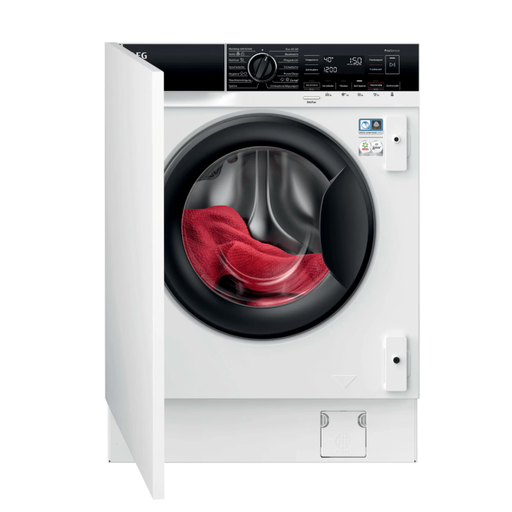
AEG LWR8WI7680
This integrated model is only suitable if it fits the dimensions and installation requirements of the space you have in mind.
The Joybuy product details list an 8 kg washing capacity, a 4 kg drying capacity and 1.600 U/min. Bear in mind the 4 kg drying limit for a combined cycle.
View at Joybuy
Frequently asked questions
Do face cloths always need to be washed at 60 °C?
No. There isn’t one temperature that’s right for every face cloth: first, check the maximum temperature on the care label. For hygiene reasons, the Umweltbundesamt recommends washing towels and similar household textiles at 40 or 60 °C; the Verbraucherzentrale says that 40 °C is also sufficient in households with healthy members.
Can every washable face cloth go in the tumble dryer afterwards?
No. Washing and drying symbols indicate different types of treatment. If the label says not to tumble-dry the item, you shouldn’t dry it in the machine.
Which load limit matters on a washer-dryer?
For a full wash-and-dry cycle, use the stated capacity for that cycle, not just the washing capacity. Compare it with the amount of cloths and other laundry that can be washed together that you want to process in one go.
Which consumption figures should I compare?
On the EU energy label, compare the electricity consumption for 100 wash-and-dry cycles separately from the figure for 100 wash-only cycles. To work out your own costs, you’ll also need to know how often you use each setting and your actual electricity tariff.
What should I check before installing the appliance?
Measure the available space, including the area in front of the open door, and compare it with the dimensions of the specific model. Also check the appliance manual to make sure the water, waste and electricity connections you have are suitable.


