Brands and models to consider
The examples below relate to specific product ranges and model specifications. They’re not a general judgement on any of the brands.
LG
The German product specifications for the W4WR7096YB and V9WD128H2 show different capacity combinations for washing and combined washing and drying.
- LG lists a 9 kg wash capacity and 6 kg wash-and-dry capacity for the W4WR7096YB, with class D for the combined cycle and class A for washing.
- The advertised 39-minute programme time doesn’t apply to a complete wash-and-dry cycle. The manufacturer’s claims about fabric care aren’t independently verified for face cloths.
Bosch
The WNC244070 is a specific example with stated capacities and appliance dimensions.
- Bosch lists a 9 kg wash capacity and 6 kg wash-and-dry capacity for this model, along with dimensions of 848 × 598 × 622 mm and AquaStop.
- The 9 kg wash capacity shouldn’t be confused with the 6 kg capacity for a complete cycle.
AEG
AEG lists the L9WEF80690 as a washer-dryer with heat-pump drying, a 9 kg wash capacity and a 6 kg drying capacity.
- For this model, AEG lists combined class C and 252 kWh per 100 wash-and-dry cycles.
- The heat pump and sensor-based care are model-specific manufacturer claims. On their own, they don’t prove that every household will save money.
Siemens
The WN54C2A40 is an example of a model with a higher stated wash capacity and automatic detergent dosing.
- Siemens lists a 10,5 kg wash capacity, a 6 kg wash-and-dry capacity and i-Dos for this model.
- If you mainly wash small loads of face cloths, don’t treat the rated wash capacity as an indication of how much you can dry.
Beko
According to the manufacturer, the freestanding BM3DT4844W1 has an 8 kg wash capacity and a 5 kg drying capacity.
- The stated 5 kg drying capacity is a useful point of comparison when planning smaller loads.
- Beko describes AquaWave as a gentle drum movement; this isn’t independent evidence of improved care for face cloths.
Joybuy product selection
This selection includes washer-dryers and a WashTower with a washing machine and separate tumble dryer. Consider which set-up suits your available space and whether you’d rather wash and dry in one appliance or use separate machines.
 No image available
LG WT1210EGF WashTower, 12 kg washing capacity and 10 kg heat-pump dryer
This washing machine and separate tumble dryer combination could suit households that want to use both appliances in the same space.
The product name lists a 12 kg wash capacity and a 10 kg heat-pump dryer, as well as AI DD, TurboWash 360° and the ThinQ Smart App.
View at Joybuy
 No image available
LG WT1210WWF front-loading washer-dryer, 12 kg washing and 10 kg drying capacity
This washer-dryer could suit you if you want to wash and dry in one appliance and your load fits within both capacity limits.
The product name lists a 12 kg wash capacity and 10 kg drying capacity, as well as a Dual Inverter heat pump, AI DD and TurboWash 360°.
View at Joybuy
 No image available
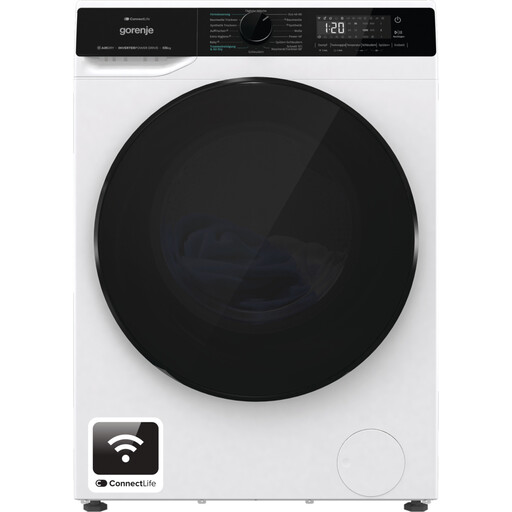
Gorenje WD2PA854ADW washer-dryer
A washer-dryer for households that want both functions in one appliance. Check that the capacities and programmes suit your laundry.
The product name lists 8 kg, 1400 U/min, AirDry and energy class D.
View at Joybuy
 No image available
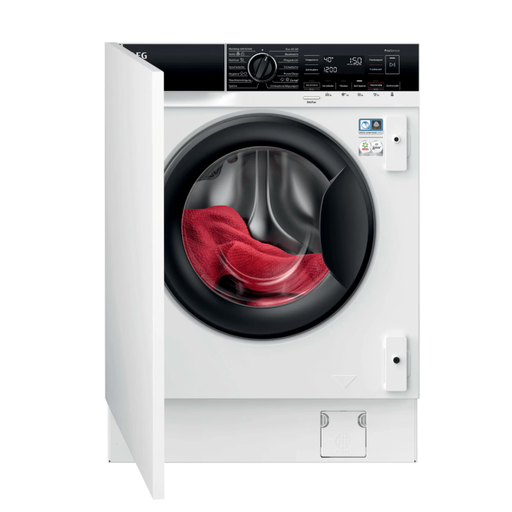
AEG LWR8WI7680 8000 Series PowerCare integrated washer-dryer, 8 kg washing and 4 kg drying capacity
This model is designed to be integrated, so make sure its dimensions fit the space in your kitchen or utility room.
The product name lists an 8 kg wash capacity and 4 kg drying capacity, 1600 U/min, Wi-Fi, ProSense and ProSteam. A furniture door is not included.
View at Joybuy
 No image available
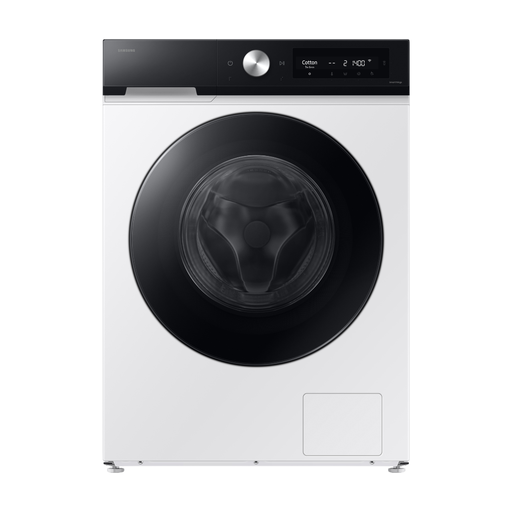
Samsung WD1BDB7B85GEU2 Custom AI washer-dryer combination
This combination appliance could be an option if you want to wash and dry in one machine. Choose programmes according to the care label and fabric.
The product name lists 11+6 kg and energy class D. Programmes include Eco 40–60, AI Wash and Hygiene Steam.
View at Joybuy
Frequently asked questions
Do face cloths always need to be washed at 60 °C?
No, 60 °C isn’t a blanket requirement for every face cloth. For towels in the home, the Federal Environment Agency recommends 40 or 60 °C as a guide for hygiene; for an individual face cloth, follow the permitted temperature on its care label. If you have specific health requirements, ordinary household laundry shouldn’t be treated as equivalent to a medically validated disinfection process.
Can a washer-dryer dry a full wash load without stopping?
Only if the load is within the wash-and-dry capacity and all the fabrics are suitable for tumble drying. For example, LG lists a 9 kg wash capacity and a 6 kg wash-and-dry capacity for the LG W4WR7096YB.
What should I check before installing an appliance in my utility room?
Check the available space, connections and installation requirements against the instructions for the specific model. If you live in rented accommodation or use a shared laundry room, also check the relevant terms of use and what’s required to prevent water damage.
How do I compare the running costs of washing and washing with drying?
Compare the figures for the way you actually plan to use the appliance, rather than trying to work out a fixed amount in pounds from an efficiency class. The EU energy label distinguishes between wash-only cycles and complete wash-and-dry cycles. Electricity and water prices, as well as how often you use the appliance, affect running costs.
Does a steam programme prove that every face cloth is hygienically treated?
No. A steam programme is a manufacturer feature specific to the model. The care label and the suitable treatment for each fabric remain the key considerations. The feature name alone doesn’t prove that it has a hygienic effect on every fabric.


