Households with limited drying space
If you have little room for appliances or an airer, combining washing and drying in one appliance could be worth considering. Bear in mind that drying loads will need to be smaller.


A washer-dryer could be a good fit if you have limited space for appliances and drying, and its lower capacity for a complete wash-and-dry cycle is sufficient for your needs. Sort napkins and muddy outdoor clothing by colour and care label, and pre-treat visible stains. If you regularly have separate loads and enough room, separate appliances may be a better choice, particularly given the higher electricity and water consumption of washer-dryers highlighted by the Verbraucherzentrale.
If you have little room for appliances or an airer, combining washing and drying in one appliance could be worth considering. Bear in mind that drying loads will need to be smaller.
If you often wash outdoor clothing, check the care label and make sure the specific wash and dry programmes are suitable for each item.
If you regularly wash table linen and heavily soiled clothing, key points to consider include planning separate loads, drying capacity and consumption in the mode you use most often.
A good fit if: you need both a washing machine and a tumble dryer, but don’t have room for two appliances or a suitable airer.
Consider: the capacity for a complete wash-and-dry cycle may be lower than the washing capacity. The Verbraucherzentrale also points to higher electricity and water consumption compared with separate appliances.
A good fit if: you have room for two appliances and regularly wash larger loads that need to be treated separately.
Consider: you’ll need space for both appliances. For technical clothing, the care label is still key when it comes to tumble drying.
A good fit if: you have a suitable place to hang your washing and don’t need an automatic drying cycle.
Consider: you’ll need to hang your washing up. Follow care instructions and take account of different treatment requirements for each fabric when washing, too.
First, check whether your napkins and outdoor clothing need different wash settings. Then consider load size, care programmes and the consumption of the mode you expect to use most often.
| What you need | What to look for when buying | Who it matters most to |
|---|---|---|
| Sort washing appropriately | Wash programmes for the fabrics you own; pre-treat visible stains before washing. | If I need to sort napkins and muddy clothing appropriately, I want to take their different care requirements into account. Around 26% of consumers put correct treatment and sorting first. |
| Care for outdoor clothing | Check the care label and the wash and dry programmes for the specific fabrics. | If I wash technical clothing, I want to follow its care instructions when drying it, too. Around 21% of consumers prioritise caring for their outdoor fabrics. |
| Dry loads completely | Compare washing and wash-and-dry capacities separately, and check the programme limit. | If I plan several separate loads, I want to know whether I’ll need to split one of them before drying. Around 21% of consumers pay particular attention to capacity. |
| Compare consumption | Compare the kWh figures for washing and complete wash-and-dry cycles on the same label basis. | If I wash and dry regularly, I want to weigh up the consumption figures for the mode that suits me. Around 16% of consumers prioritise energy and water consumption. |
| Consider space requirements | Check the dimensions and installation requirements of the specific model; weigh the space saved against capacity. | If space is limited where the appliance will go, I want to know whether a washer-dryer will fit there. Around 16% of consumers prioritise the space available for appliances and drying. |
Bosch lists a washing capacity of 10.5 kg for the Bosch WNG24443, but a capacity of 6 kg for washing and drying. So a full wash load won’t necessarily fit in a complete wash-and-dry cycle.
Plan your load according to the wash-and-dry capacity, and also check the load limit for your chosen programme.
An oversized load may mean extra drying cycles and more time.
The care label tells you how the fabric can be treated. An outdoor wash programme doesn’t confirm that the same clothing can then be tumble-dried.
Check the care label, wash programme and drying symbol separately before starting a cycle.
Using an unsuitable treatment could damage the fabric.
The EU energy label lists consumption figures separately for washing and for washing with drying. The figure for washing alone doesn’t automatically tell you how much a complete cycle will use.
Compare the kWh figures for the mode you expect to use most often, using the same label basis for each.
The Gorenje model numbers WD2PA1X64ADAAW/DE and WD2PA1X64ADW are different. Similar names and comparable washing capacities don’t prove that they’re the same product.
Check the full model number and the product details that matter for your choice before applying information to a different model.
The WD2PA1X64ADAAW/DE is a useful reference if you’re looking at larger wash loads and checking the exact model variant.
The WNG24443 shows why washing capacity and capacity for a complete wash-and-dry cycle should be considered separately.
The WN44G243 is a model whose Outdoor/impregnation programme may be useful for suitable technical clothing.
You can assess the heat pump model LWR9W81609 by looking at its specifications and your own usage patterns.
The W4WR7096YB is another washer-dryer to compare, with its washing and drying capacities listed separately.
This selection includes washer-dryers and a combined WashTower unit. For each model, compare the stated washing and drying capacities with your loads.
 No image available
The separate capacities help you plan your wash and drying loads.
Washing capacity: 12 kg. Drying capacity: 10 kg. The product name specifies a heat pump tumble dryer.
 No image available
The separate capacities are useful when planning a complete wash-and-dry cycle.
Washing capacity: 9 kg. Drying capacity: 6 kg. Also listed are 1400 rpm and AI EcoBubble. The product title gives energy class A for washing and D overall.
 No image available
The stated washing and drying capacities let you compare the appliance directly with your planned load size.
Washing capacity: 10 kg. Drying capacity: 6 kg. The product title specifies 27 programmes, Zeo-Cycle drying technology and energy class E.
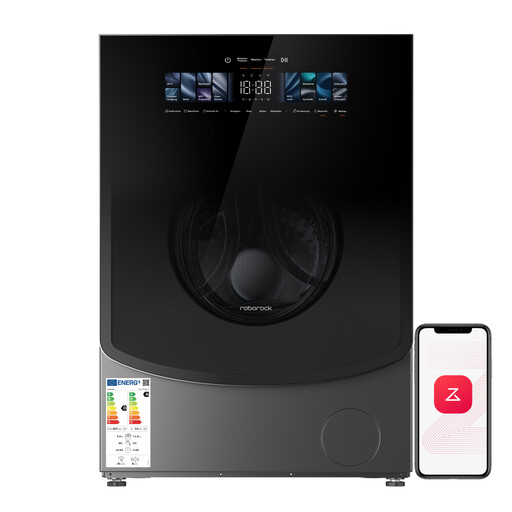 No image available
The product description lists features for wash and dry cycles; check the model specifications when planning specific loads.
Features listed include Zeo-Cycle drying technology and 27 programmes.
 No image available
The separately stated capacities help you plan wash loads that are suitable for a complete drying cycle.
Washing capacity: 9 kg. Drying capacity: 6 kg. Also listed are 1400 rpm and programmes for delicates, wool and hand-wash items.
Not as a rule. Sort items by colour and care instructions, pre-treat visible stains and choose a treatment that’s suitable for the fabrics. The Verbraucherzentrale recommends not letting stains dry in if possible. If the items have different care requirements, plan separate loads.
Only if the care label allows tumble drying and the specific appliance has a suitable programme. GINETEX GERMANY explains that care instructions are the deciding factor; an outdoor wash programme alone doesn’t confirm that the drying cycle is suitable.
The Verbraucherzentrale recommends wiping the grooves in the rubber seal and the detergent drawer dry, and leaving the compartments open so they can dry. Clean the fluff filter in line with the appliance instructions.
Compare the kWh figures per 100 wash cycles and per 100 complete wash-and-dry cycles separately, using the same label basis. The EU energy label lists the modes separately; which figure matters more depends on how often you wash and dry a complete load.
Old electrical appliances must not go in household rubbish. They must be handed over to an authorised collection operator. The German Federal Environment Ministry highlights take-back obligations under certain legal conditions, including when buying a new appliance of equivalent type; the applicable requirements depend on the circumstances.