Homes without a suitable place to dry laundry
If there’s no room for a separate tumble dryer or a suitable clothes airer, a washer-dryer could be an option – provided the care label says your pillowcases can go in the tumble dryer.


A washer-dryer could be a good fit if there’s no room for a separate tumble dryer or a suitable place to dry laundry beside the appliance. First, though, check the care label: machine-washable doesn’t automatically mean tumble-dryer-safe. Then consider the appliance’s actual dimensions, its usually different washing and drying capacities, and the energy and water use for a complete wash-and-dry cycle.
If there’s no room for a separate tumble dryer or a suitable clothes airer, a washer-dryer could be an option – provided the care label says your pillowcases can go in the tumble dryer.
Follow the care label on each pillowcase for washing temperature, gentle-care instructions and drying method. Having a tumble-dryer function doesn’t automatically mean machine drying is suitable.
If you wash several pillowcases at once, consider the washing and drying capacities separately. A larger wash load may not fit into the subsequent drying cycle.
A good fit if: you have room for just one appliance and your pillowcases can be tumble-dried.
Trade-off: washing and drying capacities differ. The Verbraucherzentrale notes that conventional washer-dryers use more electricity and water than separate appliances.
A good fit if: you plan to machine-dry regularly and a specific model suits your space, care labels and energy label figures.
Trade-off: the technology used by individual models doesn’t allow you to make general claims about all washer-dryers. The appliance’s depth must also suit the space where it will be installed.
A good fit if: you can hang your pillowcases up to dry or their care labels rule out machine drying.
Trade-off: air drying takes time and space; machine-washable textiles aren’t automatically suitable for tumble drying.
A good fit if: you have room for both appliances and often need to dry larger loads of laundry that’s suitable for tumble drying.
Trade-off: two appliances take up more floor space. Pillowcases that can’t go in the tumble dryer will still need to be dried another way.
| Buying priority | What to check | Who it matters most to |
|---|---|---|
| Suitable dimensions | Check the appliance’s width, depth and height against the space available, and allow extra room for the door to open and for connections. Haier lists a depth of 507 mm for model HWD80-BP14637T, while Bosch lists 622 mm for the WNC244070. | If there’s only a narrow alcove available, I want to make sure the appliance will fit, with enough clearance around it. Around 29% of consumers prioritise getting the dimensions right. |
| Fabric care | Check the washing and drying symbols on each pillowcase separately and compare them with the available programmes. GINETEX explains care symbols; IKEA Germany permits low-temperature tumble drying for the ÅSVEIG pillowcase, but not for STOCKHOLM 2025. | If a pillowcase is delicate, I want to follow its care instructions rather than assume that being washable means it’s suitable for tumble drying. Around 29% of consumers prioritise fabric care. |
| Drying capacity | Check the washing and drying capacities separately, along with the limits of the programme you intend to use. Haier lists 8/5 kg for washing/drying on model HWD80-BP14637T, while LG lists 9/6 kg for washing/drying on model W4WR7096YB. | If I have several pillowcases in one load, I want to know whether they can all be dried together or need to be split into smaller loads. Around 24% of consumers pay particular attention to planning their loads. |
| Energy use when drying | On the EU energy label, distinguish the figures per 100 complete wash-and-dry cycles from those for wash-only cycles, and compare the figures that match how you’ll use the appliance. | If I machine-dry frequently, I want to factor the energy use for complete cycles into my running costs. Around 18% of consumers pay particular attention to energy use. |
Cotton pillowcases can have different drying instructions, too. Using an unsuitable drying cycle could damage or shrink the fabric.
Before starting a wash-and-dry cycle, check the tumble-drying symbol on each pillowcase and follow any temperature limit shown.
For the models documented here, drying capacity is lower than washing capacity. You may therefore need to split a full wash load before drying it.
Plan your load according to the permitted drying capacity and the specific programme, not just the washing capacity.
Splitting a load may mean running an extra drying cycle or hanging some of the laundry to dry.
The energy use for washing alone doesn’t show how much a complete wash-and-dry cycle uses. The Verbraucherzentrale also notes that conventional washer-dryers use more electricity and water than separate appliances.
If you dry laundry regularly, compare the energy label figures for complete cycles. If air drying is an option, factor that into your decision too.
Frequent complete cycles can increase your ongoing electricity and water use.
The models listed offer different combinations of appliance depth and capacity.
Model W4WR7096YB is an example of a washer-dryer with different washing and drying capacities.
Model L9WEF80690 is a documented heat-pump model from the 9000 series.
Model WNC244070 can be used to compare the dimensions and capacity of a washer-dryer.
Model WN54C2A40 offers a point of comparison for larger wash loads with a lower stated wash-and-dry capacity.
The Joybuy products below range from a foldable mini washing machine to larger washer-dryers. For pillowcases, always check the care label, the relevant capacity figures and the dimensions of the space where the appliance will go.
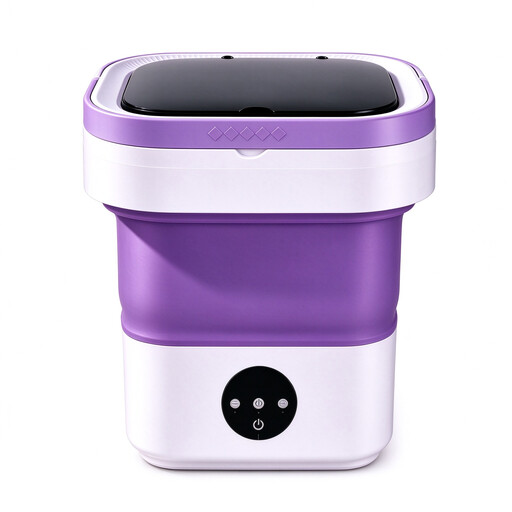 No image available
A compact option for small loads of laundry. Before buying, check that the actual dimensions and intended use suit your pillowcases.
Foldable design; the product name lists 12 L and a tumble-drying function.
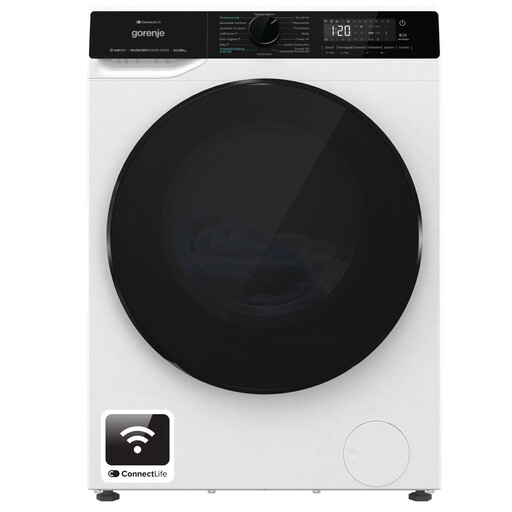 No image available
Listed as a washer-dryer combination; compare its capacity and dimensions with your needs and the space available.
The product name lists 16 programmes and 10,5 kg. Check before buying whether the capacity figure refers to washing or drying.
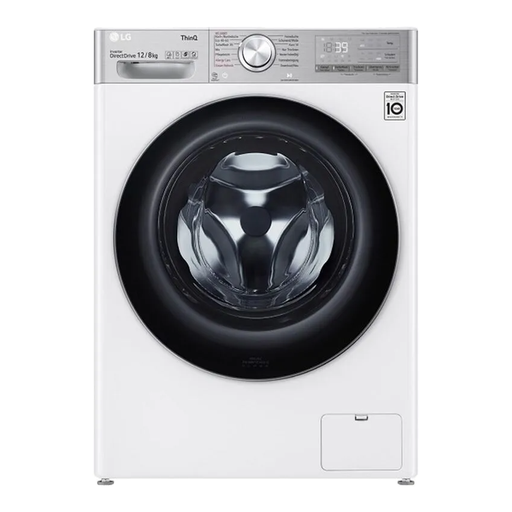 No image available
When choosing an appliance for a limited space, make sure its actual dimensions and the room needed to open it are suitable, as well as its capacity.
The product name lists 12 kg; check the product details to see whether this figure refers to washing or drying.
 No image available
This could suit homes looking for a higher stated wash-and-dry capacity. Check especially that the appliance’s design and the space it needs will work in your room.
The product name lists a washing capacity of 12 kg, a drying capacity of 10 kg and Dual Inverter Heat-Pump. As drying capacity is lower than washing capacity, you may need to split a full wash load before drying it.
 No image available
If you’re planning to wash and dry in one go, base your load on the lower drying capacity.
The product name lists a washing capacity of 9 kg, a drying capacity of 6 kg and 1400 rpm.
No. Washing and drying symbols give separate instructions. IKEA Germany permits low-temperature tumble drying for the ÅSVEIG pillowcase, while the care label for STOCKHOLM 2025 says it isn’t suitable for tumble drying.
Sort your pillowcases by care instructions and colour, then choose a suitable wash programme for each load. If you plan to machine-dry them afterwards, both the care labels and the drying capacity of your chosen programme need to allow for it.
If you regularly machine-dry your laundry, compare the stated kWh per 100 complete wash-and-dry cycles. If you mostly air-dry, the figures for wash-only cycles are also relevant. The European Commission explains the energy label figures for both types of cycle.
The German Environment Agency says you can return large old electrical appliances free of charge when buying a similar large appliance, including with online delivery. Check that the return service covers your old appliance and is included in the specific delivery offer.
Your statutory rights for faulty goods are initially against the seller and are separate from any voluntary manufacturer’s guarantee. For purchases made from 31 July 2026, the Verbraucherzentrale explains that the period increases from two to three years if a fault reported within the two-year period is fixed by repair rather than replacement. Check separately for any different terms that may apply to second-hand goods.