A shared house with a tight uniform schedule
If specific uniform items need to be ready again by a set time, the load limit and duration of the full wash-and-dry programme matter more than the length of a quick wash cycle alone.


A washer-dryer makes sense in a shared house if you don’t have a reliable place to dry uniforms and your usual load fits within the appliance’s capacity. If you can hang your washing out, a washing machine without a dryer may also be an option; the Verbraucherzentrale notes that washer-dryers can use more electricity and water than a washing machine and separate tumble dryer. Before you buy, check the care labels, load limits for the programmes you plan to use, and the space and connections available.
If specific uniform items need to be ready again by a set time, the load limit and duration of the full wash-and-dry programme matter more than the length of a quick wash cycle alone.
If you can’t reliably hang your uniforms out to dry, check how much washing the appliance can actually dry and whether that amount matches your usual load.
When care labels differ, the label on each garment will tell you whether and how it can be tumble-dried. GINETEX GERMANY and the Verbraucherzentrale explain what the care symbols mean.
Best for: When you only have room for one appliance and no suitable place to dry clothes.
Consider: Wash and dry capacities can differ. If you plan to dry clothes regularly, compare the figures for the full wash-and-dry cycle.
Best for: When you have a suitable place to dry clothes and uniforms can dry there before they’re needed again.
Consider: You’ll need space to hang clothes and enough time; actual drying times depend on the conditions where you live.
Best for: When you have room and connections for two appliances, and several people want to manage washing and drying independently.
Consider: Two appliances take up more floor space than a washer-dryer.
| Priority | What to check before buying | Who is this particularly important to? |
|---|---|---|
| Having a uniform ready to wear on time | Check for a dedicated combined wash-and-dry programme and its load limit. | If I need specific uniform items again at short notice, a suitable programme for a full wash-and-dry cycle matters to me. Around 33% of consumers put this time pressure first. |
| No reliable place to dry clothes | Check the space and connections available, and look at wash and dry capacities separately. | If I can’t reliably hang my uniforms out to dry, the drying capacity needs to suit my usual load. Around 27% of consumers prioritise the lack of a suitable place to dry clothes. |
| Looking after uniform fabrics properly | Match the care symbols on each item to the programmes and load limits allowed. | When garments have different fabrics and care labels, I want to avoid putting an unsuitable item through a drying cycle. Around 20% of consumers prioritise fabric care. |
| Sharing running costs | For the same model, compare figures for washing alone and washing plus drying on a like-for-like cycle basis. | If the shared house splits running costs, I want to budget for the consumption of the cycles we actually use. Around 20% of consumers focus primarily on running costs. |
A washer-dryer may have a lower drying capacity than washing capacity. For example, the Bosch WNC244070 has a 9 kg wash capacity and can wash and dry 6 kg.
Check that the drying capacity and the load limit for your chosen programme match the size of your usual uniform load.
A short wash cycle doesn’t tell you how long the following drying cycle will take. Beko advertises Wash & Wear for 1 kg of laundry in one hour; that doesn’t mean a full shared-house load will take a similar amount of time.
Always check the time, programme type and load limit together.
Care symbols show whether tumble-drying is allowed under certain conditions or is prohibited altogether. Using the wrong method can damage fabrics.
Check the care labels before running your first shared load, and dry unsuitable items separately.
The EU label gives separate figures for the wash cycle alone and the full wash-and-dry cycle. If your shared house regularly uses the dryer, the figure for the full cycle is the relevant one.
Compare like-for-like cycle types and use your own electricity and water prices in your calculations.
LG Deutschland lists a wash capacity of 9 kg and a drying capacity of 6 kg for its W4WR7096YB washer-dryer.
According to Bosch Hausgeräte Deutschland, the Serie 8 WNC244070 is designed for 9 kg of washing and 6 kg for washing and drying.
AEG Deutschland lists different drying methods for specific models: the LWR7F65605 uses condenser drying, while the L9WEF80690 uses heat pump drying.
Haier Deutschland lists a wash capacity of 8 kg, a drying capacity of 5 kg and dimensions of 595 × 507 × 850 mm (W × D × H) for the G3 HWD80-BP14637T.
For the Beko B3DFT510442W, the manufacturer lists a wash capacity of 10 kg and a drying capacity of 6 kg.
The Joybuy products below include washer-dryer combination models and a WashTower with a separate washing machine and heat pump tumble dryer. Compare the wash and drying capacities of each model with the size of your usual uniform load.
 Image unavailable
A good choice if you want to wash and dry at the same time and have enough height at the installation spot.
Wash capacity: 12 kg. Drying capacity: 10 kg. The stated dimensions are 60 × 165,5 × 66 cm.
The wash and drying capacities differ; the WashTower needs 165,5 cm of height.
 Image unavailable
A combined option for shared houses that want to wash and dry in one front-loading appliance.
Wash capacity: 12 kg. Drying capacity: 10 kg. The product description lists a Dual Inverter heat pump, AI DD and a steam function.
The wash capacity is higher than the drying capacity.
 Image unavailable
A good fit if your shared house wants a combined solution with a start time you can schedule.
Wash capacity: 9 kg. Drying capacity: 6 kg. Stated dimensions: 85 × 60 × 64,5 cm. The description lists a 24-hour delay start.
The wash capacity is higher than the drying capacity.
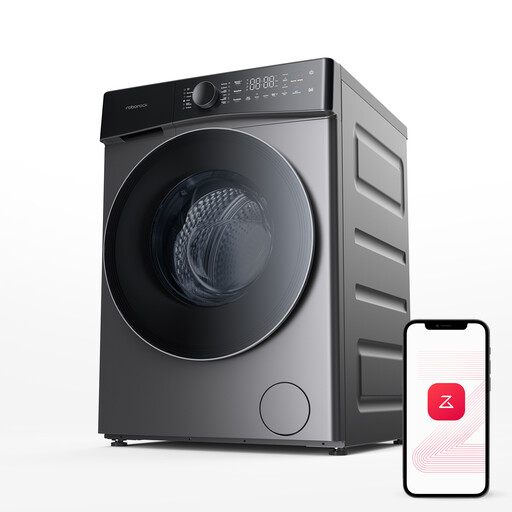 Image unavailable
A combined washing and drying option where the stated wash and drying capacities need to suit your usual load.
Wash capacity: 10 kg. Drying capacity: 6 kg. The product description lists Zeo-Cycle drying, automatic dosing and a self-cleaning lint system.
The wash capacity is higher than the drying capacity.
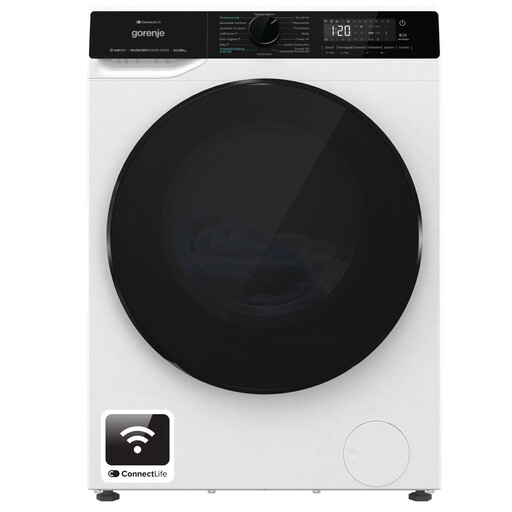 Image unavailable
An option for shared houses comparing washer-dryers with a stated wash capacity and a choice of programmes.
Wash capacity: 10,5 kg. It has 16 programmes and a spin speed of 1400 rpm.
No. The tumble-drying symbol on each garment shows whether it can be tumble-dried and, where applicable, at what temperature. Sort your washing by colour and care requirements; the appliance’s capacity doesn’t override the care instructions.
Check the dimensions, water inlet and outlet, and the planned electrical connection against the instructions for the specific model. The Verbraucherzentrale recommends discussing the situation with your landlord before installing an appliance in your home and checking how to prevent water damage; this doesn’t mean every shared house needs general permission.
Follow the instructions for your specific model. AEG Support recommends, among other things, removing visible dirt and foreign objects from the door seal and wiping it with a damp cloth when cleaning a washer-dryer.
If you buy from a business seller in the EU, consumer rules explained by Your Europe provide a legal guarantee of at least two years from the date you receive the goods; the seller is generally responsible for faults. Any additional manufacturer’s or retailer’s warranty is separate.
The EU energy label gives separate figures for the wash cycle alone and the full wash-and-dry cycle. The European Commission explains the labelling for household washing machines and washer-dryers; if you dry clothes regularly, compare the figures for the full cycle.