What to look for when buying
Washer-dryer
A good fit if: you only have space for one appliance and want uniform items to be ready after one continuous wash-and-dry cycle.
The trade-off: many models have a lower drying capacity than washing capacity; a complete cycle also ties up the appliance for other people in the household.
Washing machine and separate tumble dryer
A good fit if: you can fit two appliances and several people need to do their laundry one after another.
The trade-off: this needs more space and suitable connections; according to F.A.Z. Kaufkompass, separate appliances are generally preferable if you have enough room.
For every model, compare the load capacity for washing and for a complete wash-and-dry cycle separately. The percentages below show which concerns may take priority for consumers in this buying scenario.
| Priority |
What to look for when buying |
Who is most concerned about it? |
| Having uniforms ready on time |
Check the duration of the complete wash-and-dry cycle and the permitted load for it; quick programmes may only be suitable for small loads. |
If you need uniform items for the next school day, focus on how long it takes to get a dry garment. Around 26% of consumers prioritise having it ready on time. |
| Drying capacity when sharing the appliance |
Compare washing capacity and wash-and-dry capacity separately; if you share the appliance, allow for the programme duration too. |
If you have to coordinate several competing laundry loads and limited appliance slots, the amount that can be dried is especially important. Around 21% of consumers put this priority first. |
| Caring for uniform fabrics appropriately |
Check the care label on each item against the available wash and dry programmes; take note of whether it is suitable for tumble-drying and the temperature setting. |
If your uniforms have different care labels, you’ll want to avoid accidentally tumble-drying unsuitable items. Around 21% of consumers prioritise fabric care. |
| Ongoing electricity and water costs |
Compare kWh per 100 cycles and litres per cycle for the same operating mode, and consider how you’ll use the appliance. |
If you tumble-dry frequently and want to keep an eye on running costs, compare the figures for the complete combined cycle. Around 16% of consumers put costs first. |
| Space and noise |
Measure the available space, including clearance for the door and connections; check the connections and the stated spin noise level. |
If you need to install the appliance in a limited or noise-sensitive shared area, check that its dimensions will fit and consider the noise during the spin cycle. Around 16% of consumers prioritise space and noise. |
Washer-dryers at Joybuy
This selection features washer-dryers for households that want to wash and dry their laundry in one appliance. Check the drying capacity and the care labels on your uniform items before choosing a model.
 No image available
LG WT1210EGF WashTower, 12/10 kg, green/beige
For consecutive wash-and-dry loads, provided the 10 kg drying capacity suits the amount of laundry you need to dry.
Listed with a washing capacity of 12 kg and a drying capacity of 10 kg, plus heat-pump drying.
View at Joybuy
 No image available
LG WT1210WWF washer-dryer, 12/10 kg, white
For a continuous wash-and-dry cycle, if the stated drying capacity suits the load.
Product details list a washing capacity of 12 kg and a drying capacity of 10 kg, plus a Dual Inverter heat pump.
View at Joybuy
 No image available
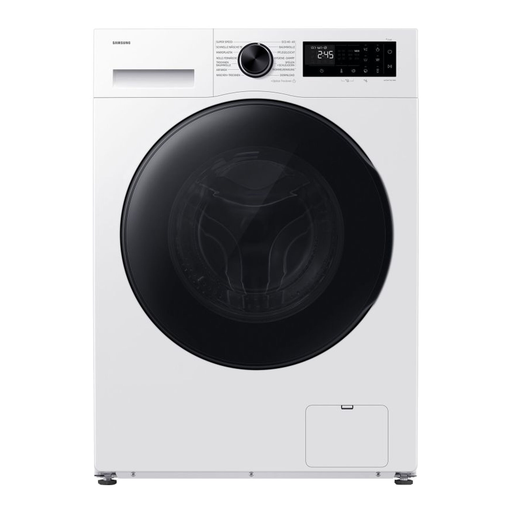
Samsung WD9BHG5U34BEEG washer-dryer, 9/6 kg
For a combined cycle, if the 6 kg drying capacity suits the planned load.
Listed with a washing capacity of 9 kg and a drying capacity of 6 kg. Super Speed is described as taking 39 minutes for a 5 kg wash load, not as the duration of a complete wash-and-dry cycle.
View at Joybuy
 No image available
Beko BM3DT4944W washer-dryer, 9/6 kg
For combined loads, if a drying capacity of 6 kg is enough and the care labels match the available programmes.
Listed with a washing capacity of 9 kg, a drying capacity of 6 kg, 1400 rpm and a Wash+Dry programme for 6 kg.
View at Joybuy
 No image available
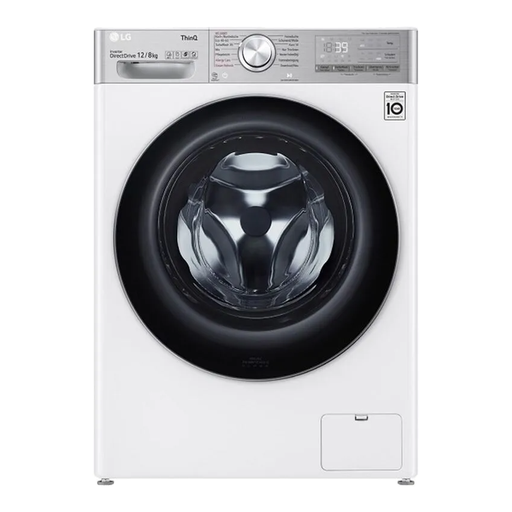
LG V9WD128H2 AI DD washer-dryer
For households considering a washer-dryer with AI DD.
AI DD features in the model name. Check the separate load capacities for washing and complete drying before choosing.
View at Joybuy
Frequently asked questions
Can every school uniform go straight into the tumble dryer after washing?
No. Check the care label on each garment: a crossed-out tumble-dryer symbol means it should not be tumble-dried. An appliance programme does not override this instruction.
How much laundry can a washer-dryer wash and dry in one cycle?
The key figure is the stated capacity for washing and drying, not just the larger washing capacity. With a model that has a washing capacity of 9 kg and a drying capacity of 6 kg, the permitted load for a continuous cycle is therefore smaller than the maximum wash load.
How can I compare running costs?
Compare the same operating mode for both models on the EU energy label. If you dry laundry regularly, the energy consumption per 100 wash-and-dry cycles and water consumption per cycle are relevant; then factor in how often you expect to use the appliance and your own energy and water rates.
What should I check before installing one in a rented home?
Check the space, connections and protection against water damage, and discuss the specific installation with your landlord. Verbraucherzentrale notes that washing machines in rented homes generally can’t be prohibited outright; this doesn’t constitute a binding assessment of every individual tenancy.
What information is shown on the EU energy label for washer-dryers?
The European Commission lists information including energy efficiency classes, energy consumption per 100 cycles, water consumption per cycle, programme duration and noise emissions. The label distinguishes between washing and washing plus drying; you can use the QR code to look up model details in EPREL.


