What should you look for when buying one for a shared house?
| What to consider |
What to check before buying |
Who is this most important for? |
| Space and drying options |
Check the appliance’s dimensions, access to the installation space and connections; decide whether you need to dry clothes in the machine. |
If there’s only space for one appliance, I want to fit washing and drying into that space and still be able to manage the drying load. Around 33% of consumers put space and drying options first. |
| Availability for housemates |
Compare the duration of the combined cycle and the maximum washing and drying capacities separately. |
If several people need to do consecutive loads, I want to know when the appliance will be free again. Around 33% of consumers prioritise having the appliance available for the next load. |
| Shared running costs |
Compare electricity consumption for washing and wash-and-dry cycles, as well as water consumption per cycle. |
If we do laundry frequently, I want to understand the running costs based on how we use the appliance and our tariffs. Around 25% of consumers focus primarily on electricity, water and shared running costs. |
| Caring for T-shirts |
Check the care label and tumble-drying symbol on each T-shirt; choose suitable programmes for the different fabrics. |
If our cotton T-shirts have different care instructions, I want to wash them accordingly and only machine-dry items that are suitable. Around 9% of consumers put fabric care first. |
The EU energy label shows details including energy consumption, water consumption and programme duration for each operating mode. The European Commission gives washer-dryer energy consumption per 100 cycles and water consumption per cycle. To compare costs for your household, you’ll also need to estimate how many cycles you expect to run and use your actual electricity and water rates.
Products available at Joybuy
This selection includes washer-dryers, as well as a washing machine with a separate heat pump tumble dryer. The right option for you depends on factors including the space available, the drying capacity you need and how the appliances will be shared.
 No image available
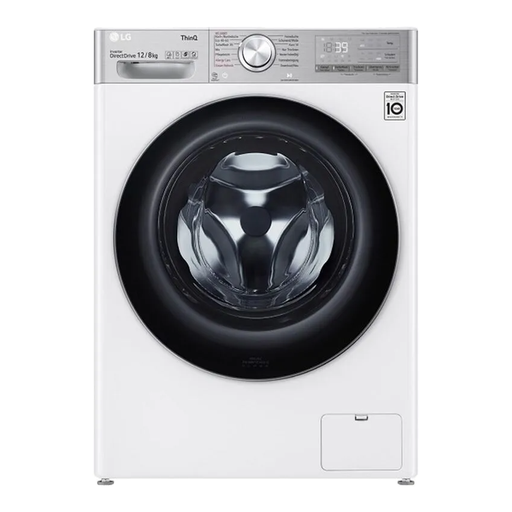
LG V9WD128H2 AI DD washer-dryer, 12 kg, white
This model could be worth considering if you want to wash and machine-dry clothes in one appliance.
The 12 kg figure in the product title isn’t broken down by washing and drying capacity. Check both figures before choosing, to make sure they suit your usual shared-house load.
Joybuy
 No image available
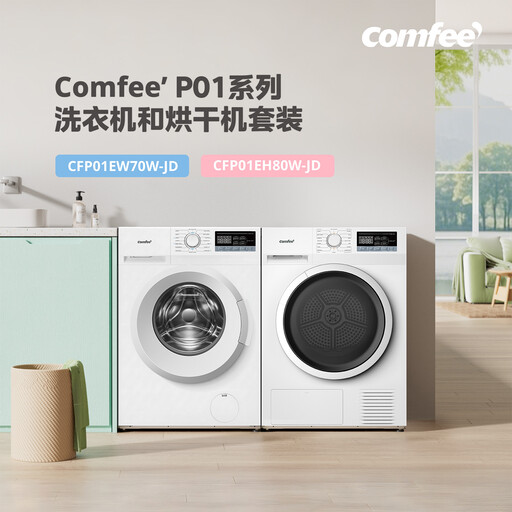
Comfee CFP01EW70W-JD washing machine & CFP01EH80W-JD heat pump tumble dryer
These two separate appliances could be a good alternative if you want to manage washing and drying separately.
The product description lists a cotton programme for both the washing machine and tumble dryer, as well as heat pump drying. You’ll need to make space for both appliances.
Joybuy
 No image available
LG WT1210EGF WashTower, 12 kg washing / 10 kg drying
This combined WashTower unit could suit a shared house looking to fit a washing machine and heat pump tumble dryer into one unit.
The stated washing capacity is 12 kg and the drying capacity is 10 kg. So a larger wash load won’t fit into a single drying cycle.
Joybuy
 No image available
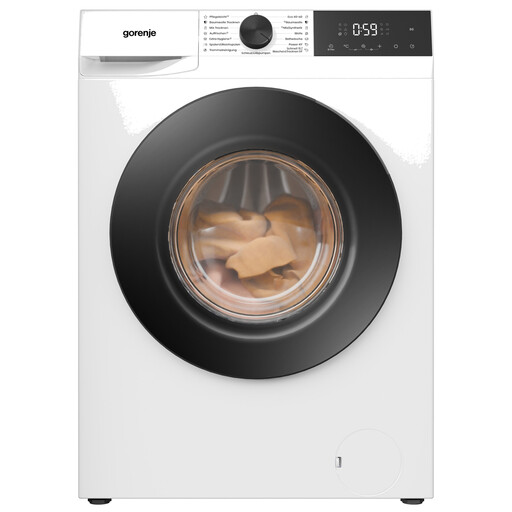
Gorenje WD5G2P1174A2DP2 washer-dryer, 11 kg washing / 7 kg drying
This model combines washing and drying in one appliance, so it could be an option if you only have space for one appliance.
The stated washing capacity is 11 kg and the drying capacity is 7 kg. Check that your usual drying load is within this limit.
Joybuy
 No image available
LG WT1210WWF washer-dryer with heat pump, 12 kg washing / 10 kg drying
This washer-dryer combines washing and drying, making it an option if you want to machine-dry clothes.
The stated washing capacity is 12 kg and the drying capacity is 10 kg. Larger wash loads may need an extra drying cycle or to be split into smaller loads.
Joybuy
Frequently asked questions
Can you put any cotton T-shirt in the tumble dryer after washing it?
No, not just because it’s made of cotton. Check the care label and tumble-drying symbol on each T-shirt. Hang up any garments that aren’t suitable for the tumble dryer.
How can you compare running costs in a shared house?
Compare the kWh per 100 cycles and water consumption per cycle for washing alone and for a complete wash-and-dry cycle. To work out the costs, you’ll also need to estimate how many cycles you’ll run and use your own electricity and water rates.
What should you agree on when it comes to laundry care and use?
Choose programmes according to the care labels, observe the stated capacity for each mode and measure the detergent according to water hardness and how soiled the laundry is. The Umweltbundesamt recommends following the dosing instructions on the packaging.
What information does the EU energy label provide for washer-dryers?
According to the European Commission, the label used since March 2021 shows the A to G scale and information including efficiency, energy and water consumption, programme duration and noise emissions. This product information doesn’t replace checking that the appliance’s dimensions and connections are suitable for the installation space.
Is an additional motor warranty the same as the statutory guarantee?
No. LG describes the additional motor warranty for the V7WD96H1A as being in addition to the statutory guarantee and sets out separate terms and conditions, including an exclusion for commercial use. Before buying, check the terms and conditions for the specific offer.


