What should you look for when buying?
First, check whether the care label says your underwear can be tumble-dried and whether you’re genuinely short on drying space. Then consider the capacity and duration of the combined cycle, as well as the consumption for the setting you expect to use regularly.
Washer-dryer on a continuous cycle
A good fit if: Your shared house is short on drying space and the care label says the underwear in question is suitable for tumble drying.
The trade-off: A full cycle ties up the shared appliance for longer, and drying capacity may be lower than washing capacity.
Wash and air-dry
A good fit if: You have space to dry your laundry, or the care label says it isn’t suitable for tumble drying.
The trade-off: Clothes airers and air-drying take up space and need to be organised in a shared house.
Washing machine and separate tumble dryer
A good fit if: You have room for two appliances and your household tumble-dries laundry frequently.
The trade-off: Two appliances need more floor space. The Verbraucherzentrale says washer-dryers use more electricity and water than separate appliances.
| Priority |
What to check before buying |
Who is it particularly relevant to? |
| Fabric care and hygiene |
Check the wash programmes and whether the washing function can be used separately; follow the care label before drying. |
If I want to care for cotton underwear in line with the label and hygiene advice, it’s important not to treat washing and drying as the same thing. Around 26% of consumers put fabric care and hygiene first. |
| Limited drying space |
Check the appliance dimensions, as well as the space needed for connections and the door to open at the intended location. |
If there’s barely any room for a clothes airer or a second appliance, I want to know whether a washer-dryer will fit in the space available. Around 21% of consumers say a lack of floor or drying space is their main concern. |
| Sharing appliance time |
Compare washing and wash-and-dry capacity, as well as the duration of a full cycle. |
If several housemates rely on the same appliance, I want to know when it’ll be free again and what load size will work for a combined cycle. Around 21% of consumers focus on appliance time and load size. |
| Electricity and water consumption |
Compare the figures for washing alone and for a full wash-and-dry cycle separately, and consider how often you plan to tumble-dry. |
If the household washes and dries laundry regularly, I want to estimate the consumption for the setting we’ll actually use. Around 16% of consumers prioritise running costs for electricity and water. |
| Installation and responsibilities |
Check the connection and installation location; agree installation arrangements and responsibilities with your housemates and landlord. |
If the appliance will be shared in a rented property, I want to make sure everyone has agreed on the location and connection in advance. Around 16% of consumers put installation and responsibilities first. |
Washer-dryers at Joybuy
These models are washer-dryers for shared households looking to wash and dry laundry in one appliance.
 No image available
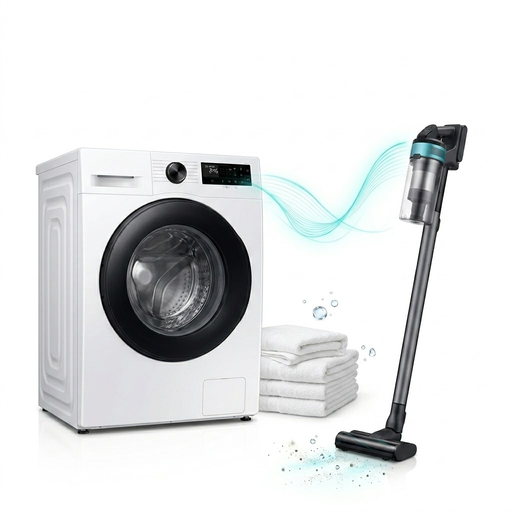
Samsung WD9BHG5U34BEEG washer-dryer with Jet 75E PetPRO cordless vacuum cleaner
This washer-dryer and cordless vacuum cleaner bundle could be worth considering if you’re looking for both appliances together.
Washing: 9 kg; drying: 6 kg.
View at Joybuy
 No image available
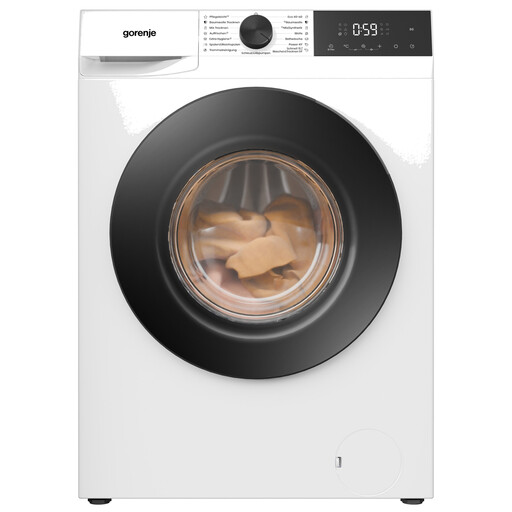
Gorenje WD5G2P1174A2DP2 washer-dryer, 11 kg washing, 7 kg drying, white
The stated washing and drying capacities help you plan the load size for a continuous cycle.
Washing: 11 kg; drying: 7 kg; colour: white.
View at Joybuy
 No image available
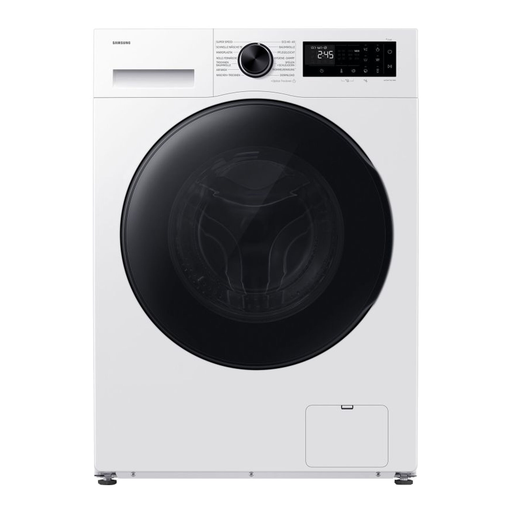
Samsung WD9BHG5U34BEEG washer-dryer
The washing and drying capacities, along with the quick programme details, help you check how well it suits your loads and laundry schedule.
Washing: 9 kg; drying: 6 kg; 1,400 rpm.
The product description lists AI Ecobubble and Super Speed, which takes 39 minutes for a 5 kg wash load. This isn’t the duration of a full wash-and-dry cycle.
View at Joybuy
 No image available
Samsung washer-dryer combination, 9 kg washing, 6 kg drying
Looking at washing and drying capacities separately is useful when planning loads for a combined cycle.
Washing: 9 kg; drying: 6 kg; 1,400 rpm.
The product description lists energy and water figures separately for washing and for washing and drying.
View at Joybuy
 No image available
Beko BM3DT4944W washer-dryer, 9 kg washing, 6 kg drying
You can compare the capacities and listed programmes with your laundry loads and the care labels.
Washing: 9 kg; drying: 6 kg; 1,400 rpm.
The product description lists programmes for cotton and Hygiene+ Wash+Dry.
View at Joybuy
Frequently asked questions
Does cotton underwear always need to be washed at 60 °C and then tumble-dried?
No. For hygiene reasons, the Umweltbundesamt recommends washing underwear at 40 or 60 °C, while the care label tells you how the item may be treated. A separate drying symbol shows whether it can go in the tumble dryer. According to the Umweltbundesamt, healthy households with normally soiled laundry don’t need to use an additional laundry sanitiser.
Does ‘eco 40–60’ mean the laundry is actually washed at 60 °C?
No. The European Commission describes ‘eco 40–60’ as a programme for normally soiled cotton items labelled as washable at 40 or 60 °C. The name doesn’t promise that the laundry will actually reach 60 °C during the cycle. If your laundry or appliance care instructions specifically call for a 60 °C cycle, check the instructions for the programme in question.
What should housemates agree on when using and caring for a shared appliance?
Agree on who will load the machine, take the laundry out and look after the appliance. The Umweltbundesamt recommends running a 60 °C wash regularly to help prevent a build-up of bacteria, and advises dosing detergent according to water hardness and how soiled the laundry is. Also follow the care instructions in the user manual.
What warranty applies when you buy a washer-dryer?
The statutory two-year guarantee applies to your purchase contract with the seller and isn’t replaced by a voluntary manufacturer’s guarantee. This is explained by Your Europe, the European Union’s consumer portal.
Are washer-dryers generally prohibited in rented shared houses in Germany?
The Verbraucherzentrale says that tenants generally cannot be prevented from installing a washing machine in their home. Even so, agree on the specific location with your landlord before installation and check what protection is in place against water damage. This doesn’t mean that every connection or installation location is automatically permitted.


