A washer-dryer could suit your shared house if you regularly need to tumble-dry clothes but don’t have room for two appliances or a practical way to air-dry them. Check care labels and how much laundry you do, then compare the smaller drying capacity with the energy and water figures for washing and for a complete wash-and-dry cycle. If the napkins can dry easily on a washing line or airer, it’s harder to justify a washer-dryer just for these small items. The Verbraucherzentrale also points out that washer-dryers use more energy and water than separate appliances.
Who might benefit from a washer-dryer?
Shared house with limited space
If there’s room for only one appliance and you regularly need to tumble-dry clothes, check the appliance dimensions and stated drying capacity. Also think about whether using an airer in your shared house is really out of the question.
Shared house with a laundry rota
If you wash napkins with other suitable items, several people will need to coordinate wash and dry loads. The separate capacities and the duration of a complete cycle can help you plan.
Shared house on a budget
If you can hang your washing out or fit two appliances, weigh up the convenience of tumble-drying against the space required and the stated energy and water figures.
What should you look for when buying one for a shared house?
Washer-dryer
A good fit if: There’s room for just one appliance and you regularly need to tumble-dry clothes.
The trade-off: Washing and drying take place one after the other in the same appliance. The Verbraucherzentrale points out that washer-dryers use more energy and water than separate appliances.
Washing machine and air-drying
A good fit if: You have a suitable place to dry clothes and don’t need the napkins to be tumble-dried straight away.
The trade-off: You can skip the tumble-dry cycle, but hanging clothes up takes time and space.
Washing machine and separate tumble dryer
A good fit if: You have space for two appliances and people in your shared house often wash and dry larger loads.
The trade-off: Two appliances take up more space. The Verbraucherzentrale and the F.A.Z. Kaufkompass see benefits over a washer-dryer for frequent drying, but this doesn’t mean every pair of separate appliances will outperform every washer-dryer.
| What matters to you |
What to check before buying |
Who will find this especially important? |
| Space and drying |
Check the appliance dimensions, access routes and available space for air-drying. |
If there’s no room for two appliances in our home but we need to tumble-dry clothes, every bit of floor space counts. Around 33 % of consumers put limited space at the top of their list. |
| Drying capacity and appliance availability |
Compare the wash and dry capacities in kg, as well as the duration of a complete cycle. |
If several people use the appliance, I want to know how much washing can be dried in one go and how long the appliance will be in use. Around 25 % of consumers prioritise being able to plan wash and dry loads. |
| Caring for napkins |
Take care labels, how soiled the items are and suitable programmes into account. |
If the napkins are made from different materials, I want to be able to choose a suitable programme without making assumptions about the right temperature. Around 25 % of consumers put choosing the right fabric care at the heart of their decision. |
| Energy and water consumption |
Compare the figures per 100 wash cycles and per 100 wash-and-dry cycles, as well as the water figures separately. |
If I only tumble-dry occasionally, I want to look at the figures for washing and drying separately. Around 17 % of consumers prioritise running costs over the extra convenience of tumble-drying. |
Common buying and planning mistakes
-
Comparing only the wash capacity
The drying capacity can be considerably lower than the wash capacity. So, a larger wash load may not be able to dry fully in the same cycle.
Plan complete cycles around the stated drying capacity and check whether you can hang up any items that don’t fit.
-
Assuming the wash efficiency rating applies to the whole cycle
Washing and washing followed by drying have separate consumption figures. For example, Samsung gives the WD90DG5B15BEEG an A rating for washing and a D rating for the combined cycle.
Compare the kWh and water figures for the setting you’ll actually use.
-
Not checking the appliance type and capacity carefully
The model name, appliance type and capacities need to match the way you plan to use it.
Check the full model number and compare the key details using a consistent manufacturer’s data sheet before assessing an appliance.
Brands worth considering
AEG
The LWK6A50680 is a useful comparison if you’re looking for smaller loads that can be washed and dried in one cycle.
- According to AEG, the model has an 8,0 kg wash capacity and a 4,0 kg drying capacity, as well as automatic load adjustment, a stain option and a water protection system.
- The drying capacity is half the wash capacity. These figures apply to the LWK6A50680, not all AEG appliances.
LG
According to LG, the HPWD096C combines a 9 kg wash capacity and a 6 kg drying capacity with heat pump technology.
- LG lists separate wash and dry programmes for the HPWD096C.
- Check the dimensions, programmes and consumption figures for the specific model before buying.
Samsung
According to Samsung, the WD90DG5B15BEEG has a 9 kg wash capacity and a 6 kg drying capacity, as well as app features.
- Samsung gives this model an A rating for washing and a D rating for the combined cycle.
- According to Samsung’s footnote, the advertised savings from AI Energy Mode are based on an internal test of a different washing machine model. The feature also requires an app and account, among other things.
Suitable appliances at Joybuy
This selection includes washer-dryers and a washing machine with a separate tumble dryer, for loads planned together.
 No image available
LG WT1210WWF washer-dryer, 12 kg wash / 10 kg dry
For loads planned together: the 10 kg drying capacity limits the load for a complete wash-and-dry cycle.
Features named in the product title: heat pump drying and steam function.
View at Joybuy
 No image available
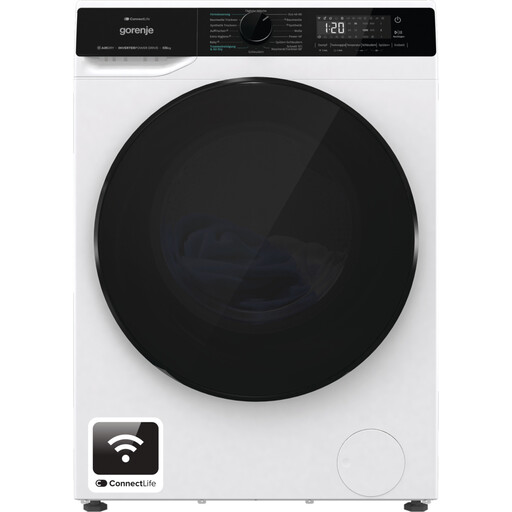
Gorenje WD2PA854ADW DE washer-dryer
For wash and dry loads that need to be planned together: the stated capacities are 8 kg for washing and 5 kg for drying.
The lower drying capacity determines the size of a complete cycle.
View at Joybuy
 No image available
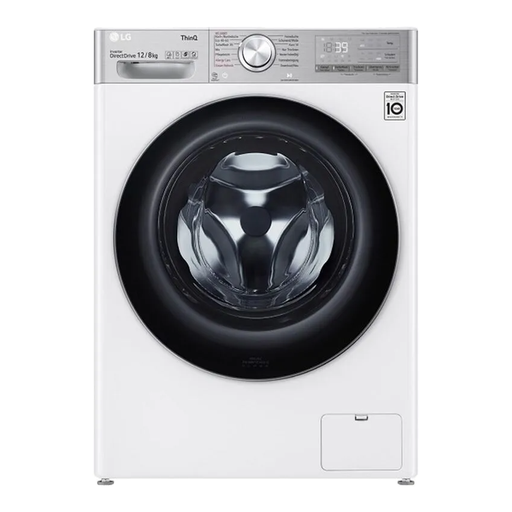
LG V9WD128H2 AI DD washer-dryer
One appliance for washing and drying: check the capacities and model details for the specific version before buying.
View at Joybuy
 No image available
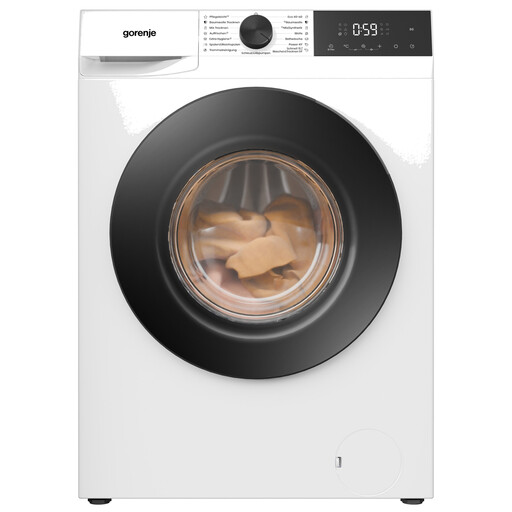
Gorenje WD5G2P1174A2DP2 washer-dryer, 11 kg wash / 7 kg dry
For shared laundry loads: the stated capacities are 11 kg for washing and 7 kg for drying.
A complete wash-and-dry cycle takes 465 minutes, which is worth bearing in mind when several people share the appliance.
View at Joybuy
 No image available
LG WT1210EGF WashTower, 12 kg wash / 10 kg dry
For households looking for a washing machine with a separate heat pump tumble dryer rather than a single washer-dryer.
The product details list a 12 kg wash capacity and a 10 kg drying capacity. You’ll need enough space for two appliances.
View at Joybuy
Frequently asked questions
Do fabric napkins always need to be washed at 60 °C?
No, there’s no blanket requirement to wash them at 60 °C. The Umweltbundesamt says higher temperatures may be an additional measure when particular hygiene requirements apply. The care label and your specific household circumstances remain the key factors.
Can I dry a full wash load straight away in a washer-dryer?
Not necessarily: the lower drying capacity is what matters. For example, AEG lists a wash capacity of 8,0 kg and a drying capacity of 4,0 kg for the LWK6A50680, so a full wash load in this model cannot be dried completely in one cycle.
How can we compare energy and water consumption in our shared house?
Compare the separate figures for washing and complete wash-and-dry cycles on the EU energy label. Relate the stated kWh and water figures to how often you’ll actually use the appliance; the wash efficiency rating alone doesn’t show the consumption for a complete cycle.
Is the EU energy label relevant when buying online?
Yes. Appliances that require a label must also display it when sold online. EU labelling rules cover household washer-dryers. The label provides figures for comparison, but doesn’t guarantee the consumption of every individual load.
What matters most when sharing wash loads?
Plan complete wash-and-dry cycles around the drying capacity and allow for the duration of the full cycle. Also check the care labels before washing napkins with other items.


