A washer-dryer can be a good option for a shared house if there’s no room to air-dry laundry and you need tea towels dry again quickly. Check that the model has a suitable wash programme, and compare its separately stated wash and drying capacities—the drying capacity is often lower—as well as its consumption figures for a complete wash-and-dry cycle. If air-drying is practical, a washing machine without regular use of its drying function may be the more economical starting point. A steam or quick programme isn’t proof that it’s suitable for washing tea towels just because of its name.
Who is a washer-dryer right for?
Shared houses with communal tea towels
If you share tea towels, choose a specific wash programme that suits the care label and washing instructions. The Verbraucherzentrale recommends letting tea towels dry thoroughly, changing them regularly and washing them at a minimum of 60 °C.
Shared houses without suitable drying space
If you need your towels dry again soon after washing, drying capacity and how long the shared machine is in use are important factors to consider. The Verbraucherzentrale describes washer-dryers as space-saving combination appliances.
Budget-conscious shared houses
If you share the purchase and running costs, look at the energy and water figures for washing and for washing plus drying separately. EU energy label information distinguishes between these operating modes.
What should a shared house consider?
| Priority |
What to check before buying |
Who is this especially relevant to? |
| Wash programme for tea towels |
Check the care label and model instructions against the available wash programmes and temperature settings. The Verbraucherzentrale recommends washing tea towels at a minimum of 60 °C. |
When we wash communal tea towels, we want to check the care instructions against the wash programme rather than rely on the programme name alone. Around 33% of consumers put hygienic washing first. |
| Towels dry again quickly |
Check the wash and drying capacities separately in kg, as well as the duration of the complete programme you want to use. |
If we don’t have a suitable place to dry our towels, we want to know whether they can dry in the machine without being moved to another appliance, and how long the machine will be in use. Around 27% of consumers prioritise quick drying. |
| Running costs |
Compare the energy and water figures for wash-only cycles with those for complete wash-and-dry cycles, making sure you use the same basis for comparison. |
If we share the running costs, we want to compare consumption figures for the programmes we actually use. Around 20% of consumers put running costs first. |
| Space and installation |
Check the appliance dimensions, door clearance, access route and available connections. If you rent, also check the specific installation requirements. |
If space is limited in our shared house, we want to know whether a single appliance will fit and whether there’s a practical place to air-dry laundry. Around 20% of consumers put available space first. |
Common selection mistakes
-
Looking only at wash capacity
According to Bosch, the Bosch WNG24441 has a 9 kg wash capacity but a combined wash-and-dry capacity of 6 kg. So a full wash load won’t necessarily fit into a single complete drying cycle.
Compare both capacities and, if necessary, plan for extra drying cycles or smaller loads based on what you usually wash.
Extra drying cycles can keep the shared machine in use for longer.
-
Assuming the wash energy rating also applies to wash-and-dry cycles
The energy label distinguishes between the wash cycle and the complete wash-and-dry cycle. The figures for these two operating modes aren’t interchangeable.
If your household often washes and dries in one cycle, compare the figures for the complete cycle. For wash-only cycles, use the separate washing figure.
-
Treating programme names as proof of hygiene performance
“Steam”, “Hygiene” or “Eco 40–60” alone don’t tell you what temperature a specific programme reaches or whether it’s suitable for your tea towels.
Check the care label against the model instructions. The Umweltbundesamt notes that additional measures may be needed when someone in the household has a contagious illness, and that a higher wash temperature can help.
-
Ruling out air-drying or a second appliance without checking the space available
A washer-dryer can save floor space, while air-drying needs a suitable area and takes time. If you dry clothes indoors, the Verbraucherzentrale recommends ventilating and heating the room sufficiently.
First check how much drying space you have and where an appliance could go. Then compare whether a washer-dryer or separate appliances would work better for your household’s routine.
Brands and models at a glance
Bosch
The Bosch WNG24441 is a useful example of why wash and combined capacities should be considered separately.
- Bosch lists a 9 kg wash capacity and a 6 kg wash-and-dry capacity for this model, along with dimensions of 848 × 598 × 590 mm.
- The E rating applies to the complete wash-and-dry cycle. Quick or steam functions alone don’t prove that the appliance is suitable for hygienically washing tea towels.
Siemens
The Siemens WN44G243 is a useful comparison if you’re looking for a larger wash capacity, with the drying capacity still listed separately.
- Siemens lists a 10.5 kg wash capacity and a 6 kg capacity for washing and drying for this model.
- The higher wash capacity doesn’t change the stated combined capacity of 6 kg. The noise figure given for this model doesn’t apply to other Siemens models.
AEG
The AEG L9WEF80690 is a heat-pump washer-dryer with published figures for complete cycles.
- AEG lists a 9 kg wash capacity and a 6 kg drying capacity for this model, along with 252 kWh per 100 complete cycles and energy class C for washing plus drying.
- Manufacturer claims about gentle drying don’t confirm that a steam refresh function will hygienically wash tea towels.
Samsung
The Samsung WD90DG5B15BBEG is a comparison model with app features and a stated steam programme.
- Samsung lists energy class D for washing plus drying and a Hygiene Steam programme for this model.
- Samsung’s stated potential savings with AI Energy Mode apply to wash temperatures up to 40 °C. The internal tests cited for another model don’t prove that the same savings apply when washing tea towels in this appliance.
Beko
The Beko BM3DT4944W is an example of a model with separate wash and drying capacities.
- Beko lists a 9 kg wash capacity and a 6 kg drying capacity for this model.
- The capacity figures don’t tell you what temperature a particular tea towel programme reaches. Check the model instructions for this information.
Washer-dryers at Joybuy
This selection includes washer-dryers for shared households looking to combine washing and drying in one appliance. Check each model’s wash and drying capacities separately.
 No image available
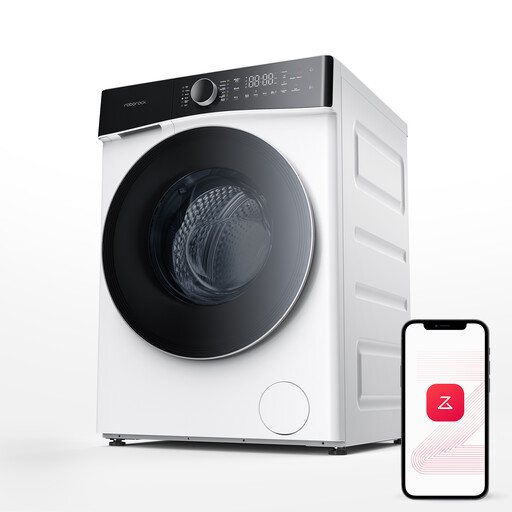
Roborock Zeo Lite washer-dryer, 10 kg washing / 6 kg drying
For a shared household looking to combine washing and drying in one appliance; the drying capacity is lower than the wash capacity.
Capacity: 10 kg washing and 6 kg drying.
View at Joybuy
 No image available
LG WT1210WWF front-loading washer-dryer, 12 kg washing / 10 kg drying
For a shared household looking to combine washing and drying in one appliance; this model also has different wash and drying capacities.
Capacity: 12 kg washing and 10 kg drying. The product name specifies a Dual Inverter heat pump.
For wash loads over 10 kg, you may need to use a smaller load for the combined wash-and-dry cycle.
View at Joybuy
 No image available
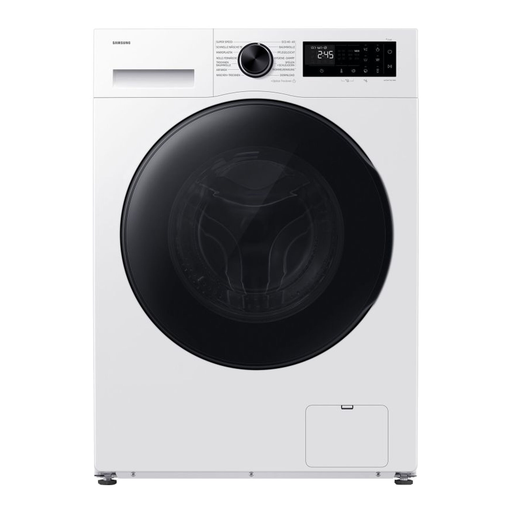
Samsung WD9BHG5U34BEEG washer-dryer, 9 kg washing / 6 kg drying
For a shared household looking for a combined appliance with stated wash and drying capacities; the drying capacity is lower than the wash capacity.
Capacity: 9 kg washing and 6 kg drying.
View at Joybuy
 No image available
Samsung washer-dryer, 9 kg washing / 6 kg drying, Add Laundry
For a shared household looking for a washer-dryer with stated capacities; a wash load larger than the drying capacity won’t fit into the same combined cycle in its entirety.
Capacity: 9 kg washing and 6 kg drying. The product name specifies energy class A for washing and D for combined operation.
View at Joybuy
 No image available
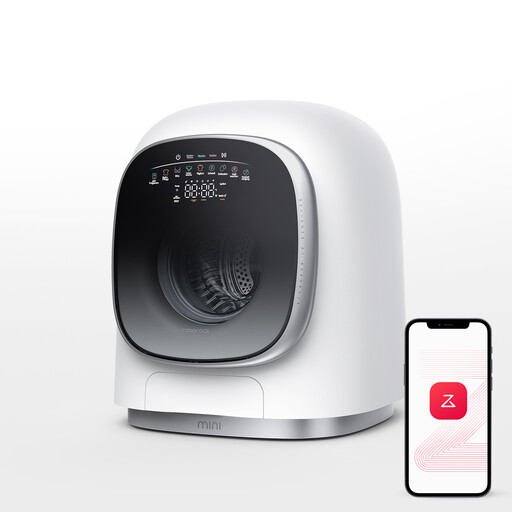
Roborock Zeo Mini washer-dryer, 1 kg washing / 0.5 kg drying
For small loads; its stated capacity is considerably lower than that of the other appliances in this selection.
Capacity: 1 kg washing and 0.5 kg drying. For larger loads, consider using a smaller load or choosing a different appliance size.
View at Joybuy
Frequently asked questions
Is a steam or quick programme enough for tea towels?
You can’t tell from the programme name alone. The Verbraucherzentrale recommends washing tea towels at a minimum of 60 °C; check this recommendation against the care label and the instructions for your specific appliance. The Umweltbundesamt considers that additional measures may be useful if someone in your household has a contagious illness.
Can the whole wash load be dried in the same appliance straight away?
Not necessarily. Bosch lists a 9 kg wash capacity and a 6 kg capacity for washing and drying for the Bosch WNG24441. Check both figures for your chosen model and bear in mind that a larger wash load may need to be split for the combined cycle.
What should a shared household check before installing an appliance in a rented home?
Measure the space and access route, check the connections and confirm the specific installation requirements. The Verbraucherzentrale recommends agreeing the installation with your landlord and taking steps to prevent water damage; this doesn’t mean that washing machines are generally prohibited in rented homes by law.
Which consumption figures matter for a washer-dryer?
Compare the figures for wash-only cycles separately from those for complete wash-and-dry cycles. If your household dries laundry regularly, the complete-cycle figures are the ones that matter for this type of use. To work out your own costs, you’ll also need to factor in how often you use the appliance and your electricity tariff.


