What should your house share look for when buying?
Washer-dryer
A good fit if: You have room for one appliance but little space to dry laundry, and your house share wants to machine-dry clothes regularly.
Consider: For a complete cycle, the drying capacity is what matters. While the appliance is drying, nobody else can use it to wash clothes.
Washing machine and air-drying
A good fit if: You have somewhere suitable to hang laundry and don’t need the pillowcases to be dry straight away.
Consider: Hanging laundry takes up space. If you dry clothes indoors, make sure the room is well ventilated.
Washing machine and separate tumble dryer
A good fit if: You have enough space and several housemates often need to wash or dry clothes.
Consider: Two appliances need more space, but you can wash and dry at the same time. Actual consumption depends on the appliances and how you use them.
First, work out whether you have space to air-dry laundry in your house share. Then compare the appliance’s capacity and how long it will be in use, along with its consumption figures for the mode you’d actually use.
| Priority |
What to check before buying |
Who should pay particular attention? |
| Space and drying |
Check the appliance’s dimensions and door opening; work out where you’ll dry items that can’t go in the tumble dryer. |
If you’re short on space for the appliance or somewhere to hang laundry, look for one that can meet both needs in practice. Around 33% of consumers have this as their main priority. |
| Capacity and availability |
Check the washing and drying capacities separately, and factor in how everyone in your house share plans to use the appliance. |
If several people do laundry regularly, you’ll want to avoid waiting and blocked washing cycles. Around 27% of consumers put access to shared appliances first. |
| Running costs |
Compare the figures for washing and for a complete wash-and-dry cycle on the same cycle basis. |
If you usually air-dry your laundry, make sure the cost of the drying function reflects how often you’ll use it. Around 20% of consumers put running costs first. |
| Caring for pillowcases |
Check the washing and drying symbols on the care label, and choose programmes that match those instructions. |
If your pillowcases have different care instructions, you’ll want to wash them accordingly and only machine-dry those that are suitable. Around 20% of consumers put fabric care first. |
Washer-dryers at Joybuy
Washer-dryers for house shares looking to combine washing and drying in one appliance.
 Image unavailable
LG WT1210WWF washer-dryer
For a house share looking to combine washing and drying in one appliance.
12 kg washing capacity and 10 kg drying capacity; Dual-Inverter heat pump.
View at Joybuy
 Image unavailable
Samsung washer-dryer, 9 kg/6 kg
For a house share looking to compare a combined washing and drying capacity of 9 kg and 6 kg respectively.
1400 U/min; energy classes A for washing and D overall, according to the product name.
View at Joybuy
 Image unavailable
Roborock Zeo Lite washer-dryer
For a house share looking for a washer-dryer with separate washing and drying capacity figures.
10 kg washing capacity and 6 kg drying capacity; Zeo-Cycle drying technology.
View at Joybuy
 Image unavailable
Beko BM3DT4944W washer-dryer
For a house share looking to compare a combined cycle with a separately stated drying capacity.
9 kg washing capacity and 6 kg drying capacity; 1400 U/min.
View at Joybuy
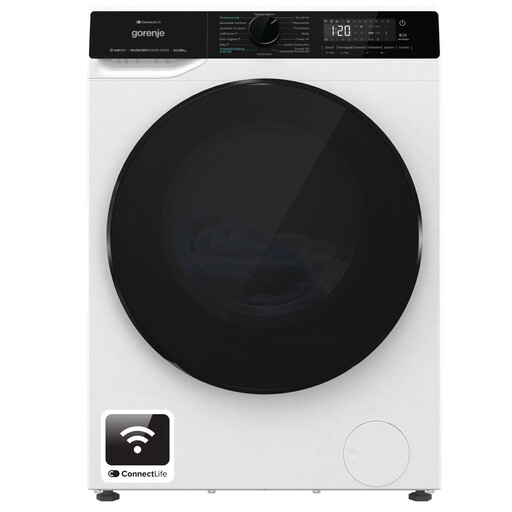 Image unavailable
Gorenje WD2PA1X64ADW DE washer-dryer
For a house share looking to include a washer-dryer with several programmes in its comparison.
16 programmes and 1400 U/min, according to the product name.
View at Joybuy
Frequently asked questions
Can every pillowcase stay in the washer-dryer after washing?
No, it depends on the care label for the individual pillowcase. Check the washing and drying symbols. A crossed-out tumble-dryer symbol means it isn’t suitable for machine drying.
Do I always need to wash pillowcases at 60 °C?
No, follow the care label. The Umweltbundesamt says that disinfection or a hot wash is generally not necessary for ordinary household laundry.
What should our house share check before installing an appliance in a rented home?
Check the intended location, as well as the water inlet and drainage, and discuss the installation with your landlord. The Verbraucherzentrale recommends doing this to help prevent possible water damage. This does not mean there is a blanket legal ban on washing machines in rented homes.
Which figures should I use to compare energy consumption?
Compare the EU energy label figures for the same cycle and operating mode. If you also want to dry your laundry, figures for a complete wash-and-dry cycle are more useful than those that only cover washing.
What should I do if my newly bought appliance is faulty?
According to Your Europe, when you buy from a business seller, you’re entitled to a legal guarantee of at least two years from the date you receive the goods. This applies to the seller and is separate from any voluntary manufacturer’s warranty.


