A washer-dryer could be a good choice for your student house share if you have little space for appliances or drying laundry, and the care label on your shorts says they can be tumble-dried. If you have room to hang them up, it’s also worth comparing a washing machine without a drying function. With a washer-dryer, the smaller drying capacity, longer complete cycles and energy and water use of a wash-and-dry cycle can limit its usefulness when several people share the machine.
Which option is right for you?
A house share with space for just one appliance
If there’s barely enough room next to the washing machine for a tumble dryer or clothes airer, a washer-dryer could be a practical choice. Before buying, check its dimensions, connections and stated drying capacity.
A house share with several loads to get through
When several people share a machine, the length of complete cycles and the separate washing and drying capacities matter. If you have enough space, you could also compare a separate washing machine and tumble dryer.
A house share on a tight budget for running costs
If you want to keep electricity and water costs down and can air-dry your shorts now and then, compare the consumption figures for the programmes you’ll actually use.
What should you look for when buying?
First decide whether you’ll use the drying function regularly and whether you have space for a suitable place to hang laundry or for separate appliances. Then you can match the capacity, energy and water use, and care requirements to life in your shared house.
Washing machine with air-drying
A good fit if: you have a suitable, well-ventilated place to dry clothes and only need a drying function occasionally.
The trade-off: Laundry needs space and time to dry; indoors, good ventilation and heating are important.
Washer-dryer
A good fit if: you have space for only one appliance and want to machine-dry tumble-dryer-safe clothes regularly.
The trade-off: The drying capacity may be lower than the washing capacity, so plan around the capacity of the complete programme.
Washing machine and separate tumble dryer
A good fit if: you have space and connections for both appliances, and several loads are often waiting to be washed in your shared house.
The trade-off: Separate appliances take up more space. The German Consumer Advice Centre says they have advantages over typical washer-dryers in terms of electricity and water use.
| What matters |
What to check before buying |
Who is this particularly important to? |
| Space for the appliance and drying laundry |
Check the appliance dimensions, door opening, connections and available hanging space. |
If we only have room for one appliance and want to machine-dry clothes occasionally, having a usable place to dry them matters too. Around 33% of consumers put space requirements first. |
| Drying capacity and waiting time |
Compare the washing and drying capacities separately, along with the length of the complete programme you plan to use. |
If several people take turns doing the laundry, we want to plan our loads without tying up the machine for too long. Around 25% of consumers prioritise throughput and waiting time. |
| Electricity and water use |
Check the EU product information sheet for the figures for washing alone and for the complete wash-and-dry cycle separately. |
If we want to keep running costs down and can hang our shorts up to dry, we compare the figures for the programmes we’ll actually use. Around 25% of consumers focus primarily on consumption. |
| Caring for your shorts |
Check the washing temperature, any gentle-care instructions and the separate tumble-drying symbol on each garment. |
If we want to look after our cotton shorts, we follow the care label for washing and drying rather than relying on the fabric alone. Around 17% of consumers put fabric care first. |
Avoid common misconceptions
-
Assuming washing capacity and drying capacity are the same
Each of the washer-dryers considered has a lower drying capacity than washing capacity. So a full wash load won’t necessarily fit in the same drying cycle.
Plan typical shared-house loads around the drying capacity of the programme you choose.
If the load is too large, you may need an extra drying cycle, tying up the shared machine for longer.
-
Taking the wash efficiency class as a measure of the complete cycle
The EU product information sheet lists washing and washing with drying separately. The washing figure alone doesn’t show the consumption of a complete wash-and-dry cycle.
For the way you plan to use it, compare the kWh and litre figures for the same model variant and the relevant cycle.
-
Assuming all cotton shorts can be tumble-dried
The cotton content alone doesn’t tell you whether a garment can be tumble-dried or which temperature is suitable.
Check the washing and tumble-drying symbols on each pair of shorts before selecting a complete programme.
-
Choosing where to put it based only on its width
In a rented home, you also need to consider the connections, the exact installation location and what to do in the event of a leak.
Check the planned location with your landlord before ordering, and make sure you meet the connection requirements for the specific appliance.
Notable brands and models to compare
LG
The W4WR7096YB is a freestanding washer-dryer with a 9 kg washing capacity and a 6 kg drying capacity.
- LG says this model has full water protection.
- The advertised 39-minute programme is for a half load. The drying capacity is lower than the washing capacity.
AEG
According to AEG, the freestanding L9WEF80690 from the 9000 Series combines heat-pump drying with a 9 kg washing capacity and a 6 kg drying capacity.
- AEG gives figures of 252 kWh per 100 complete cycles and 49 kWh per 100 wash cycles for this model.
- These figures relate to different types of cycle, so the one that matches your use is what matters when choosing.
Bosch
The Series 8 washer-dryer WNC244070 has a stated washing capacity of 9 kg and a drying capacity of 6 kg.
- Bosch gives a maximum spin speed of 1,400 rpm for this model.
- When planning drying for full shared-house loads, you’ll need to take the separate capacities into account.
Beko
The freestanding BM3DT4844W1 washer-dryer is listed with a washing capacity of 8 kg, a drying capacity of 5 kg and a stated depth of 57 cm.
- The model specifications make it easy to compare its dimensions and drying capacity.
- Its stated drying capacity is lower than the 6 kg listed for the LG, AEG and Bosch models mentioned here.
Washer-dryers at Joybuy
These Joybuy products combine washing and drying in one appliance. Before planning a complete wash-and-dry cycle, check the drying capacity of the model you’re considering and the care label on your shorts.
 No image available
LG WT1210EGF WashTower, 12 kg washing and 10 kg heat-pump drying
For a shared house looking to combine washing and drying in one appliance space.
It has a stated washing capacity of 12 kg and drying capacity of 10 kg. You may need to split a full wash load before drying it.
View at Joybuy
 No image available
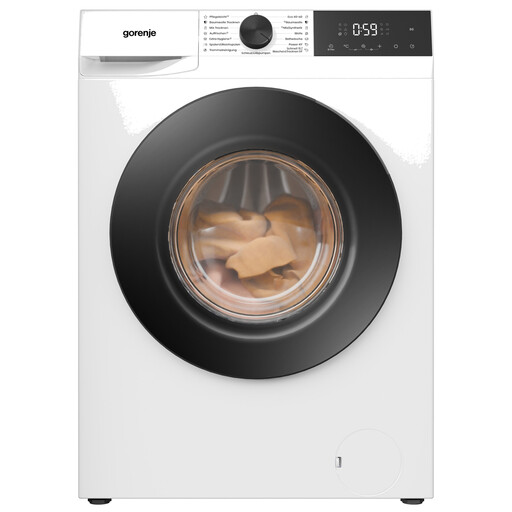
Gorenje WD5G2P1174A2DP2 washer-dryer, white
For a shared house looking to wash and dry clothes in one appliance.
The stated capacities are 11 kg for washing and 7 kg for drying. You may therefore need to split a full wash load before drying it.
View at Joybuy
 No image available
LG WT1210WWF front-loading washer-dryer, 12 kg washing and 10 kg drying
For a shared house looking to combine washing and drying in a front-loading appliance.
The stated capacities are 12 kg for washing and 10 kg for drying. You may therefore need to split a full wash load before drying it.
View at Joybuy
 No image available
Samsung washer-dryer, 9 kg washing and 6 kg drying
For a shared house looking for a freestanding washer-dryer with separate washing and drying capacities.
The product lists a washing capacity of 9 kg and a drying capacity of 6 kg, with energy classes A for washing and D for the complete cycle. The washing class doesn’t represent the efficiency of a complete wash-and-dry cycle.
View at Joybuy
 No image available
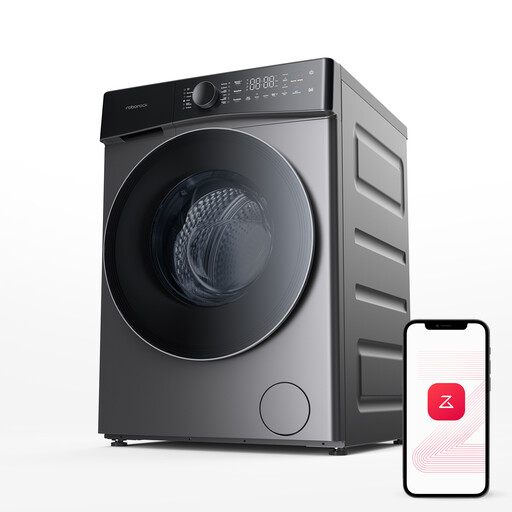
Roborock Zeo Lite Grey washer-dryer, 10 kg washing and 6 kg drying
For a shared house looking to combine washing and heat-pump drying in one appliance.
The stated washing capacity is 10 kg and the drying capacity is 6 kg. You may therefore need to split a full wash load before drying it.
View at Joybuy
Frequently asked questions
Can cotton shorts be washed on the Eco 40–60 programme?
This programme is designed for normally soiled cotton laundry that can be washed at 40 °C or 60 °C according to its care label. Even so, check the label on the specific pair of shorts; the fabric description alone isn’t enough.
Can I dry a full wash load without taking anything out?
Only if the load is within the drying capacity allowed for the wash-and-dry programme you’ve selected and the garments are suitable for tumble-drying. For example, the LG W4WR7096YB and AEG L9WEF80690 each have a washing capacity of 9 kg and a drying capacity of 6 kg.
What should we check before connecting an appliance in a rented home?
Check the intended location, the connections and what to do in the event of a leak. The German Consumer Advice Centre recommends checking with your landlord before installing the appliance; this doesn’t mean there’s a blanket requirement for permission or a general ban.
How do we compare a washer-dryer’s energy and water use?
For each model, compare the EU product information sheet figures for washing alone and for a complete wash-and-dry cycle separately. Which figures matter most to you depends on how often you actually use the drying function.


