A washer-dryer could work for your shared house if space for appliances and drying is limited, and the care labels confirm that the pillowcases in question can go in the tumble dryer. Before choosing one, check the washing and drying capacities, as well as the figures for a complete wash-and-dry cycle. If you have space to dry laundry, a washing machine with air-drying is still a practical alternative. Machine-washable does not automatically mean suitable for tumble-drying.
Who needs to make this decision?
Shared houses with different types of pillowcase
If your pillowcases have different care instructions, you’ll need to check the washing and drying requirements for each item separately. GINETEX Germany explains how to recognise the tumble-dryer symbol on a care label, while examples from IKEA Germany show that machine-washable pillowcases are not necessarily suitable for tumble-drying.
Shared houses without space to dry laundry
If there’s no room for a clothes airer or a second appliance, a washer-dryer could be an option – but only for pillowcases whose care labels allow tumble-drying. You’ll still need a way to air-dry any items that are not suitable for the tumble dryer.
Shared houses with lots of communal laundry
When several people use the same appliance, washing and drying capacity matter, as does how long the machine is occupied during a complete cycle. The consumer advice centre notes that a washer-dryer’s drying capacity can be lower than its washing capacity.
What should you look for when buying?
Washer-dryer
A good fit if: Your shared house has space for only one suitable appliance and you want to tumble-dry pillowcases that are suitable for it.
Trade-off: The drum is occupied for the whole cycle. For conventional washer-dryers, the consumer advice centre reports higher electricity and water consumption than for separate appliances. Compare the label figures for the specific models you’re considering.
Washing machine and air-drying
A good fit if: Your pillowcases are machine-washable but not suitable for tumble-drying, or you have a suitable place to dry them.
Trade-off: Your pillowcases won’t go through a machine-drying cycle, so you’ll need to allow space for them to dry. If you dry laundry indoors, you’ll also need to consider ventilation and heating.
Washing machine and separate tumble dryer
A good fit if: You have space for two appliances and regularly have enough laundry that’s suitable for tumble-drying.
Trade-off: You’ll need more floor space. The consumer advice centre rates separate appliances as more efficient in terms of electricity and water use than conventional washer-dryers. The care label still determines whether an item can go in a separate tumble dryer.
| Priority |
What to check before buying |
Who does this matter most to? |
| Fabric care |
Check the washing temperature and tumble-dryer symbol on each pillowcase; a machine’s delicate programme does not mean an item is approved for tumble-drying. |
If I share pillowcases with different care labels, I want to check their suitability for washing and tumble-drying individually. Around 33% of consumers put fabric care first. |
| Shared loads |
Compare washing and drying capacities separately, along with the load limit for the programme you plan to use. |
If several people rely on the same appliance, I want to know how much laundry can be washed and dried in one cycle. Around 27% of consumers prioritise shared loads and appliance availability. |
| Space for the appliance and drying |
Check the appliance dimensions against its installation space and the route for getting it there; also consider how much room you have for air-drying. |
If our shared house has no room for a second appliance or enough drying space, I’m looking for a solution that fits the space available. Around 20% of consumers put space first. |
| Running costs |
Compare figures for the same operating mode on the energy label, and factor in water consumption and how often you expect to use the appliance. |
If we share the costs, I want to distinguish between the figures for washing and those for a complete wash-and-dry cycle. Around 20% of consumers prioritise consumption and predictable shared use. |
Common buying mistakes
-
Assuming machine-washable means suitable for tumble-drying
Care instructions can vary: the DYTÅG pillowcase from IKEA Germany can be washed on a delicate cycle at no more than 40 °C, but is not suitable for tumble-drying. The LÖKSTAMFLY pillow also has different care instructions for the cover and the inner cushion.
Check the label on every pillowcase and each part of the pillow before planning a machine-drying cycle.
-
Comparing washing capacity alone
For the washer-dryer models mentioned here, the stated drying capacity is lower than the washing capacity. That means you can’t automatically dry a full washing load without removing some of it first.
Compare both capacities and plan how you’ll split the load if necessary.
Extra drying cycles can make the appliance less available to everyone and extend the time it’s in use.
-
Taking washing figures as figures for a complete cycle
The energy label shows separate figures for washing alone and for a complete wash-and-dry cycle. If you look only at the washing figures, you won’t be comparing the cycle you’ll be using when you regularly tumble-dry laundry.
For the way you plan to use the appliance, compare figures for the same operating mode. The consumer advice centre and HEA explain the separate label figures.
Brands as technical reference points
LG
The models mentioned range from a washer-dryer with a 9 kg washing capacity and 6 kg drying capacity to a heat pump washer-dryer.
- The LG W4WR7096YB is listed with a 9 kg washing capacity and 6 kg drying capacity; the HPWD096C is listed as a heat pump model with the same capacity figures.
- The manufacturer’s fabric-care claims for the W4WR7096YB apply under the relevant test conditions and don’t confirm that it’s suitable for every pillowcase. The care label remains the deciding factor.
AEG
According to AEG, the L9WEF80690 from the 9000 series is a heat pump washer-dryer with a rated washing capacity of 9 kg and a rated drying capacity of 6 kg.
- AEG states a figure of 252 kWh for 100 complete cycles. You can compare this with figures for other models on the same label basis.
- Heat pump technology and a wool programme do not override a care label that says an item must not be tumble-dried.
Siemens
According to Siemens, the iQ700 WN54C2070 has a washing capacity of 9 kg and a capacity of 6 kg for washing and drying.
- Siemens lists appliance dimensions of 848 × 598 × 622 mm and a noise level of 70 dB(A), which you can check against your chosen installation space.
- The model specifications don’t replace checking the connections or clarifying the terms of a water damage guarantee.
Haier
According to Haier, the I-PRO SERIE 7 PLUS HWD80-B14979 has a washing capacity of 8 kg and a drying capacity of 5 kg.
- The stated dimensions of 595 × 548 × 850 mm can help when checking whether the appliance will fit in a limited space.
- Haier describes the motor as quiet; to compare noise levels, look at specific figures presented on a like-for-like basis.
Joybuy products
The models below are intended for shared washing and machine-drying, and include washer-dryers as well as a washing machine and tumble dryer system. Check the care label on each pillowcase to make sure it allows tumble-drying.
 No image available
LG WT1210WWF washer-dryer
When comparing an integrated system, check the separate capacity figures for washing and drying.
12 kg washing, 10 kg drying; Dual Inverter Heat-Pump.
View at Joybuy
 No image available
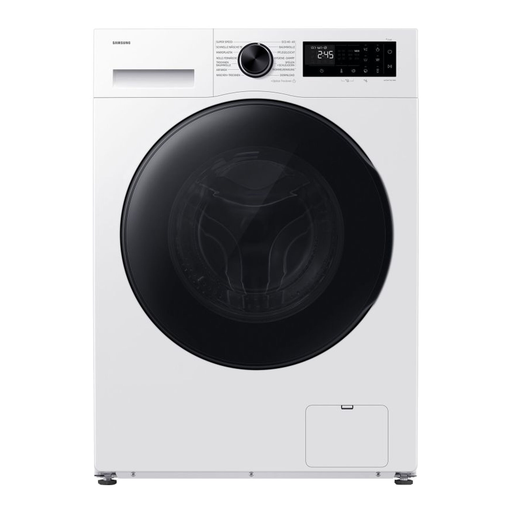
Samsung WD9BHG5U34BEEG washer-dryer
A washer-dryer could be an option for a shared house with limited space for appliances, as long as the drying capacity and care labels suit the load you have planned.
9 kg washing, 6 kg drying; 1,400 U/min.
View at Joybuy
 No image available
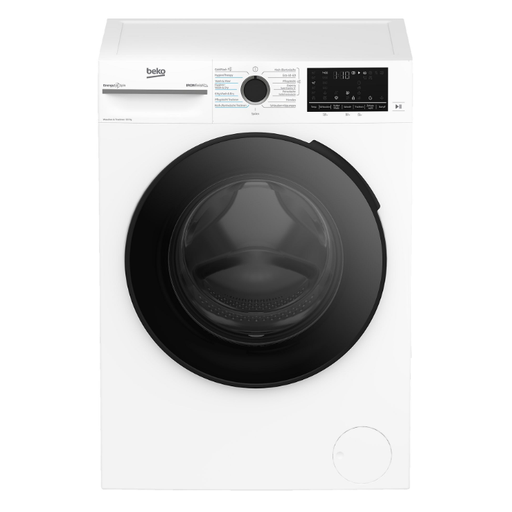
Beko BM3DT4944W washer-dryer
If you want to run a complete wash-and-dry cycle, compare the drying capacity with the amount of laundry you actually want to dry.
9 kg washing, 6 kg drying; 1,400 U/min; energy class D.
View at Joybuy
 No image available
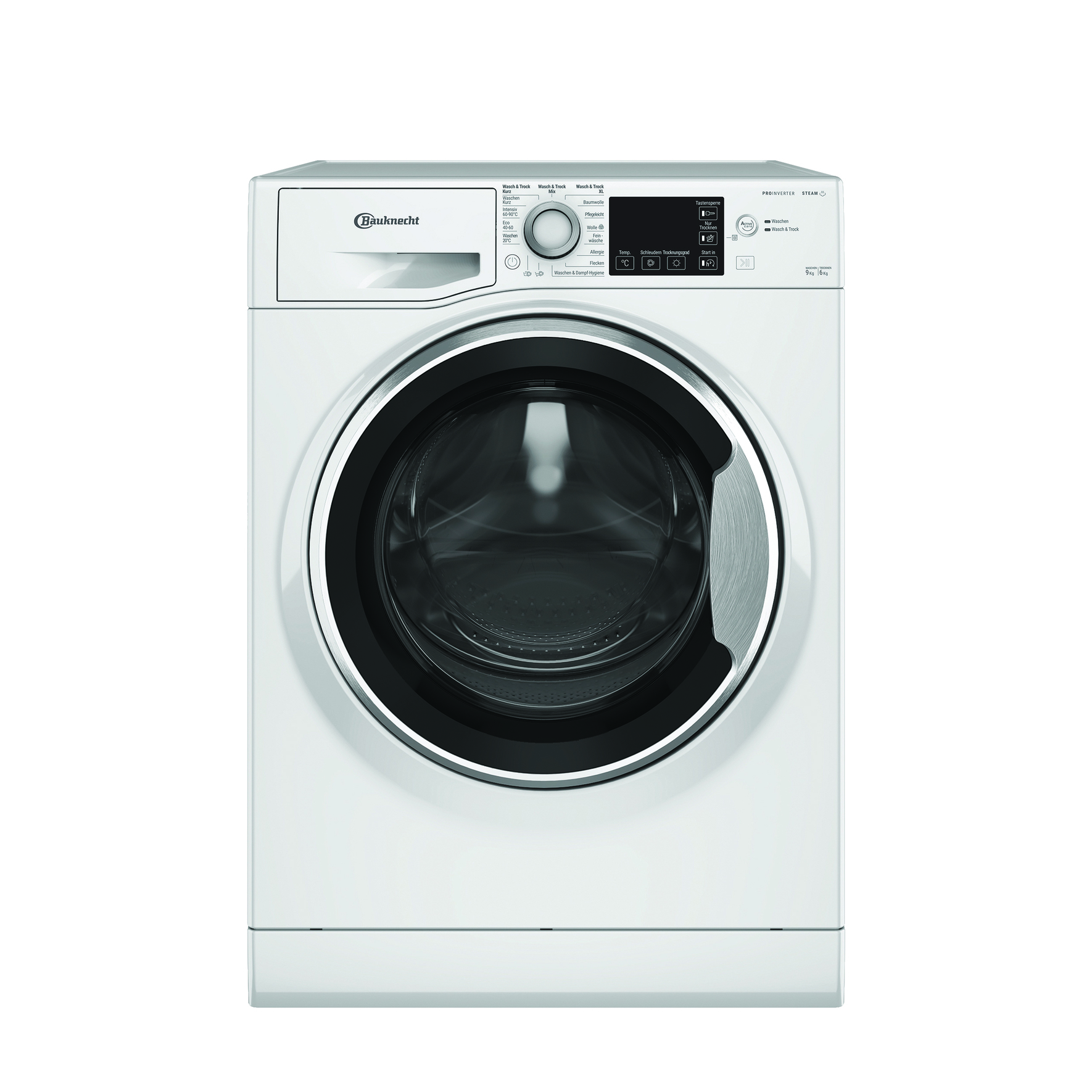
Bauknecht WADR ACTIVE 9614 D washer-dryer
When sharing an appliance, it’s important to consider not just its capacity but how long a complete wash-and-dry cycle keeps it in use.
9 kg washing, 6 kg drying; 1,400 U/min.
A complete wash-and-dry cycle with a full load is listed as taking 9 hours 20 minutes.
View at Joybuy
 No image available
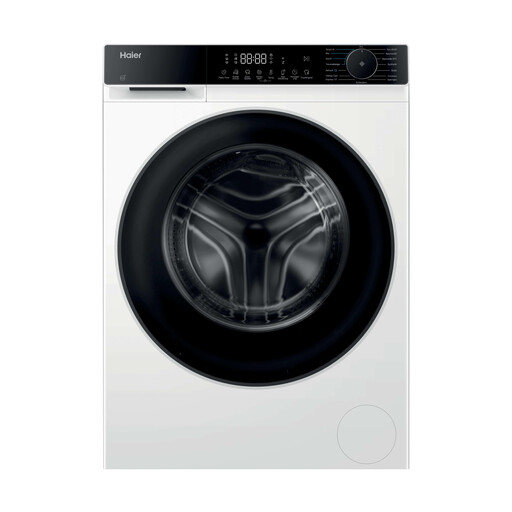
Haier X5 Series HWD120-BP14357U1 washer-dryer
If your shared house plans to wash larger loads together, compare the washing and drying capacities separately with your requirements.
12 kg washing, 8 kg drying; 14 programmes.
View at Joybuy
Frequently asked questions
Can every machine-washable pillowcase go in the tumble dryer afterwards?
No. Check the washing and tumble-drying symbols separately: the DYTÅG pillowcase from IKEA Germany is machine-washable but not suitable for tumble-drying. The LÖKSTAMFLY pillow has different care instructions for the cover and the inner cushion.
What should I check before installing a washer-dryer in a rented shared house?
Check the available space and connections, and make sure you understand your tenancy agreement. The consumer advice centre recommends discussing the installation with your landlord. Also make sure the appliance is installed safely and consider what to do about the water supply if you’ll be away for an extended period. This doesn’t mean that every shared house necessarily needs separate permission.
Which energy label figures help you compare running costs?
The energy label shows energy consumption for complete wash-and-dry cycles separately from washing-only cycles. Compare the same operating mode, then factor in how often you expect to use the appliance and your actual electricity and water costs.
What happens to an old appliance when it’s replaced in Germany?
Old electrical appliances must not be put in household rubbish. According to the Federal Ministry for the Environment, you can take them to a public waste disposal authority free of charge; retailers also have take-back obligations. Check how take-back will be arranged when you buy your new appliance. For certain appliances, free collection can be agreed when you sign the contract.


