A washer-dryer makes most sense in a student house share when there’s no practical place to hang washing or dry it another way. If you can hang the tea towels up, a washing machine with air-drying is usually enough. The Verbraucherzentrale recommends washing tea towels at a minimum of 60 °C, but the care label on each towel determines how it can be washed. So, when choosing a washer-dryer, look at the wash programmes, the lower drying capacity, separate energy and water consumption figures, and how long the shared appliance will be in use.
Who should consider this?
House shares with shared tea towels
When several people use the same tea towels, it’s important to change them regularly and choose a wash cycle that follows both the care label and hygiene guidance. The Verbraucherzentrale recommends changing tea towels at least once a week and washing them at a minimum of 60 °C. GINETEX GERMANY explains the care symbols on the label.
House shares without a practical drying space
If there’s hardly anywhere to hang washing after a cycle, the usable drying capacity becomes important. The Verbraucherzentrale points out that a washer-dryer can only dry part of its wash load straight away.
House shares with a shared laundry room
When several people share an appliance, the time taken by a complete wash-and-dry programme can affect how long it’s in use. Compare the full programme rather than just the duration of a quick wash.
What should you look for when buying?
Washing machine with air-drying
A good fit if: There’s a suitable place in the house share to hang tea towels after washing.
Things to consider: You’ll need space to hang them and should leave the towels to dry thoroughly after use.
Washer-dryer
A good fit if: A second appliance or a clothes airer isn’t practical, and the load suitable for tumble-drying fits within the drying capacity.
Things to consider: Washing and drying use the same drum, so the drying capacity determines the load size for a complete combined cycle.
Washing machine and separate tumble dryer
A good fit if: You have enough space and suitable connections, and the house share regularly wants to tumble-dry larger loads.
Things to consider: You’ll need more floor space for two appliances.
The Verbraucherzentrale recommends washing tea towels at a minimum of 60 °C, but whether a particular towel can be washed at that temperature also depends on its care label. The following considerations will help you weigh up hygiene, drying space and sharing the appliance.
| What matters |
What to check before buying |
Who will find this especially important? |
| Hygienic washing that’s kind to fabrics |
Check the care label and permitted wash temperature against the appliance’s programmes. |
If we use tea towels together regularly, we want a wash cycle that follows hygiene guidance without disregarding the fabric care instructions. Around 33% of consumers put this question at the top of their list when buying. |
| Drying space and drying capacity |
Measure the space available for the appliance and for drying; check wash and drying capacities separately. |
If we have very little room to hang washing, we want to know whether the appliance and the load suitable for tumble-drying will fit our house share. Around 27% of consumers prioritise a lack of drying space and usable drying capacity. |
| Shared electricity and water costs |
Compare consumption figures for the operating mode you actually plan to use, and factor in how often you expect to use it. |
If we share the household bills, we want to take account of the consumption of the programmes we’ll really use. Around 20% of consumers put running costs first. |
| How long the appliance is in use |
Check the duration and load limit for a complete wash-and-dry programme. |
If several people rely on the same appliance, we want to know how long it will be in use for a complete combined cycle. Around 20% of consumers prioritise how much time the appliance is available. |
Common misconceptions
-
Assuming the wash capacity is the same as the load for a complete combined cycle
Wash and drying capacities can differ considerably. For the AEG LWK6A50680, for example, AEG lists a wash capacity of 8 kg and a drying capacity of 4 kg.
Plan your load around the selected wash programme and drying capacity. If it’s too large, you’ll need to remove some items before drying or run another drying cycle.
Removing part of the load or running an extra drying cycle can make laundry planning in a house share take longer.
-
Comparing only the energy rating for washing
The energy label gives separate figures for washing and for a complete wash-and-dry cycle. Looking at just one of these figures won’t necessarily tell you how the appliance will perform in the mode you actually use in your house share.
Compare the declared consumption figures on a like-for-like basis and consider how often you’ll use the tumble-drying function. To work out your own costs, you’ll also need to factor in how often you plan to use it and your energy and water tariffs.
-
Assuming a quick or steam programme is suitable for hygienic washing
A short programme or steam function alone doesn’t confirm that the required wash temperature will be reached or that the programme is suitable for a particular tea towel. A quick wash may also only be suitable for a specific load size.
Check the care label, programme description and hygiene guidance separately. The Verbraucherzentrale recommends washing tea towels at a minimum of 60 °C; the care label determines how each towel can be treated.
Key brands at a glance
LG
For its German-market W4WR7096YB model, LG lists a wash capacity of 9 kg and a drying capacity of 6 kg.
- LG lists a 39-minute wash programme at half load and an AquaStop hose for this model.
- The stated programme time doesn’t apply to a complete wash-and-dry cycle. It also doesn’t confirm that the programme is suitable for tea towels.
Haier
For the freestanding G3 HWD80-BP14637T, Haier lists a wash capacity of 8 kg, a drying capacity of 5 kg and dimensions of 595 × 507 × 850 mm (width × depth × height).
- The stated dimensions make it easier to check whether the appliance will fit in the available space.
- Connections and the clearance required must be checked separately. A marketed steam refresh function doesn’t prove that the appliance has a suitable programme for hygienic washing.
AEG
For the Series 6000 LWK6A50680 washer-dryer, AEG lists a wash capacity of 8 kg and a drying capacity of 4 kg.
- AEG lists 217 kWh per 100 complete wash-and-dry cycles and 47 kWh per 100 wash cycles. This lets you compare the declared figures for each operating mode separately.
- The drying capacity is half the wash capacity. The consumption figures are declared values, not measurements for a particular house share.
Beko
Beko lists the freestanding BM3DT4844W1 washer-dryer with a wash capacity of 8 kg.
- The wash capacity gives you a specific model figure to compare with your own needs.
- Check the drying capacity and consumption figures for the specific model separately. Information about spin-speed adjustment doesn’t prove that a quick or hygiene programme is suitable for tea towels.
Joybuy products
The Joybuy washer-dryers below are designed for house shares looking to combine washing and drying in one appliance. For tea towels, also check that the care label and wash programme are compatible.
 No image available
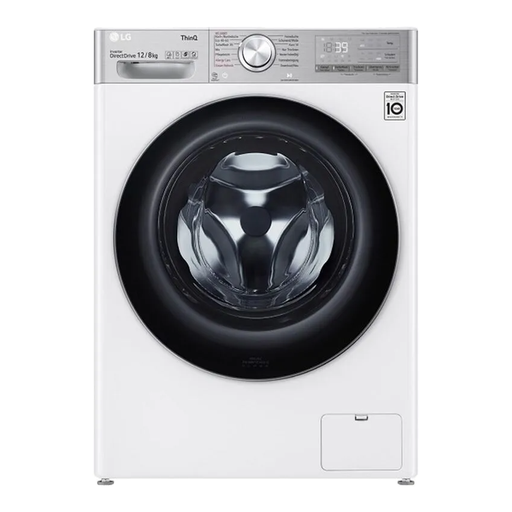
LG V9WD128H2 AI DD Washer Dryer, 12 kg, White
A washer-dryer for a house share looking to combine washing and drying in one appliance. Whether a wash programme is suitable for tea towels depends on the care label and programme details.
The product title lists a 12 kg capacity and the colour White.
Joybuy
 No image available
LG WT1210EGF WashTower, 12 kg washing, 10 kg drying
This model combines washing and drying. For a complete combined cycle, the stated drying capacity is the key limit.
The product description lists a wash capacity of 12 kg, a drying capacity of 10 kg and a heat-pump tumble dryer.
Joybuy
 No image available
Samsung Washer Dryer Combo, 9 kg washing, 6 kg drying
The separate capacity figures make it easier to plan a load for a complete wash-and-dry cycle.
The product title lists a wash capacity of 9 kg, a drying capacity of 6 kg and 1400 rpm.
Joybuy
 No image available
Roborock Zeo Lite Grey, 10 kg washing, 6 kg drying
When planning a combined cycle, the drying capacity is the relevant limit, not just the wash capacity.
The product details list a wash capacity of 10 kg and a drying capacity of 6 kg.
Joybuy
 No image available
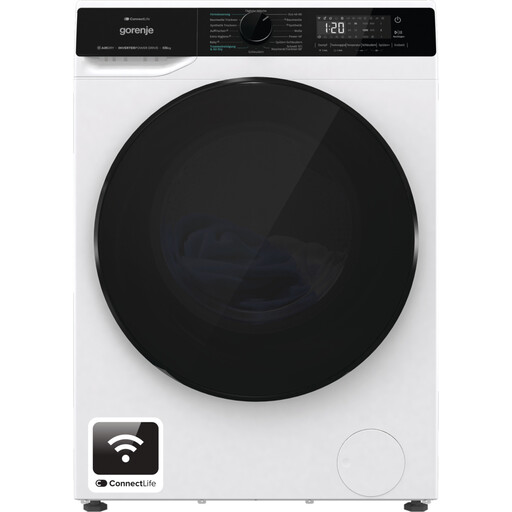
Gorenje WD2PA854ADW DE Washer Dryer, 8 kg washing, 5 kg drying
The separate capacities are useful for a house share that needs to plan a load for washing and subsequent drying.
The product description lists a wash capacity of 8 kg and a drying capacity of 5 kg.
Joybuy
Frequently asked questions
Does every tea towel need to be washed at 60 °C and then tumble-dried?
No. The recommendation to wash at a minimum of 60 °C doesn’t mean the towels also need to go in a tumble dryer. The Verbraucherzentrale also recommends letting tea towels dry thoroughly after use and changing them regularly. The care label tells you how each towel can be washed and whether it’s suitable for tumble-drying.
How can a house share compare the running costs of a washer-dryer?
Compare the separate figures on the EU energy label for washing and for a complete wash-and-dry cycle. To work out your own costs, you’ll need to factor in how many of each type of cycle you expect to run, as well as your electricity and water costs.
What should the house share check before connecting the appliance in a rented home?
Check the proposed location and connection with your landlord, and consider how to protect against water damage. The Verbraucherzentrale recommends discussing this before installation. Whether you need permission in a particular case depends on the tenancy agreement and the installation arrangements.
What labelling applies when buying a new washer-dryer online in Germany?
This appliance category uses the EU energy label, with a scale from A to G, and the energy label must be visible when the appliance is sold online. For a washer-dryer, the figures for washing and wash-and-dry cycles should be considered separately. This doesn’t mean you have to buy a particular energy rating.
Who should the house share contact if the appliance develops a fault after purchase?
If the goods are faulty, buyers may have legal rights against the seller, including the right to have the issue put right, subject to the relevant legal requirements. Section 439 of the German Civil Code (BGB) provides for repair or replacement with goods free from defects and covers the necessary expenses. This is separate from any additional manufacturer’s guarantee that may be advertised.


