A washer-dryer could be a good fit if you want to dry tea towels without transferring them to another machine and only have space for one appliance. The key considerations are a suitable wash programme and the usually lower capacity for a combined wash-and-dry cycle. If you have room to air-dry your laundry or space for two appliances, compare those options too. The German consumer advice centre points out that washer-dryers typically use more electricity and water than separate appliances, while the EU energy label shows figures for washing and for washing plus drying separately.
Who is a washer-dryer suitable for?
Households with lots of kitchen laundry
If you change your tea towels regularly, check that the wash programme suits their care labels. The German consumer advice centre recommends washing kitchen towels regularly at a minimum of 60 °C. If you want to dry them in the same machine afterwards, the drying capacity is what matters.
Households without a suitable place to dry laundry
A washer-dryer could be an option if you have space for an appliance in your utility room but nowhere suitable to air-dry laundry, and want to machine-dry your towels without transferring them between machines.
Households keeping an eye on running costs
If you can hang your towels up to dry or fit two appliances, compare the space required and the separate consumption figures for washing and for washing plus drying. The German consumer advice centre notes that washer-dryers typically use more electricity and water than separate appliances.
What should you look for when buying?
First, check that the wash programme suits the care labels. Then consider drying capacity, the appliance's dimensions and its consumption figures for the way you plan to use it.
| Buying consideration |
What to look for |
Who is it most important for? |
| Suitable laundry care |
Care label and available wash programme; check the temperature you want. |
If you wash tea towels regularly, the programme needs to match the care label. Around 33% of consumers say laundry care is their top priority. |
| Drying in one continuous cycle |
Check the wash and drying capacities separately; consider the duration of the complete programme. |
If you want to dry your towels without transferring them, the permitted drying load is crucial. Around 27% of consumers say this is their main concern. |
| Fit at the installation site |
Compare the appliance's dimensions with your measured space; allow for the connections. |
If space in your utility room is limited, the appliance needs to fit the recess you have in mind. Around 20% of consumers prioritise space. |
| Running costs |
Compare the EU energy label figures for washing and washing plus drying separately; consider water use and programme duration. |
If you machine-dry your laundry often, focus on the consumption figures for the setting you actually use. Around 20% of consumers pay particular attention to running costs. |
Common buying misconceptions
-
Assuming wash and drying capacities are the same
The stated wash capacity does not automatically match the load that can be dried in a complete wash-and-dry cycle. An oversized load may need to be transferred to another machine or put through an additional drying cycle.
Plan the full-cycle load according to the stated drying capacity and the requirements of your chosen programme.
-
Comparing only the washing efficiency figure
The EU energy label shows consumption figures for washing and for washing plus drying separately. A figure for washing alone does not describe the combined cycle.
For the way you use the appliance most often, compare the same operating mode and consider air-drying or separate appliances as alternatives too.
-
Assuming “eco 40–60” is a wash at exactly 60 °C
The EU “eco 40–60” programme is for suitable cotton laundry with the relevant care label. The programme name does not mean that the wash is always carried out at 60 °C.
If you want to follow the German consumer advice centre's recommendation to wash kitchen towels at a minimum of 60 °C, check the care label against the details of the specific programme.
Brands and models at a glance
LG
With a 9 kg wash capacity and 6 kg drying capacity, the W4WR7096YB washer-dryer is a specific model you can use to compare complete cycles.
- LG lists quick-wash and fabric-protection features for this model. The relevant programme details and test conditions are those specified by the manufacturer.
- The manufacturer's information for this model cannot be applied to every LG appliance or every load of tea towels.
AEG
The L9WEF80690 heat-pump washer-dryer has a 9 kg wash capacity and a 6 kg drying capacity, making it a model you can use to compare the two operating modes.
- For this specific model, AEG states figures of 252 kWh per 100 wash-and-dry cycles and 49 kWh per 100 wash cycles.
- These are standardised manufacturer figures for different operating modes, not the measured consumption for a load of tea towels.
Siemens
With a 10.5 kg wash capacity and a 6 kg drying capacity, the WN54C2A40 is an example of a model with a larger wash capacity and a more limited drying capacity.
- Siemens lists dimensions of 848 × 598 × 622 mm, aquaStop and automatic detergent dosing for this model.
- A wash capacity of 10.5 kg does not mean that a load of the same size can be dried in one continuous cycle.
Haier
The HWD80-BP14687TU1 has an 8 kg wash capacity and a 5 kg drying capacity, making it a useful model for comparing appliance depth.
- Haier lists dimensions of 595 × 525 × 850 mm for this model, which you can compare with the space available at your installation site.
- The manufacturer's stated efficiency figure applies to washing, not to the combined wash-and-dry cycle.
Beko
Beko offers freestanding washer-dryers in a range of capacities. The BM3DT4844W1 is listed with an 8 kg wash capacity and a 5 kg drying capacity.
- The manufacturer's overview makes it easier to distinguish between the wash and drying capacities of specific models.
- The manufacturer's claims about gentle drying are not independent evidence of how well the appliance cares for tea towels.
Washer-dryers at Joybuy
The Joybuy products below are washer-dryers for households that want to wash tea towels in one appliance and then machine-dry them. For every model, plan your drying load according to the stated capacity.
 No image available
Samsung washer-dryer, 9/6 kg
For a complete cycle, the stated drying capacity of 6 kg is lower than the 9 kg wash capacity.
1400 rpm; energy class A (washing)/D (combined); Wi-Fi and voice control.
View at Joybuy
 No image available
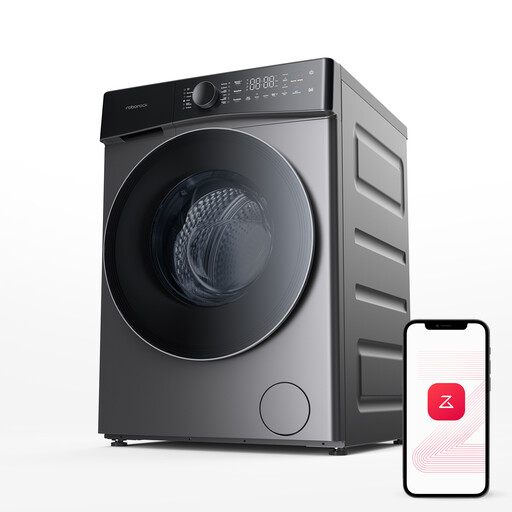
Roborock Zeo Lite Grey, 10/6 kg
If you want to dry your laundry without transferring it, the load must stay within the stated drying capacity of 6 kg. The wash capacity is 10 kg.
View at Joybuy
 No image available
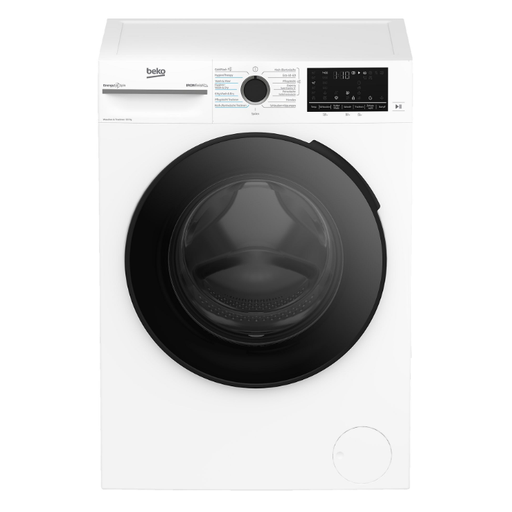
Beko BM3DT4944W, 9/6 kg
The stated drying capacity of 6 kg is lower than the 9 kg wash capacity and is the key figure when planning a complete cycle.
1400 rpm; energy class D.
View at Joybuy
 No image available
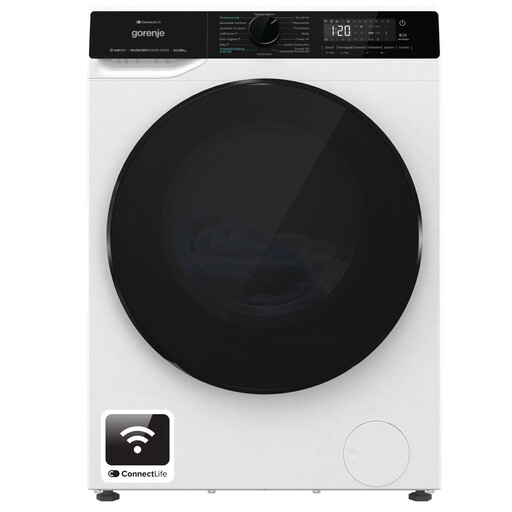
Gorenje WD2PA1X64ADW DE
This washer-dryer combines washing and drying. Before planning a complete cycle, check the permitted load for the programme you want to use.
16 programmes; 1400 rpm; Total AquaStop; “Wash & Dry 60’” programme.
View at Joybuy
 No image available
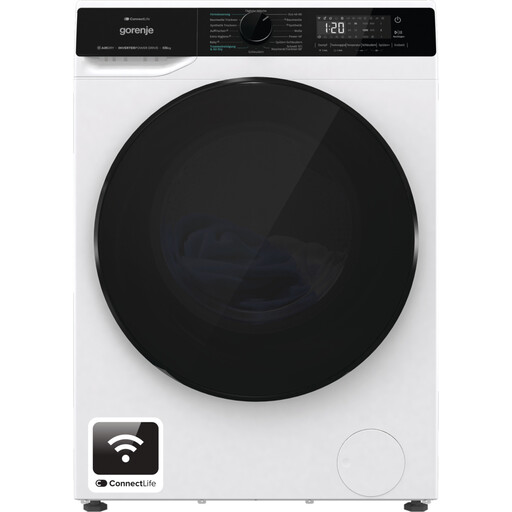
Gorenje WD2PA854ADW DE, 8/5 kg
For a complete cycle, the stated drying capacity of 5 kg is lower than the 8 kg wash capacity.
1400 rpm; dimensions: 59,5 × 84,5 × 51 cm; 16 programmes.
View at Joybuy
Frequently asked questions
Do I need a specific hygiene programme for tea towels?
The programme name alone is not what matters: the German consumer advice centre recommends washing kitchen towels regularly at a minimum of 60 °C. Check that the care label is compatible with the specific wash programme. A steam or hygiene function on its own does not prove that it has the same effect.
Which figures should I compare to assess running costs?
Compare the EU energy label figures for washing and washing plus drying separately, and focus on the operating mode you use most often. The label also gives figures for water consumption and programme duration. Your own costs will also depend on how you use the appliance and your tariffs.
How can I keep my washer-dryer clean between washes?
The German consumer advice centre recommends taking wet laundry out promptly, wiping the seal and detergent drawer dry, and leaving them open to air-dry. Also clean the lint filter regularly, if your appliance has one.


