Households without space to dry laundry
If you wash tea towels regularly but can’t find a practical place for a clothes airer or fit in a second appliance, the drying capacity for your usual load is especially important.


If you don’t have a suitable place to dry tea towels or room for two appliances, a washer-dryer could be the more practical choice. The key is whether your usual load fits within its smaller drying capacity and whether it has a suitable wash programme. If you have space for air-drying or two separate appliances, factor in the higher energy and water consumption of many washer-dryers when weighing up your options.
If you wash tea towels regularly but can’t find a practical place for a clothes airer or fit in a second appliance, the drying capacity for your usual load is especially important.
If you use tea towels and dishcloths frequently, choose a suitable wash programme and remember to account for the usually lower drying capacity when planning a load.
If you have a little space for drying, weigh up whether the space saved by a washer-dryer is worth the potential increase in energy and water use.
| Consideration | What to look for | Who is this important to? |
|---|---|---|
| No space to dry laundry | Appliance dimensions, including the door when open, and available floor space; drying capacity for your usual load. | If I can’t fit in a clothes airer, I need to know whether the appliance will fit in the space available and dry my load without splitting it. Around 33% of consumers say a lack of drying space is their main concern. |
| Suitable cleaning | Check the care label and available wash programmes; the German consumer advice centre recommends washing tea towels at a minimum of 60 °C. | When I wash kitchen towels, I want to be able to choose a cycle that suits their care label and my cleaning needs. Around 27% of consumers prioritise suitable cleaning. |
| Running costs | Compare kWh per 100 complete wash-and-dry cycles and water use per complete cycle on a like-for-like basis. | If running costs matter to me, I compare the complete wash-and-dry cycle rather than just the figures for washing. Around 20% of consumers prioritise electricity and water costs. |
| Load size and routine | Compare washing and drying capacities separately with your usual load; take the duration of a complete cycle into account. | If I have several loads to do, I want to know whether I can get through them one after another without having to remove or split laundry unexpectedly. Around 20% of consumers prioritise how loads fit into their routine. |
For the models listed here, the stated drying capacity is lower than the washing capacity. So a larger wash load won’t necessarily fit into a complete wash-and-dry cycle.
Plan a complete cycle around the stated drying capacity. Check whether you could remove some laundry or dry it later if necessary.
The EU energy label gives separate information for washing alone and for the complete wash-and-dry cycle. Figures for washing don’t tell you how much energy is used for the drying stage that follows.
Compare complete cycles like for like, and take your usage and tariffs into account when estimating costs.
A refresh programme doesn’t prove that a wash cycle meets the German consumer advice centre’s recommendation for tea towels.
Check care labels and wash programmes separately from steam and drying functions.
The 9000 series is worth considering if you’re specifically looking for heat-pump technology in a washer-dryer.
The W4WR7096YB is an option to compare if you want to run a complete cycle, with a stated drying capacity of 6 kg.
The WT1 WTD160 WCS could suit you if its washing capacity of 8 kg and drying capacity of 5 kg are right for the amount of laundry you have.
The I-Pro Series 7 Plus washer-dryer HWD100-BD14979U1 is an option if you need a washing capacity of 10 kg.
The Serie 4 washer-dryer WNA13470 shows why washing and drying capacities should be considered separately.
This selection includes washer-dryers for households with limited drying space. Compare the drying capacity with your usual load before choosing a complete wash-and-dry cycle.
 No image available
The stated drying capacity of 6 kg helps you plan a complete load.
Washing: 10 kg; drying: 6 kg. The title mentions Zeo-Cycle drying.
 No image available
The stated drying capacity of 10 kg is the key limit when planning a complete wash-and-dry cycle.
Washing: 12 kg; drying: 10 kg. The product title mentions Dual Inverter Heat-Pump technology.
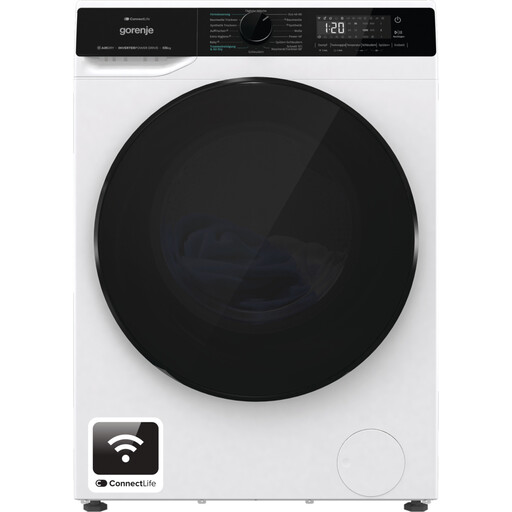 No image available
The drying capacity of 5 kg is important when planning a small complete load.
Washing: 8 kg; drying: 5 kg. The title mentions 16 programmes and 1,400 rpm.
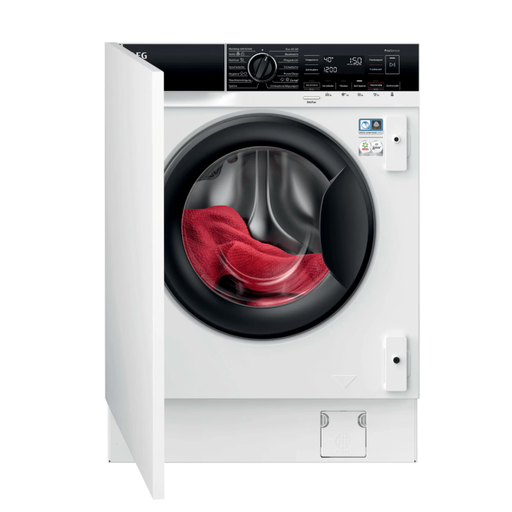 No image available
As a built-in washer-dryer, this model could suit a compatible installation. Pay particular attention to its lower drying capacity.
Washing: 8 kg; drying: 4 kg. The product title mentions 1,600 rpm and Wi-Fi.
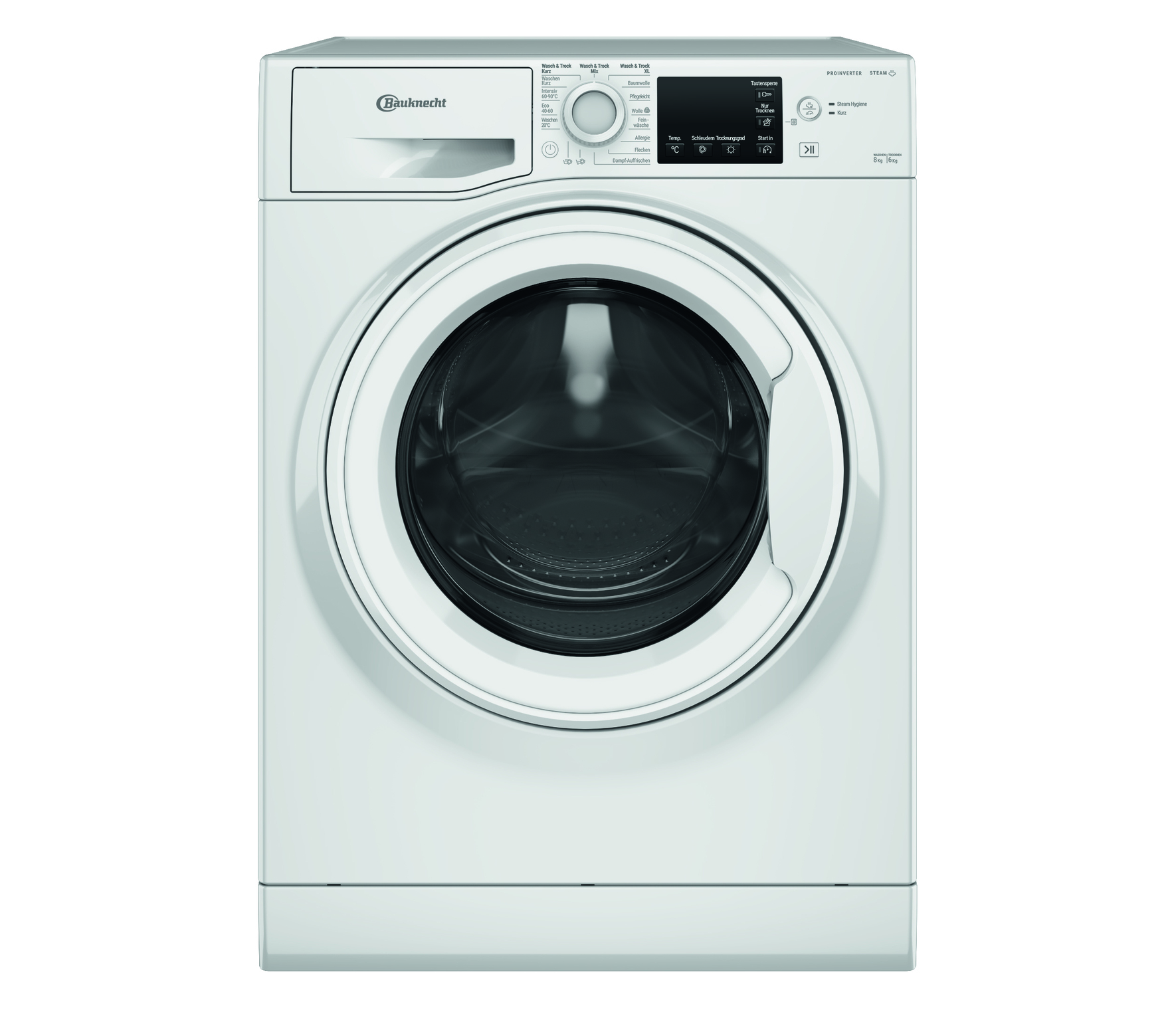 No image available
When choosing a wash programme for tea towels, check the care label and bear in mind the recommendation to wash them at a minimum of 60 °C.
Washing: 8 kg; drying: 6 kg. The title mentions a Stains 40° programme; this doesn’t meet the German consumer advice centre’s recommendation to wash tea towels at a minimum of 60 °C.
You can’t tell from the programme name alone. The European Commission describes Eco 40-60 as a programme for normally soiled cotton that is suitable for washing at 40 °C or 60 °C; the German consumer advice centre recommends washing dishcloths and tea towels at a minimum of 60 °C. Check the care label and make sure the appliance has a suitable wash cycle you can select.
If the wash load is larger than the stated drying capacity, you’ll need to remove some laundry or dry it another way. For example, the Miele WTD160 WCS is listed with a washing capacity of 8 kg and a drying capacity of 5 kg. Plan a complete cycle around the lower figure.
On the EU energy label, compare electricity use per 100 complete wash-and-dry cycles and water use per complete cycle. Figures for washing alone answer a different question; your actual costs also depend on how you use the appliance and your tariffs.
Online retailers in Germany are also subject to take-back requirements for electrical and electronic waste. The Federal Ministry for the Environment explains that free collection from home is available for certain appliances if it is agreed when the contract is made. Check the specific return and collection arrangements before placing your order.