A washer-dryer could suit a shared house if space is limited and the care label confirms that your workwear is suitable for both the selected wash programme and machine drying. Compare the washing and drying capacities, as well as the consumption of complete wash-and-dry cycles: the Verbraucherzentrale notes that washer-dryers use more electricity and water than separate appliances. Protective clothing and possible contamination with hazardous substances are subject to additional requirements; according to the Berufsgenossenschaft Rohstoffe und chemische Industrie, contaminated workwear must not be taken home.
Who might need a washer-dryer in a shared house?
Workwear with specific care instructions
When washing workwear, you need to follow the temperature, gentle-care and tumble-drying instructions. Protective clothing is also subject to specific cleaning requirements; GINETEX Germany explains that care symbols indicate the maximum permitted level of treatment.
Shared houses with a busy laundry schedule
When several people use the same appliance, washing and drying capacities, as well as the duration of a complete cycle, matter. The capacities for washing and drying are listed separately for the models mentioned here.
Shared houses with limited space
A combined appliance may be worth considering if there isn’t room for two separate machines. However, the Verbraucherzentrale also notes that washer-dryers use more electricity and water than separate appliances.
What should you look for when buying?
| What matters when buying |
What to check |
Who is it important to? |
| Washing and drying that follow care instructions |
Check the care label against the wash and drying programmes; GINETEX Germany explains the maximum permitted treatment indicated by care symbols. |
When I wash workwear, I want to follow the label’s instructions for washing and drying separately. This is a priority for around 29% of consumers. |
| Drying capacity and load planning |
Check the washing and drying capacities separately, and compare the duration of a complete cycle with your shared-house laundry schedule. |
When several of us share an appliance, I want to know how long it will be occupied for drying and whether the load will fit. Around 29% of consumers prioritise the shared laundry schedule and drying capacity. |
| Space and installation |
Check the appliance dimensions and the connections required at the intended location; if you live in a rented property, agree the installation with your landlord in advance. |
When space is tight, I need a solution that will actually fit in the space available. Around 24% of consumers prioritise the space they have for an appliance. |
| Electricity and water consumption |
On the EU label, compare wash cycles with wash cycles, and complete wash-and-dry cycles with the same type of cycle; the European Commission explains that figures are given per 100 cycles and per cycle. |
If our shared house uses the dryer frequently, I want to take the consumption of a complete cycle into account. Around 18% of consumers put ongoing running costs first. |
Common buying misconceptions
-
The washing capacity also applies automatically to the subsequent drying cycle
The stated drying capacity of the models mentioned here is lower than their washing capacity. A full wash load may therefore exceed the drying limit.
Plan a continuous wash-and-dry cycle according to the drying capacity and the limits of the programme you choose.
An oversized load could mean extra drying cycles and longer use of the shared appliance.
-
If it’s washable, it’s automatically suitable for tumble drying
Check washing and drying instructions separately. The care label sets out the permitted treatment; GINETEX Germany explains what the care symbols mean.
Check the washing and drying symbols on the specific workwear before planning a complete cycle.
If machine drying isn’t allowed, you’ll need to plan another suitable way to dry the clothes.
-
A steam or hygiene programme means protective clothing can be washed at home
Personal protective equipment must retain its protective properties after cleaning. Specific workplace requirements apply if clothing has been contaminated with hazardous substances; the Berufsgenossenschaft Rohstoffe und chemische Industrie states that contaminated workwear must not be taken home.
If contamination or a protective function is a concern, check who is responsible at work and consult the manufacturer’s instructions, rather than relying on the shared-house machine as a substitute for workplace cleaning.
-
Compare only the consumption of the wash cycle
Wash cycles and complete wash-and-dry cycles are different measures. The European Commission explains that energy figures for household washer-dryers are given per 100 cycles, while water figures are given per cycle.
Compare the same types of cycle and consider how often people in your shared house actually use the dryer.
If you frequently wash and dry complete loads, looking only at the wash cycle could lead you to underestimate electricity and water use.
Brands to consider
LG
The W4WR7096YB is available with a 9 kg washing capacity and 6 kg drying capacity, making it a useful reference when planning loads in a shared house.
- LG lists Steam and TurboWash for this model.
- LG’s advertised claim of 18% more fabric protection is based on tests using different model codes and 2 kg of underwear; it doesn’t demonstrate the same effect on workwear in the W4WR7096YB. The drying capacity is 6 kg.
Bosch
The Series 6 WNG24443 is available with a 10.5 kg washing capacity and a 6 kg capacity for continuous washing and drying. This is relevant if you mainly wash larger loads but only dry smaller ones.
- Bosch lists an automatic stain programme and AquaStop for this model.
- A stain programme doesn’t guarantee results on every stain on workwear. Bosch lists 70 dB(A) re 1 pW for this model.
AEG
According to AEG, the Series 9000 LWR9W81609 combines a 10 kg washing capacity and 6 kg drying capacity with heat pump technology. It may be worth comparing if you dry clothes regularly.
- AEG lists 206 kWh per 100 complete operating cycles and 51 kWh per 100 wash cycles for this model.
- These figures relate to cycles defined in different ways and are not independent measurements. You’ll also need to weigh up whether it’s suitable for your garments and the purchase cost.
Haier
The G3 HWD80-BP14637T is listed with dimensions of 595 × 507 × 850 mm, an 8 kg washing capacity and a 5 kg drying capacity. This makes the appliance’s depth an important measurement to check.
- Haier lists a refresh programme and an inverter motor.
- The 5 kg drying capacity may mean splitting larger loads into smaller batches. A refresh programme is no substitute for a wash cycle when one is needed.
Joybuy products for washing and drying
The following Joybuy options cover appliances for washing and drying. Check the appliance type and the separately stated washing and drying capacities for each model.
 No image available
Roborock Zeo Lite, washer-dryer, white
May suit a household looking to combine washing and drying in one washer-dryer; the size of a continuous load is limited by the drying capacity.
10 kg washing; 6 kg drying; Zeo-Cycle drying; automatic dosing; energy efficiency class E.
View at Joybuy
 No image available
LG WT1210EGF WashTower, green/beige
An option if you want to compare washing and drying capacities separately for your shared house; the space available must suit this appliance configuration.
12 kg washing; 10 kg heat pump dryer; AI DD; TurboWash 360°; ThinQ Smart App; 1,350 rpm.
View at Joybuy
 No image available
LG WT1210WWF front-loading washer-dryer, white
May suit anyone comparing a front-loading appliance for washing and drying, provided they plan around the lower drying capacity when loading it in a shared house.
12 kg washing; 10 kg drying; Dual-Inverter heat pump; AI DD; TurboWash 360°; Steam function; Wi-Fi ThinQ App.
View at Joybuy
 No image available
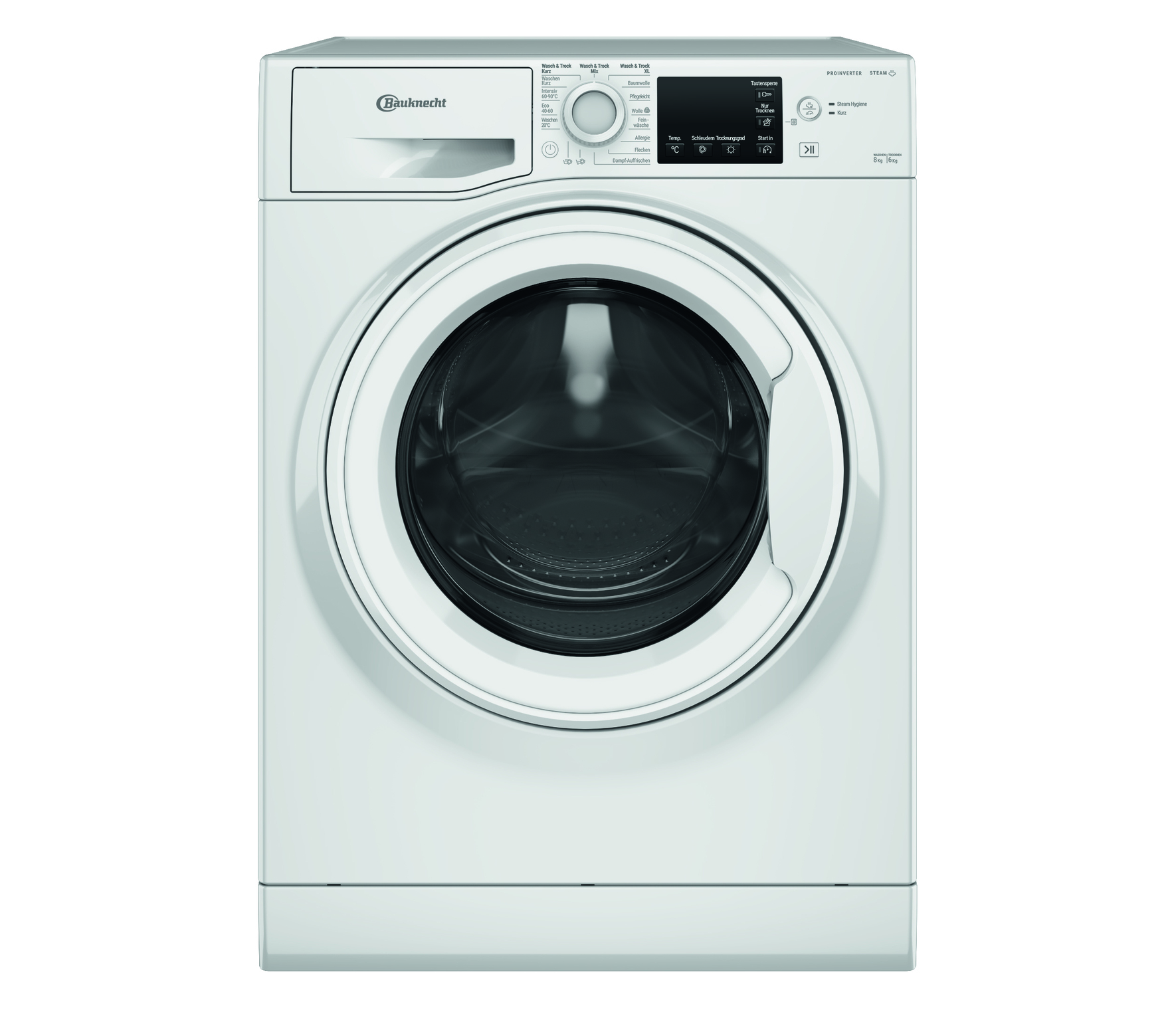
Bauknecht WD Eco Shield 8614 D
May suit a household comparing washing and drying capacity in one appliance; the drying limit is lower than the washing limit.
8 kg washing; 6 kg drying; 1,400 rpm; Stains 40°; energy efficiency class D.
View at Joybuy
 No image available
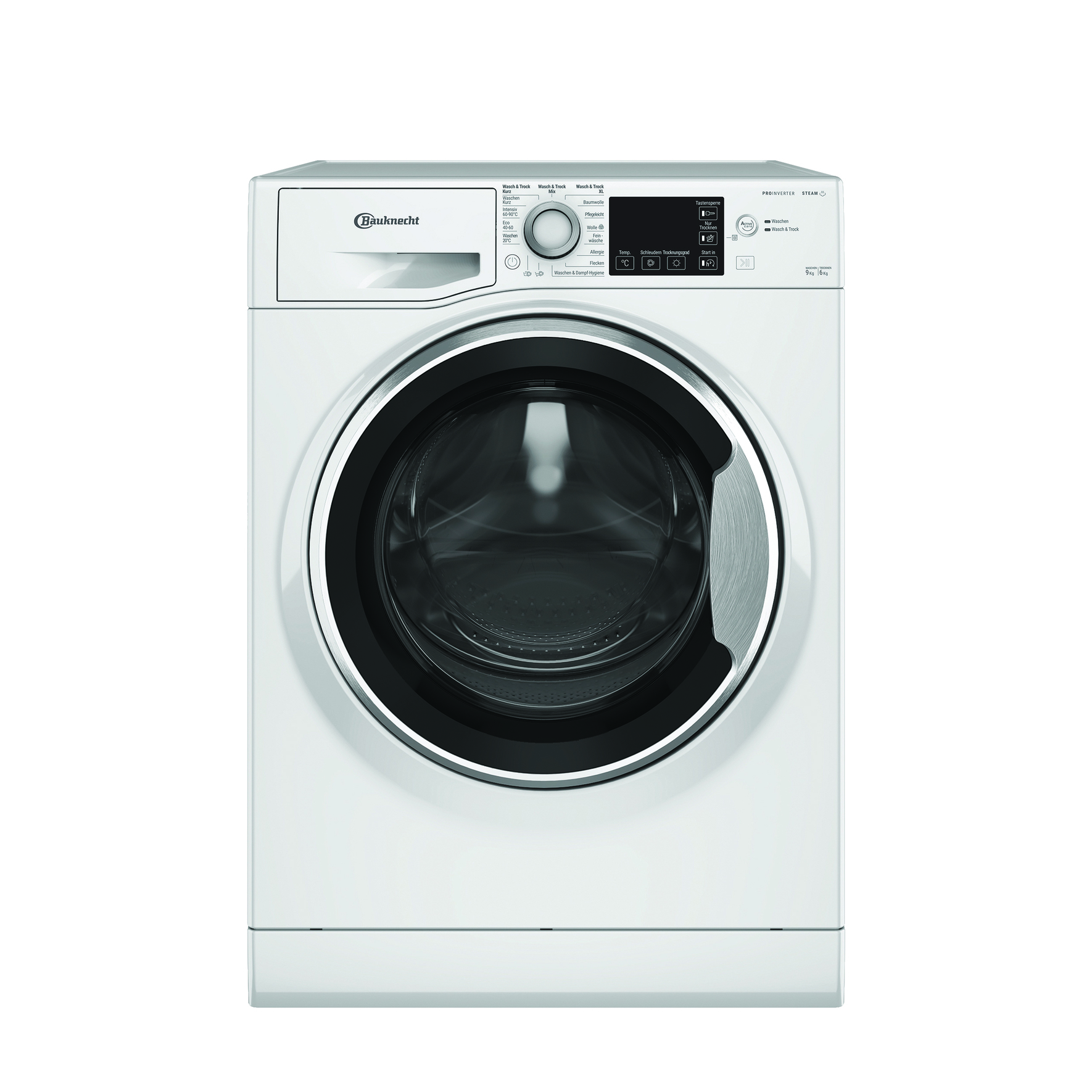
Bauknecht WADR ACTIVE 9614 D
An option if you’re looking for a freestanding appliance for washing and drying, and can size your shared-house load to the drying capacity.
9 kg washing; 6 kg drying; 1,400 rpm; Active Care Wash & Dry; Dynamic Inverter Motor; energy efficiency class D.
View at Joybuy
Frequently asked questions
Can all washable workwear be washed at home in a shared-house machine?
No. For workwear or protective clothing contaminated with hazardous substances, the Berufsgenossenschaft Rohstoffe und chemische Industrie outlines workplace cleaning requirements and states that contaminated clothing must not be taken home. Personal protective equipment must retain its protective properties after cleaning; the Bundesanstalt für Arbeitsschutz und Arbeitsmedizin advises following the manufacturer’s instructions. For ordinary workwear, follow the care label and workplace requirements.
Does the wash symbol mean you can also machine-dry the item afterwards?
No. Check the washing and drying instructions separately. GINETEX Germany explains that the tumble-dryer symbol indicates whether an item can be tumble-dried; you should also follow the treatment limits on the care label.
What should I check before installing a washer-dryer in a rented shared house?
Agree the installation with your landlord in advance and check that the appliance dimensions and connections suit the intended space. The Verbraucherzentrale recommends agreeing where appliances will be installed in the home beforehand and ensuring there is protection against water damage.
Which consumption figure should I use when comparing appliances?
Compare wash cycles with wash cycles, and complete wash-and-dry cycles with complete wash-and-dry cycles. The European Commission explains that the EU label gives energy figures per 100 cycles and water figures per cycle; your costs will also depend on how often you use the appliance and your tariffs.


